December 6th -National Day of Remembrance and Action on Violence Against Women

women-wont-forget-december-6-logo

On December 6, 1989,  fourteen female engineering students were murdered at school in Montreal.  They were murdered because they were women and their murders were extreme acts of gender based violence.

Just last week, on December 1, 2016, a Toronto doctor was murdered by her physician husband.  Someone posted something on facebook, commenting that this murderer must be “sick,” or “mentally ill,” and I was angry.

Violence against women, domestic violence, and gender based violence that escalates to femicide is not caused by seriously mentally ill men.  That’s a myth and it’s a dangerous one which overlooks the very real structural and societal causes of violence against women.  Causes such as patriarchy, rape culture, poverty, racism, sexism, homophobia and other types of oppression and inequality that impact women and gender non-conforming folks.  Mentally ill and other folks with disabilities are far more likely to be the victims of violent crime than the perpetrators of it.

Tomorrow night I will be attending a vigil to remember those women and gender non-conforming folks who have lost their lives as result of gender based violence.  In particular, the victims of the Montreal massacre.

So many times over the past few  years,  when I’ve heard news stories about domestic violence escalating to murder, I’ve thought to myself: that could be me.  That could be me.  What makes me different from those women?  What is it that made that particular man, escalate his violence in that particular way, on that day?   Statistics show that women are most at risk of being killed around the time when they are planning to leave the perpetrator, or just after leaving.  I often wonder what would it take to make my ex snap?  What does it take for someone to cross a line between sexual assault, and murder?   How thin is that line?  How safe am I really?

I could be that woman.   I am that woman.

Truth be told, a lot of us could be that woman.  And that’s not a reality that many of us want to face.  Instead we talk about how the murderer must be seriously mentally ill, a crazy person, someone that must be fundamentally different from us, different from our neighbour, our doctor, our religious leader, our school teachers, our lawyers, our engineers and our bankers.  We think of the victims as misfits, as street folks, addicts, people who are “different” or somehow to blame.

But the honest truth is that the victims of domestic violence are all around us.  They are you, they are  me and they didn’t do anything to provoke the violence.

The perpetrators are all around us too.  They are sitting next to you in the cubicle beside you at work, they just served you at the restaurant you ate lunch at.

Gender based violence is everywhere and we all have a responsibility to look for the signs, see the signs, believe survivors, speak out, speak up, ask questions, don’t turn our backs on it and remember those who have lost their lives.   Remember them tomorrow on December 6th, say the names of those who have lost their lives, and remember them every day.

I would also like to remember my friends who have not survived their battles with PTSD due to gender based sexual violence.  Suicide as a direct result of PTSD that was caused by repeated and horrific sexual assault is akin to slow murder by the perpetrator.  My friends were some of the bravest people I have ever known and they were survivors even though they did not survive.

On December 6th, I will remember you.

The 14 women murdered at l’École Polytechnique de Montréal were:

Geneviève Bergeron
Hélène Colgan
Nathalie Croteau
Barbara Daigneault
Anne-Marie Edward
Maud Haviernick
Barbara Klucznik Widajewicz
Maryse Laganière
Maryse Leclair
Anne-Marie Lemay
Sonia Pelletier
Michèle Richard
Annie St-Arneault
Annie Turcotte

It’s rude to stare.

20161204_1228461

I’m not speaking for all people with disability here, there are my own opinions.  Trigger warning for description of self harm

I identify as a person with disabilities.  The thing is, that I live in an interesting position where some of the time I have the privilege of “passing” as a non-disabled person and some of the time, it’s obviously visible that I’m different, strange, mad, crazy, mentally ill, or whatever label people might want to put on my experience.

I experience my PTSD as a chronic disability rather than an illness.  It’s something I live with and cope with and I don’t expect it to suddenly be cured or disappear.  I don’t consider myself “sick” but I’m not really well either.

One of the ways in which I coped with having undiagnosed and improperly treated PTSD was to cut myself.  I cut myself for many years of my life.  Because I had severe adverse effects from psychiatric medications I cut myself deeply, chaotically and severely.  As a result I have visible scars over the majority of my body.   These scars are covered by long sleeves and long pants, but can be seen wearing any other type of clothing.

I have a number of close friends who also identify as having disabilities, and I work in a field where I have read, heard about and studied oppression related to disability.  What I want to talk about is the situation I encountered last night.  The one in which able-bodied, sane, or well people feel the need to STARE at, or comment on, disabled bodies.   The staring makes me feel instantly like a circus freak, instantly judged, instantly “less than” and instantly oppressed.

I was out at the dance last night and I’d invited along a woman I’ve met up with a few times.   It’s been winter weather so this was the first time she’d seen me in a short sleeved shirt.  I hadn’t mentioned the self harm to her.  I had mentioned my past abusive relationship.   When I arrived, I noticed her staring at my arms. I noticed her staring at them on and off over the course of the evening.  She never said anything about them, just looked at them awkwardly.

I was already struggling yesterday.  I was having a lot of body dysphoria and feeling self conscious and negative about my body.  I’d been at a party earlier and I was hot in my sweater but I didn’t want people looking at my arms, so I left it on.  Often I forget about my scars now, but some days I’m hyper sensitive because I don’t want to risk being under the “judgemental gaze” of able-bodied or sane folks.

Here’s what I wish folks would do when they notice my scars:

  1.  You’ve noticed my scars.  You are curious. I get it. But this isn’t about you.  Please don’t stare.  I’m not a circus freak.
  2. If you must ask questions about it, if possible wait until a quite private moment and then politely ask me what you want to know.
  3. If you absolutely have to know.  Please don’t stare.  I’d rather you ask me a question about what you want to know, even in a public place than continue to stare or sneak glances at me.  Believe me  I SEE YOU LOOKING AT THEM.  You aren’t getting away with looking at them subtly.  In general, people with visible disabilities are vigilant to noticing people staring at them.
  4. Remember, I’m still the same person I was before you noticed the scars. Nothing has really changed.  Your reaction to my scars is more about you, than it is about me.  If you are seeing the scars, it means I am comfortable showing them.  You are the one who is making the situation uncomfortable by awkwardly staring at me!

And here is a list of answers to some commonly asked questions about my scars.  Maybe this will help you to not ask these questions to other people who self injure, maybe it will help others understand a bit better.  To be fully honest, people rarely ask me questions about my scars.  I sometimes wish they did ask me.  I’d rather be asked questions than be stared at and be left wondering what the person was thinking.  But there are some common questions and questions I imagine folks have.

  1.  Do they hurt?  No, most of them don’t hurt.  There are a few that didn’t heal properly or weren’t stitched properly that do hurt.  Some of them itch or the skin pulls at times which can be uncomfortable.  For the most part they just feel the same as the rest of my skin.
  2.  Can I touch them? No!  That’s fucking creepy.  This is a trigger for me, because one of my abusers asked that question.  I don’t think it’s cool, cute, fun or sexy to have them touched specifically during intimacy.  Please just treat them as part of the rest of my skin.
  3. What happened to you?  They are scars from self inflicted injuries, mainly cutting.  I hurt myself as a way of coping with ongoing sexual and emotional abuse over a period of time in my life.  I also had serious adverse reactions to psychiatric medication, especially SSRI anti-depressants which gave me obsessive self destructive thoughts and impulses over a 4 year period of time.  I was told repeatedly that “doctors don’t give you medication to make you sick”
  4. Did you have to get stitches?  Yes.  Lots of them.
  5. Did it hurt?  Sometimes.  But a lot of the time when I was harming myself I was disassociating and I didn’t feel the pain.  A lot of the time I was doing it I was numb and detached and felt very little.  It hurt a lot AFTER and when it was healing, when the disassociation wore off.
  6.  Do you regret it? Sometimes.  It’s hard to remember a time when I didn’t have the scars.  To be honest the scars trigger me sometimes which is why I often used to hide them.  They bring back bad memories of times I’d rather forget.  But they are a part of me as well, a part of my story and a part of what I’ve survived.
  7.  What is the worst part about having self harm scars?  The worst part is the judgement I get when seeking non-psychiatric medical care.  So many times doctors have seen the scars and treated me differently.  They often make assumptions about me that are incorrect.  They assume I’m drug seeking, an addict, or that I’m unstable, lying, attention seeking, borderline etc.  I notice that doctors have the worst misconceptions about self harm.   Doctors often assume I’m LESS able than I actually am, and at times I struggle to receive appropriate medical care.  There is a great deal of stigma attached to having a mental health disability, especially related to self injury.

The take home message is simple:

Don’t stare at people whose bodies may be different than yours.

If you must ask questions, do so politely and privately if possible.  Ideally, don’t ask a lot of questions of complete strangers.  Questions as part of a friendship come across completely differently and can be more acceptable as a part of getting to know someone over time.

I notice you staring at me, and I don’t interpret it as polite concern.  I interpret it as intense othering.

I was just there for the dance.

Why Women Don’t Leave

If I knew  what leaving meant, I probably would have stayed.

I was naive, and I’m glad.  I’m glad that I left and that I’ve been forced to fight, but nobody should have to fight this hard to be believed.

As I walked into the court house yesterday, over three years after leaving, my first step was to check with the information desk to find out what court room my matter was being heard in.   I checked the list and realized that we were scheduled in a small motions room, rather than a full sized court room.

Why does that matter?  Why does the size of the court room matter so much that I’m writing a blog post about it?

I rode the elevator, arrived at the correct floor and met my lawyer.  My anxiety grew and grew as I thought about the room.  I could feel panic starting, my body was tensing, all the preparations I’d done for the day were quickly flying out the window.

I opened the door of the courtroom just a crack and peered inside.

It was as I’d feared.  A small motions room, a large conference table filled the room, with the judge’s dias at one end and a small witness box to the side.  The whole room was not much bigger than an average sized dining room.   A conference table, with 3 chairs along each side, spoke of mediation, settlement, concord, agreement and discussion.

All I could think about was this:

This is the reason why women don’t leave.  Women don’t leave because they don’t want to spend two days, trapped in a tiny court room, sitting face to face with their abuser, unable to speak or move, except on the judge’s schedule.

What could be more triggering for a survivor of violence?  Not only do I have to sit in the room with him, I have to sit in an assigned chair (no choice), I have to sit quietly (I can’t speak),  I can’t stand, move or stretch to ground myself and I have to listen to various people speak about traumatic experiences in my life as if I was not there.   If I react emotionally in any way, he will see me and he will have power over me.  If I cry, he will have power over me.  If I get angry, he will have power over me.   It’s a situation of power and control and lack of options and I have no choice but to stay in it.

Luckily today I have support person with me, otherwise I feel like I wouldn’t even be able to sit in that room.  Every part of me screams NO!  I don’t want to go in there.  I want to rebel!  I want to fight! I want to yell at everyone that this system is unfair, unjust, unhealthy and re-traumatizing.

But that isn’t an option.  Instead, I sit in the room.  I clench my hands together as tightly as I can underneath the table.  My whole body is shaking, as it does as I’m trying desperately to process trauma that is overwhelming me.  I try to tremble in a way that is not noticeable, or could be interpreted as shivering from the cold.  I try to breathe.  I write notes and doodle continuously.    I try to tune out and disassociate enough to be able to stay sitting in the room, but not so much that it’s obvious, or that I can’t stay focused.   I listen to what is being said, but I try to detach myself emotionally from it.  I try to put myself into a frame of mind where I’m observing someone else’s life.  But it doesn’t really work.

As the day wears on, the oxygen in the room starts to disappear.  I feel like I can’t breathe.  I have a harder time sitting still.  My leg starts to shake,.  my body trembles again, almost imperceptibly.   I try to fidget just a little, but in a way that doesn’t come across as anxious.   I start to feel panicky, like I need to run out of the room.  All my muscles start to hurt from holding them tense, from shaking, from sitting still, from being unnatural and on edge for hours at a time.   The time that goes too slowly.  I feel like I’m in a place where I will never escape back to reality.    I’m stuck in court world, no windows, no escape, it’s own set of rules and rituals.  I’m a stranger in a strange land.

And right across the table from me.   Emotionally nonreactive, as if this whole ordeal is uneventful and ordinary, sits my abuser.  Calm and collected and emotionally blunted.   And I feel a sense of confusion.   Who is this stranger?

How did we get here?   It’s a blur of months and years.  It’s a blur of “just get through this next few months.”  It’s a blur of “just keep going for the kids.”  It’s a blur of coping and surviving.

This is why women don’t leave.

Because the process of leaving doesn’t end the day she walks out the door.

Survivors need compassion when they can’t leave because it’s too hard.

They need help to leave because it’s too hard to do alone.

And they need help, patience, compassion and validation long after they leave.  Because the process of leaving can be as traumatic as the relationship itself.   Because it’s too hard to do alone.

Seeing things.

img_8702

It’s been a difficult week for so many of us, including women and gender non-conforming survivors of sexual violence.  I’m struggling with my PTSD symptoms.

Marian was the only one I could ever talk to about some of my more intense PTSD symptoms.  She was the only person I’ve ever met who I really felt completely understood what I was going through.  I never felt “crazy” when I talked to her.  I could call her, say what happened and every time she would know exactly what I was talking about because she’d experienced it too.

I’ve learned with symptoms of mental illness that there are some things that are more acceptable to talk about, and some things which are more highly stigmatized.  There are some symptoms which almost nobody ever talks about, for fear of being judged or experiencing discrimination or persecution.

In 2016, almost everyone knows someone who has struggled with depression, anxiety or who has issues related to food.  These are things we talk about.

People very rarely talk about suicidal thoughts, self harm, paranoia, delusions and seeing and hearing things that aren’t real.

It’s almost like there is a divide between the mental illness that society accepts and the mental illness that is forced to exist in the closet.

When PTSD is really acting up for me, I see things that aren’t there.

I’ve rarely told anyone about this because I know that most people won’t understand.  Marian understood.  I felt so accepted, like there was at least one other person in the world who experienced seeing things as a symptom of PTSD.

This week, there have been three separate occasions where I’ve “seen” my ex in public places.  It’s so hard to explain how this feels.   The first person was in the food court at the mall.  He had a coat, scarf and haircut similar to my ex, and even though I looked at him and my intellectual mind recognized it wasn’t him, I kept looking back over and over, convinced it was somehow him.  My heart was racing and I felt panicky.   It isn’t just the feeling of mistaking someone else for him.  I actually SEE him, in someone else.  Someone else is replaced by him for that moment and I’m afraid.

This happened again today when I was buying my coffee.  The person didn’t even look like my ex, but he became him for a moment.   My intellectual mind tries to reassure me that what I’m seeing isn’t real, but it feels real.  It happens with cars that look like his too.  Sometimes, I have to check and check again, sure that the car is his, even though intellectually I know it is not.

I’ve had this experience before, in the past, in the years leading up to me leaving my ex.  I would see X sometimes, when I was triggered.  I remember talking to Marian about it.

It’s an unsettling feeling.  Sometimes when I’m very stressed and have been sleeping poorly, I also see tricks of the light which aren’t there.   These experiences are all more illusions than actual hallucinations, but they are still disturbing and they signal to me that my brain is over-stressed, overtired and in need of relief.  My doctor assures me that none of these are psychotic symptoms, but they are symptoms of PTSD.

These experiences of “seeing things” are different that what happens during flashbacks.  They seem to happen just out of the blue when my brain is stressed.

During flashbacks, it also happens that my brain sees something from the past rather than what is in the present.  The person I’m with, “becomes” my abuser, I can’t trust what I’m seeing, my brain is mixing the past and the present into a mash up of confusion.

Nobody really talks about these things.  As a survivor it can be very isolating and it can make me afraid to speak out about the symptoms.  Sometimes I don’t know what is more terrifying: feeling crazy or worrying that people will perceive me as crazy.   I know, intellectually, somewhere deep inside, that I’m not actually crazy.  My brain is coping with trauma and it is doing what it needs to do to survive.  Sometimes this coping mimics, looks like, and produces symptoms of mental illness.  But often the symptoms are my brain letting me know that I need to reduce my stress.  If I don’t listen to the early warning signals, my brain escalates to more dramatic signals like suicidal thoughts and seeing things.

Learning to listen to my own inner voice is part of the healing journey.

Essentially,  I think society needs to talk about these stigmatized symptoms of PTSD and mental illness.  I think we need to break down the misconceptions and the misinformation and realize that for the most part, folks are just doing the best they can to cope.   When you are living it, all mental illness is terrifying.  It’s just a matter of degrees.  Sometimes the fear of stigma is what keeps people silent and stops them from reaching out for help.   Talking openly and without judgment heals.

I sometimes see things, but if Marian could understand, maybe you can to.

A Dance with Disaster

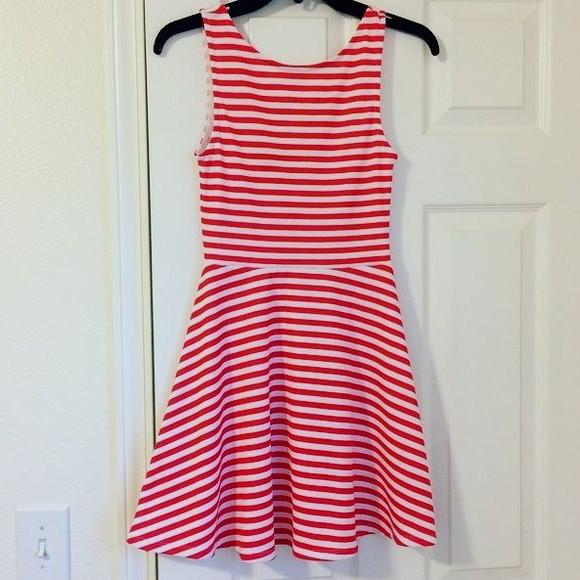
red-white-striped-dress-brand-new-and-never-worn-red-white

Two years ago I met a guy in the social dance community.   It was a community within which I felt safe and I’d never had any problems there.  I had made friends and it didn’t seem unusual to go for ice cream with this guy after the dance.  Dancing makes you hungry and late night snacking is a part of the ritual.

We went twice for ice cream.  On two different weeks and we texted minimally.  On the third evening, I agreed to hang out after the dance.  Again, I was expecting to go for ice cream or snacks.  He wanted to go to his place.  I somehow thought we’d park the car near there and then get ice cream nearby.  He lived near a busy street where there were lots of restaurants open late.

It was late, maybe 12:30AM.  He asked me to come into his place.  Every voice inside me was yelling “No, don’t go with him!”  But then I shut myself down, I told myself “You can’t always be expecting the worst of everyone, you have to trust people, this guy is from the dance, he’s most likely safe”

In other words, I had that moment which so many survivors describe, of knowing that something wasn’t right.  But, like I’d done in the past, I ignored it and went along with what he was suggesting.

He lived in a bachelor apartment inside an older house.  The couch was so close to the bed they were almost touching and there was barely any space to move around.  We sat on the couch and I started talking nervously.  I told him that I’d recently separated from an abusive husband, that I had been sexually abused.   I was trying to give a clear signal that I wasn’t interested in fooling around with him.    He listened without saying much.

Then he started kissing me.  His hand was on my thigh, pushing up my red and white dress.  I froze.  In my head I was gathering strength, making a plan.  Finally, I said “No” very clearly.  But he didn’t stop.  He kept kissing me and touching me.   Again, I froze, I went into my head and continued planning.   I said “No” a second time and a third.  The kissing and touching continued, his hand touching my underwear under my dress.

I realized at this point that I was in trouble.  He was bigger than me, likely stronger.  We were alone, nobody would likely hear me scream.  Thoughts were rushing through my head.  By the third “No,” my brain was ready to check out.  I was on the verge of disassociating, my energy was used up and my old responses were kicking in.

He picked me up.  Lifted me in his arms and placed me on his bed.  He was on top of me kissing me.  And I had a moment of clarity.  My internal voice spoke firmly (I’m paraphrasing my internal dialogue):

You cannot disassociate right now.  If you disassociate you are going to be raped.  You barely know this person.  You have to fight.  You have to escape.  You do NOT want to be raped tonight.  You have to stay in the present, you can’t zone out!  This is your chance to protect yourself.   This guy didn’t listen to words, you have to use force!”

I gathered my strength and I pushed him as hard as I could with both my hands.  He stopped, lay down beside me, hands still touching my legs.  He seemed upset, as if I’d been leading him on.  I don’t remember him speaking.  I could just tell he was angry.   I breathed one more time, regenerating some strength.  Then I told him I had to leave, jumped off the bed, grabbed my coat and purse and ran.

I ran down the stairs.  I ran out into the street.  My car was parked a few blocks away, but I barely remembered where.  It was late, after 2:30AM.   As soon as I hit the fresh air I was crying.  I was shaking with the exertion of defending myself.  The PTSD was overtaking me, everything was happening and I was still trying to find my car.

I took out my cell phone, and called the guy I was casually dating.  He often stayed up very late and I prayed he would answer.  I called a few times, no answer, left a panicked message and finally located my car.

My friend called me back as I was driving home.  I remember crying on the phone while I was driving.   He stayed on the phone with me for a long time, until I was finally able to sleep.

He was so angry.  He wanted me to call the police, but I knew that was basically useless.  I was also really embarrassed and I didn’t know the people in the dance community to know.  I felt like somehow I’d be the one who would be shamed.  I knew on one level I could, and probably should, tell one of the organizers, but I was too ashamed.  I wanted to keep it a secret and just try to forget about it.   I didn’t want to call the police, because I hadn’t been raped.  It wasn’t “that bad,” and I’d escaped without injury.  I’d just forget about it and move on.

But I was traumatized.  I had flashbacks for days, weeks.  I felt embarrassed, I felt like somehow everyone could know that I’d been assaulted.  It was a similar feeling to when I’d been a teenager and was convinced the whole world knew, when in reality nobody did.

I struggled to wear that red and white striped dress again.  Because when I wore the dress I could feel his hands moving it up my thighs without my consent.  I shuddered just looking at the dress.

I also felt a sense of empowerment, that I was able to defend myself rather than disassociating.  It was the first time in all my years of experiencing sexual abuse that I’d ever physically defended myself. But it was small comfort.  If there was one thing I didn’t need in my life it was to be sexually assaulted again.

The worst part is that I still see this guy.  He’s still a part of the dance community.  He’s on facebook, online dating sites and if I’ve seen him I’ve blocked him.   But I can’t block him from the dance, not without telling someone.  And what’s the point now?  It’s been over 2 years and what if they didn’t believe me?   Worse, what if they think I’m exaggerating or making a big deal of nothing.  So I see him from time to time, I ignore him with all my strength, I walk away, I dance in a different part of the room, I try to imagine him disappearing.  But honestly,  when he’s there I never feel 100% comfortable.

People often say that sexual assault only lasts for a few moments.  Why ruin someone’s life by accusing them of assault and reporting them to the police over something that only lasted moments?   Why ruin someone’s reputation?  Why report at all?

Well, sexual assault doesn’t last only for a few moments.  Not for the survivor!  For the survivor it never fully heals, it’s never fully forgotten.  It’s like a stain on your favourite dress, one that you can’t ever get out.  Or your favourite dress that you can’t wear again, because the stain is the memory of the assault.  It’s  just there, in your closet, to remind you of a night you’d rather forget.

It is “that bad.”  It just is.

Depression.

20160219_213203

Depression doesn’t always look the same.  Sometimes it is most clearly described by how I feel when it lifts.  When I’m depressed I’m not actually myself and when the depression lifts I wake up and I’m me again.

When I’m depressed, I am physically exhausted by social contact and social situations, but at the same time I don’t always want to be alone.  One of the reasons social situations are so difficult is because social anxiety is a symptom of my depression, and depression is fueled by my social anxiety.

Over the past few weeks, interactions with others leave me drained. Probably because half the time I’m spending with people I’m hyper aware of whether or not I’m behaving appropriately.  Because depression blunts and numbs some feelings and amplifies others, I’m constantly monitoring myself and thinking:

Am I acting normally?  Can this person tell I’m acting?  Am I smiling enough?  Am I smiling too much?  What should I do with my hands?  Stop picking at your skin! Remember to make eye contact!  Not too much eye contact!  Stop fidgeting!  Is my facial expression appropriate for what they just said?  Make sure your face is responding like a normal person! That was a joke, laugh.  But don’t laugh too much.  Did that sound stupid?  Do they hate me?  Did I make a mistake?  Is my facial expression appropriate?  Oh my god, did I even hear what she just said? Smile.  Act normal

After a short interaction I’m exhausted and I want to flee to a place where I can just be.   This usually means being alone.  I’m completely relieved to be alone.  I often hibernate under quilts and blankets where I feel safe.

But then the loneliness hits.  I text.  Texting is much easier than phone calls or in person hang outs.  When I’m texting I just have to think about the words and not all the other complex social dance behaviours that I’m sure I’m completely mangling.  Texting is safe.  Texting breaks isolation, without crowding me or making me self conscious.

When I’m lonely and depressed, I start to believe I’m literally the only person on the planet who doesn’t have plans at that moment.  All logical reasoning to the contrary is dismissed by my social anxiety brain.   I start to think that nobody likes me, that I’m boring or annoying, that I’ve said terrible things to offend everyone I know.  I feel jealous about the plans and social gatherings of others.  And yet, ironically, I often cancel plans or say no to things I am invited to.   The contradiction of depression is frustrating and impossible.

Depression is panic attacks in crowded places.  Panic attacks about choosing food, or anxiety about eating around other people.   Depression is feeling “fat” when my body hasn’t changed. Depression is anxiety that everything I say or do might get me into trouble or make my situation worse.  Depression is reading my emails over and over and over and over, obsessively, worried that I made a mistake, said the wrong thing or was oppressive.   Depression is paranoia that the email was accidentally sent to the wrong person, somehow ruining my life.  Depression is knowing I have to do something at work, but feeling incapable, afraid and ashamed to ask for help, thus procrastinating and avoiding.

Depression zaps energy.  I’m literally exhausted almost every minute of the day.  It’s not something that can be fixed by more sleep.  Though less sleep makes it much worse.  My body feels heavy and I struggle to get out of bed in the morning.  My bed feels warm and safe in the mornings, but physical pain and stiffness in my body prevents me from lying down for too long. Sometimes I’m drained and have to lie down after taking a shower in the morning.  But somehow I push through it.

I feel like robot, automatically going through the motions of my day.  I check each task off against a mental list.  Breakfast, check, kids to school, check, commute to work, check.  Each day moves through a series of tasks to be completed.  I’m always counting time until the next time I can be alone and rest.  I’m often watching the clock, but I’m never comforted by it. Then after about one day of a weekend alone, I’m lonely and waiting for my kids to return.  It’s a terrible feeling, like you have nothing to look forward to, but are always looking forward to something unimportant.  Maybe the next day will be brighter, maybe the next _____ will break the cycle, maybe I’ll wake up tomorrow and feel better.

Depression is being unreasonably and intensely irritated by innocuous things.  Like the sound of someone chewing near me.  I could scream.  My whole body is tense, I can hear every sound.  Depression is losing patience in a split second, in situations I would normally be able to cope with.  Depression is feeling frustrated when people repeat themselves or take a long time to get to the point of their stories.  Depression is hating myself because I know I’m not being as kind as I should be.  Depression is losing my temper at my children, when they are barely doing anything wrong and my rage is uncontrollable like a volcano, then dissolves into guilty desperate tears.  Depression is intense compassion fatigue.  Not having enough energy to have empathy for others and then beating myself up with self judgment afterwards.

Depression means rarely living in the moment.  Depression is being caught in a tangle of awful memories from the past, or absorbed in worries or thoughts about the future.  Or more often, ping ponging back and forth between memories and worries.  In the moment, there is often zoning out, disassociation, numbing and that floating feeling of being something less than human, unable to connect with anyone.  Feeling like my essence of humanness is just beyond reach.

Depression is either crying too much, or (this time) not being able to cry at all.  Depression is either all the feelings right at the surface every single minute, or all the feelings pushed down and boxed up into controlled spaces inside me.

Depression is the darkness in the Fall and Winter months.  Depression is waking in the dark, coming home from work in the dark and forgetting what the warmth of the sun feels like.  Depression is like sitting at a dirty window, watching the normal world proceed just outside my grasp.

Depression is feeling suicidal, obsessing about death and dying.  Sometimes it is destructive impulses, or sometimes, wishing I hadn’t been born at all.  Sometimes it is a passive thought of just not wanting to be alive.  And then the torturous, trapped feeling of knowing that suicide is no longer an option.

Depression is boring.  Like this blog post feels boring.

It’s a world without light.  Depression is obsessive, recurring thoughts.  Depression is feeling like a bore to others, feeling self-obsessed, immature and uninteresting.  Depression is feeling unlovable and like you will always be alone.

Depression lies.

Even if I know that depression lies, it’s not so easy as just snapping out of it.

When I’m depressed I’ve learned that the best I can do is to stay as safe as possible, sleep regularly, eat and drink regularly, self care, be patient with myself, lower my expectations of myself and just do my best.

Because depression always lifts.  It’s not forever.   But it feels awfully bleak.

Night Bears.

2016-10-18_21-35-061

Someone told me a story about her daughters, who woke up at night and looked for the “bears” that were scaring them, having misheard the word “nightmare” as “night bear.”  It was a sweet story and I loved the imagery.  I took to calling my PTSD nightmares, night bears.   It makes them less scary in a way, because I think of bears as being soft and cuddly rather than threatening.

Night bears are something I’ve struggled with since I was a small child.  I still remember some of my recurring childhood nightmares.  I remember a dream where I was Red Riding Hood, walking along a dark path between tall, thick, dark shrubs.  I heard sounds and I reached my hand through the hedge, only to find a giant, grey, terrifying wolf grabbing at my hand.  I would wake up terrified and frozen.  I tried to call out but my voice didn’t work. That paralyzed feeling happened often as I woke from dreams, I felt I couldn’t move or speak.  Eventually I would be fully awake and run into my parents room.

When I was a teenager I took some medication to prevent malaria while travelling.  I was 16 and it had a very negative impact on me.  I’ve always been sensitive to strange side effects from medication.  I began to have even more vivid dreams.  They were full of all the sensations.  I remember having a dream about being on a battlefield during World War Two.  I could actually smell the smoke from the fires burning around me, I could feel it in my nose.  The heat was burning and I woke up sweating.

As a teenager I also began to have precognitive, predictive dreams.  This may sound bizarre and ridiculous to you, it sounds strange to me too, but it happened.  I had a friend in high school who struggled with self harm and suicide attempts.  I would have vivid dreams about her.  When I arrived at school she wouldn’t be there.  I remember calling her house, frantically from the pay phone in the hall.  Every time I found that she was in the hospital after harming herself, often in similar ways to my dreams.

In my 20s and early 30s, I had another friend who I had a similar connection with.  I’ve written about her in some of my other posts “MJ.”   We lived in different cities, but the precognitive dreams were eerie.  She could never figure out how I knew she was in trouble, or in the hospital, before she even contacted me.  It happened so many times that we both began to trust in the strange premonitions I had about her.

Because of these experiences, when I have vivid dreams about death and violence I am often afraid.  I worry that something bad has happened to someone I care about. I worry that there will be bad news.  I worry that it’s a sign.  It’s a horrible feeling, and I try to reassure myself that precognitive dreams are not real and that my brain is just expressing stress and worry through images of violence.   I’m never 100% reassured though.

In the last few years of my marriage, I had vivid rape and sexual assault dreams.  I would wake up screaming, thrashing around in bed.  It would wake up my husband too and he would comfort me.  But I often felt confused and afraid.  The person who was abusing me, perhaps triggering the dreams, was the only one there to protect me from the nightmares.  I remember having one particularly bad dream in the months before I left him.

In the dream I was attacked by a man on the street.  I was trying to fight back and to scream but I was pinned to the ground.  There was a chain link fence beside me as I lay on the ground, on the side walk.  I was trapped under his weight as he raped me.  The only part of my body that I could move was my right hand.  I somehow grabbed a stick and frantically banged the chain link fence with it, trying to attract the attention of someone who could save me.  I remember waking up, my right arm hitting out in bed, strangled cries coming out of me.  I used to worry it would wake up my children in the other rooms.

As long as I can remember, nightmares have been a feature of my PTSD.  When I am under too much stress, the nightmares return.  They cycle through various themes over a period of days to weeks, and then they relent for a while.   I rarely have the dreams which are so intense I wake up shouting and fighting imaginary enemies anymore. I do still occasionally wake up in a sweat, from deep sleep to intense panic attack, then back to sleep again.

Recently, I’ve been having a lot of nightmares.  I think it is because of the stress of the court case and the triggers related to my marriage, the unfairness of the system and the stories I hear at work.

This week I’ve been dreaming about death, violence and natural disasters.  When I wake from the dreams I’m disoriented and confused.  When I’m alone it’s very difficult to feel safe and calm.  Sometimes I turn my cell phone on, just to ground myself in reality and remind myself that I’m not alone.  That I could call or text someone if I needed to.  I open the window, I listen to the wind and the leaves.  I cuddle my teddy bear.  I breathe and I let the semi-medicated, blurry sleepiness take me back into sleep.

Last night I was feeling unsettled and struggling.  I’d gone up to bed early but had some trouble relaxing.  I had the window slightly open as usual.  I woke up in a complete panic, startled awake by the house shaking from the strength of thunder and lightening nearby and wind howling through the window, rain pounding.   It was so intense that I was afraid.  I usually love storms.  But I hate being startled awake.  It’s a trigger to the abuse.

I was dreaming about being in a hotel by the beach.  There was a giant tsunami crashing onto the beach.  I was running from room to room in the hotel, as it filled up alarmingly quickly with water.  Somehow all the rooms were sealed and there were no windows to open.  There was not enough air and eventually no place to run.  It reminded me of the passengers trapped on the sinking Titanic, right at the end.

Last week I dreamed about being at the strip mall near my house, at dusk.  I was alone.  I found a severed head on the pavement, blood everywhere.  I was shocked to realize that the head was alive and speaking to me. I called 911 on my phone and ran over to the head, trying to comfort what was left of this person.   At the same time, my mind was screaming at me that it was impossible for a head to be alive without a body and that something supernatural or unnatural was happening.  I was calling out and calling out for help and then I woke up.

That same week I dreamed about an old man dying while I held him in my arms.  His face was hollow and his breath rattled as dying people’s do.  I woke up so sad, and the sadness stayed with me all day.

That’s the thing about PTSD nightmares.  They don’t just fade when I wake up.  Bad dreams fade, neutral dreams fade, but PTSD nightmares stay with me…sometimes for years after.  They can put me into a mood before I’m even out of bed in the morning.  They also make me feel exhausted, as if I’ve lived a whole day instead of sleeping through the night.

They are difficult to talk about.  I expect to hear “don’t worry, it was just a dream,” but they don’t feel like dreams to me.   These nightmares are resistant to medication, to therapy, to the power of positive thinking.   They have a life of their own and I can’t control them.  That also feels triggering.

To everyone who struggles with PTSD night bears.  I hope you have a restful sleep tonight.  I hope you have someone to comfort you when you wake up afraid and disoriented.  I hope you can comfort yourself too.  Nightmares aren’t “just dreams,”  they can be traumatic, draining and incredibly frustrating.

To My American Readers

cunos3cxyaencm4

(photo credit Jessica Bennett)

I’m not an American citizen.  I can’t vote in the upcoming election, but today I’ve been triggered and upset due to the state of American politics.

American friends, I urge you to vote and to consider your vote carefully.

I, and other survivors of sexual violence, have struggled today.  Women (and others impacted by gender based violence) have felt a little more uncomfortable and that their world is a little less safe.  And decent men and masculine folks, you are harmed by these comments as well.

I’m talking about rape culture.

It’s 2016, and one of the people running to be the leader of the most powerful country in the world, is promoting racism, xenophobia, patriarchy, and rape culture.  A disturbing proportion of what this man says is actually considered hate speech by many people around the world.

A politician should be a leader and set the tone for the people they lead.

Glorifying sexual assault is disgusting and it gives people the clear message that consent is optional.  If you are rich and powerful you have the right to take sex. If someone says no, then just try harder.  Or better yet, don’t ask at all…just grab their ****.   It sickens me.

I’ve had a difficult day today.  As a woman, I do not exist to be a sexual object for others.  As a woman, I do not want to be treated as if my word is less valid because of my gender.  If I say no, I mean no.  Consent culture is important to me.  As a woman first and as a survivor of sexual violence.

I don’t want to live in a world where the leader of the country to the south of us grabs women without their consent and then brags about it after.  I don’t want my children (or any children!) seeing this as normal behaviour.  It’s not just locker room banter, it’s assault, harassment, hate speech and misogyny.   A world where this is normal reduces women to sexual objects and men to sex crazed, power hungry rapists.  It benefits no one.

I don’t want to live in a world where racism, Islamophobia and xenophobia are being spouted by world leaders.   It scares me, and I benefit from white privilege.  It scares me that anyone would even consider voting for this man. It scares me to think of the divisive direction this world will take with him at the helm.

It benefits no one.

We are better than this.


Talking to kids about mental illness

20150918_161622

At dinner tonight my  kids were joking about various things and my younger child started joking about being in the “mental health room” and the “mental health unit” and basically laughing about people being crazy.

I felt frozen.  I’m a social justice warrior parent and I’ve been quick to call in, correct, and stop my kids around issues like racism and oppression.  But I was tired today and I wasn’t sure how to broach the subject that I’ve been a patient in mental health hospitals.   My older daughter knows about some things from my past.  They both have seen my scars and know that I used to self harm.  My older daughter knows a bit more, she was more aware of my depression before I left her father.  But they don’t know even a fraction of the story.   I wondered today about what they will think of me when I tell them.

I wanted to jump into the conversation with “it’s not polite to joke about people with mental health problems.”  But that didn’t seem like enough and I was so tempted just to honestly say: “I’ve been in mental health hospitals and it’s not something funny to joke and tease about.”  I wasn’t ready for the conversation and they were happy and I didn’t want to add stress to the evening.

But now, hours later, I’m thinking about it.  What will I tell my kids about my past?  When will I tell them?  Will it be planned, or will it spill out one day in a situation like this one?   I don’t want to talk too much about things that might upset them, but I also don’t want them to feel like mental illness is a taboo or a stigma that people should be ashamed of.

How do we talk to children about mental illness?   Before my first child was born I downloaded a fact sheet from CAMH called “talking to children about mental illness.”  I told myself that I had a few years, until she was 2 at least, to fully recover.  I told myself that she would never know and that I’d be 100% better by the time she was old enough to be aware.

I was optimistic.  But even when I downloaded the fact sheet, I think a part of me realized that it wouldn’t be that simple.  Anorexia, depression, anxiety and PTSD weren’t going to disappear the moment my new baby was born.  It made me (and makes me) so sad to think about talking to my children about my mental health struggles.

The fact sheet suggested reassuring the child that they were not responsible for my health.  Reassuring the child that I was seeking my own help and talking to other adults about my issues.  In this way, she would not feel responsible for me or worry about my health.

I struggled with postpartum depression after both my kids were born.  My older child was impacted more severely because she lived through both episodes.  I struggled to cope with taking care of my toddler after my second baby was born.   I hated myself for it and I still struggle to forgive myself for how I felt during the postpartum depression after my second baby.  By the time my older one was 5-7 years old, I was again coping with depression due to the abuse in my marriage.

My child was bright and extremely emotionally aware and emotionally intelligent.  I knew she worried about me and it broke my heart.  I knew she was aware that I was not happy.  When she was about 6, I read her some books from the public library which explained depression to children.  I told her the words from the fact sheet: “I love you,  I talk to my doctor and my friends when I am sad, you aren’t responsible and it’s not your fault.”  But it was difficult and I felt like a horrible mother.

My eldest was 18 months old when she first noticed my scars.  She was sitting on the potty and she looked at my arms and said “draw, draw?”  She thought they were marker marks on my arms.  I told her they were just marks and not to worry.  I knew I was only buying time until she would ask again.

When my eldest was 7, I separated from her father.  My mood improved and we no longer talked about depression. But over the next year she started to ask me incessantly about my scars.   For a year I told her that I would “explain when you are older,” but after a time it wasn’t enough.  She began to cry at night, get angry at me and say that I didn’t trust her enough to tell her.  She started refusing to talk to me about her problems because I wouldn’t explain the scars.  I spoke to my doctor and together we came up with a plan of how I could talk to my daughter.   He said that the fighting was likely more damaging to our relationship than just telling her an age appropriate version of the truth.

So I told her.  I told my 8 year old child about my past self harm.  I told her that all the scars were due to me injuring myself.  It was very difficult for me and I had a lot of guilt.  I told her a version of the truth.  I told her that when I was younger someone was mean to me and not respecting me and that I never told anyone.  I told her that sometimes when you keep secrets like that inside you start to cope in bad ways like hurting yourself.  I explained to her that this is why I always encourage her to talk to an adult about her problems.   My daughter was sad.  She told me that self harming was a very bad decision and that I should have talked to someone.  She asked me such a wise question: “If someone was hurting you, why did you hurt yourself?”

Since I told her, the questions stopped.  Once in a while I notice her looking at my scars with a sad expression, sometimes when I read to her at night she touches them and looks wistful.  I hope that my honesty will allow her to make choices to help herself in her own life and not turn to such negative coping.   My younger child still thinks the scars are cool, like battle wounds that make me funky and unique and a warrior of sorts.  She knows on some level that they are from self harm, but I’m not sure she is ready to accept that and she doesn’t ask questions.

I don’t think that talking to an 8 year old child about self harm is ideal.  But what options do I have?  My scars are obviously visible and it’s impossible to deny them or hide them.  If I had another type of physical disability I would have to explain that to my children.

Why is it so difficult to have open and honest conversations about mental health and mental illness?

I would like to tell my children that joking about the “mental hospital” isn’t funny.  I would like to tell them that it is triggering for me and could be upsetting for other people as well.  I want them to know that there is no shame in asking for help and getting treatment for a mental illness.  I do want them to know some aspects of my story when they are a bit older.  I want them to know because I made a lot of mistakes, and I hope that the knowledge I’ve gained on this journey could help them avoid the same mistakes.  I also want them to be the kind of people who help others rather than judging them or putting them down.

I want to shatter the stigma.  But today I was tired, my kids were happy and I didn’t want to put a shadow over a good day.   The conversation that started at 18 months old with an innocent “draw, draw” is likely one that will be taking place in stages as they grow up.  My psychiatric survivorship story IS my life, it is a part of me, and because of my scars I can’t hide it, even if I did want to.

And maybe one day I won’t feel ashamed and embarrassed to talk about it.

Wash your mouth out

20161003_1942061

When I was being sexually abused I soon learned that pleasing the other person, quickly and in the ways they preferred, would mean that I would be safer.  I found it more upsetting to be touched against my will, than to touch the other person.  At least I felt I had a marginal amount of control over the non-consensual sex.  This is one of the impacts of surviving sexual violence that has been hardest to recover from.

My earliest sexual experiences taught me that my own needs were irrelevant, unimportant and that my body existed to please others.  In the present, I struggle to internalize the idea that I have rights, likes, dislikes and the right to say both yes and no in intimate situations.  I keep living out what I learned: pleasing the other person is best the way to stay safe.  I have a lot of guilt, shame and disgust which I direct towards myself, focusing the hatred on my physical body which at some level I blame for the abuse.

When I was 15-16 and being abused by X, I remember such intense shame.  I felt like it was my fault that the abuse was happening, that I was guilty and that my body was to blame.

I remember one late afternoon or evening.  I believe it was in the summer, because it was not dark outside yet.  I was 15.  I was in X’s room.  His room was always dark, the blinds always closed.   His family was home, which only increased my level of shame as I imagined his parents thinking what a terrible, slutty girl I was.   I remember him standing naked at the foot of his bed.  There was music playing.  There was always music playing, giving the impression of teenagers making out, but in reality, disguising the dark tone of the abuse.   I don’t remember how we got there, or how I got home after.  I do remember that my shirt was off, I think I was still wearing either a skirt or underwear.   He was kissing me, he had his hands on the sides of my head.  Then his hands moved more to the top of my head, pushing me down onto my knees and holding me there.   His hands were forceful.  I didn’t try to fight, but I imagined that if I did, his hands would only have held me tighter.  I knew what he was wordlessly “asking” for.  Something I’d never done before, but something I’d heard about from older, more experienced cousins and friends.  I knew the word for it, but it wasn’t something I was even remotely interested in.

I remember his hands on my head.  I remember feeling choked and struggling to breath.  I remember the salty taste, and stumbling quickly to the bathroom.   The bathroom was brighter, ordinary.  A different world.  I remember feeling shaky.   I stood in front of the white sink.  I spat and rinsed my mouth with water.  I can’t remember if I cried silently, or if I was beyond crying and only filled with disgust and shame.

I couldn’t think of how to cleanse myself.  I remember seeing a plain white bar of soap beside the sink.  In desperation, I grabbed it and put it in my mouth, literally trying to wash his taste from my memory.  Washing myself clean, spitting the soapy taste back into the sink.

I don’t think it worked.  I’m not sure it’s possible to wash away the dirt of being raped.   The memory stayed with me, even 20 years later it is vivid as if it were yesterday.

The saddest thing is that teenage me internalized it all.  Never told a soul.  Blamed myself and didn’t spend a lot of time considering X’s responsibility.

I remember going back to his room.   It happened again and again over the months that followed.  He didn’t have to hold me down every time.  I knew what was expected and I did it.  It’s so important for people who have not lived through sexual violence to understand that just because a person doesn’t fight back, it doesn’t mean there is consent.

Consent is a state of mind.  Consent is active.  Consent involves desire, curiosity, wanting, love, interest, participation… Consent is between two people.  There is a matching process, a parallel course, desires intertwined, questions and answers.

Abuse is the absence of these things.  Abuse is a teenage girl mechanically going through the motions so it will be over more quickly.  The violence isn’t always overt (hitting, holding down),  sometimes the violence exists merely in the absence of consent.

Without consent, it’s not sex.  It’s abuse.   It’s just that simple.

It’s a long journey back.