December 6th -National Day of Remembrance and Action on Violence Against Women

women-wont-forget-december-6-logo

On December 6, 1989,  fourteen female engineering students were murdered at school in Montreal.  They were murdered because they were women and their murders were extreme acts of gender based violence.

Just last week, on December 1, 2016, a Toronto doctor was murdered by her physician husband.  Someone posted something on facebook, commenting that this murderer must be “sick,” or “mentally ill,” and I was angry.

Violence against women, domestic violence, and gender based violence that escalates to femicide is not caused by seriously mentally ill men.  That’s a myth and it’s a dangerous one which overlooks the very real structural and societal causes of violence against women.  Causes such as patriarchy, rape culture, poverty, racism, sexism, homophobia and other types of oppression and inequality that impact women and gender non-conforming folks.  Mentally ill and other folks with disabilities are far more likely to be the victims of violent crime than the perpetrators of it.

Tomorrow night I will be attending a vigil to remember those women and gender non-conforming folks who have lost their lives as result of gender based violence.  In particular, the victims of the Montreal massacre.

So many times over the past few  years,  when I’ve heard news stories about domestic violence escalating to murder, I’ve thought to myself: that could be me.  That could be me.  What makes me different from those women?  What is it that made that particular man, escalate his violence in that particular way, on that day?   Statistics show that women are most at risk of being killed around the time when they are planning to leave the perpetrator, or just after leaving.  I often wonder what would it take to make my ex snap?  What does it take for someone to cross a line between sexual assault, and murder?   How thin is that line?  How safe am I really?

I could be that woman.   I am that woman.

Truth be told, a lot of us could be that woman.  And that’s not a reality that many of us want to face.  Instead we talk about how the murderer must be seriously mentally ill, a crazy person, someone that must be fundamentally different from us, different from our neighbour, our doctor, our religious leader, our school teachers, our lawyers, our engineers and our bankers.  We think of the victims as misfits, as street folks, addicts, people who are “different” or somehow to blame.

But the honest truth is that the victims of domestic violence are all around us.  They are you, they are  me and they didn’t do anything to provoke the violence.

The perpetrators are all around us too.  They are sitting next to you in the cubicle beside you at work, they just served you at the restaurant you ate lunch at.

Gender based violence is everywhere and we all have a responsibility to look for the signs, see the signs, believe survivors, speak out, speak up, ask questions, don’t turn our backs on it and remember those who have lost their lives.   Remember them tomorrow on December 6th, say the names of those who have lost their lives, and remember them every day.

I would also like to remember my friends who have not survived their battles with PTSD due to gender based sexual violence.  Suicide as a direct result of PTSD that was caused by repeated and horrific sexual assault is akin to slow murder by the perpetrator.  My friends were some of the bravest people I have ever known and they were survivors even though they did not survive.

On December 6th, I will remember you.

The 14 women murdered at l’École Polytechnique de Montréal were:

Geneviève Bergeron
Hélène Colgan
Nathalie Croteau
Barbara Daigneault
Anne-Marie Edward
Maud Haviernick
Barbara Klucznik Widajewicz
Maryse Laganière
Maryse Leclair
Anne-Marie Lemay
Sonia Pelletier
Michèle Richard
Annie St-Arneault
Annie Turcotte

It’s rude to stare.

20161204_1228461

I’m not speaking for all people with disability here, there are my own opinions.  Trigger warning for description of self harm

I identify as a person with disabilities.  The thing is, that I live in an interesting position where some of the time I have the privilege of “passing” as a non-disabled person and some of the time, it’s obviously visible that I’m different, strange, mad, crazy, mentally ill, or whatever label people might want to put on my experience.

I experience my PTSD as a chronic disability rather than an illness.  It’s something I live with and cope with and I don’t expect it to suddenly be cured or disappear.  I don’t consider myself “sick” but I’m not really well either.

One of the ways in which I coped with having undiagnosed and improperly treated PTSD was to cut myself.  I cut myself for many years of my life.  Because I had severe adverse effects from psychiatric medications I cut myself deeply, chaotically and severely.  As a result I have visible scars over the majority of my body.   These scars are covered by long sleeves and long pants, but can be seen wearing any other type of clothing.

I have a number of close friends who also identify as having disabilities, and I work in a field where I have read, heard about and studied oppression related to disability.  What I want to talk about is the situation I encountered last night.  The one in which able-bodied, sane, or well people feel the need to STARE at, or comment on, disabled bodies.   The staring makes me feel instantly like a circus freak, instantly judged, instantly “less than” and instantly oppressed.

I was out at the dance last night and I’d invited along a woman I’ve met up with a few times.   It’s been winter weather so this was the first time she’d seen me in a short sleeved shirt.  I hadn’t mentioned the self harm to her.  I had mentioned my past abusive relationship.   When I arrived, I noticed her staring at my arms. I noticed her staring at them on and off over the course of the evening.  She never said anything about them, just looked at them awkwardly.

I was already struggling yesterday.  I was having a lot of body dysphoria and feeling self conscious and negative about my body.  I’d been at a party earlier and I was hot in my sweater but I didn’t want people looking at my arms, so I left it on.  Often I forget about my scars now, but some days I’m hyper sensitive because I don’t want to risk being under the “judgemental gaze” of able-bodied or sane folks.

Here’s what I wish folks would do when they notice my scars:

  1.  You’ve noticed my scars.  You are curious. I get it. But this isn’t about you.  Please don’t stare.  I’m not a circus freak.
  2. If you must ask questions about it, if possible wait until a quite private moment and then politely ask me what you want to know.
  3. If you absolutely have to know.  Please don’t stare.  I’d rather you ask me a question about what you want to know, even in a public place than continue to stare or sneak glances at me.  Believe me  I SEE YOU LOOKING AT THEM.  You aren’t getting away with looking at them subtly.  In general, people with visible disabilities are vigilant to noticing people staring at them.
  4. Remember, I’m still the same person I was before you noticed the scars. Nothing has really changed.  Your reaction to my scars is more about you, than it is about me.  If you are seeing the scars, it means I am comfortable showing them.  You are the one who is making the situation uncomfortable by awkwardly staring at me!

And here is a list of answers to some commonly asked questions about my scars.  Maybe this will help you to not ask these questions to other people who self injure, maybe it will help others understand a bit better.  To be fully honest, people rarely ask me questions about my scars.  I sometimes wish they did ask me.  I’d rather be asked questions than be stared at and be left wondering what the person was thinking.  But there are some common questions and questions I imagine folks have.

  1.  Do they hurt?  No, most of them don’t hurt.  There are a few that didn’t heal properly or weren’t stitched properly that do hurt.  Some of them itch or the skin pulls at times which can be uncomfortable.  For the most part they just feel the same as the rest of my skin.
  2.  Can I touch them? No!  That’s fucking creepy.  This is a trigger for me, because one of my abusers asked that question.  I don’t think it’s cool, cute, fun or sexy to have them touched specifically during intimacy.  Please just treat them as part of the rest of my skin.
  3. What happened to you?  They are scars from self inflicted injuries, mainly cutting.  I hurt myself as a way of coping with ongoing sexual and emotional abuse over a period of time in my life.  I also had serious adverse reactions to psychiatric medication, especially SSRI anti-depressants which gave me obsessive self destructive thoughts and impulses over a 4 year period of time.  I was told repeatedly that “doctors don’t give you medication to make you sick”
  4. Did you have to get stitches?  Yes.  Lots of them.
  5. Did it hurt?  Sometimes.  But a lot of the time when I was harming myself I was disassociating and I didn’t feel the pain.  A lot of the time I was doing it I was numb and detached and felt very little.  It hurt a lot AFTER and when it was healing, when the disassociation wore off.
  6.  Do you regret it? Sometimes.  It’s hard to remember a time when I didn’t have the scars.  To be honest the scars trigger me sometimes which is why I often used to hide them.  They bring back bad memories of times I’d rather forget.  But they are a part of me as well, a part of my story and a part of what I’ve survived.
  7.  What is the worst part about having self harm scars?  The worst part is the judgement I get when seeking non-psychiatric medical care.  So many times doctors have seen the scars and treated me differently.  They often make assumptions about me that are incorrect.  They assume I’m drug seeking, an addict, or that I’m unstable, lying, attention seeking, borderline etc.  I notice that doctors have the worst misconceptions about self harm.   Doctors often assume I’m LESS able than I actually am, and at times I struggle to receive appropriate medical care.  There is a great deal of stigma attached to having a mental health disability, especially related to self injury.

The take home message is simple:

Don’t stare at people whose bodies may be different than yours.

If you must ask questions, do so politely and privately if possible.  Ideally, don’t ask a lot of questions of complete strangers.  Questions as part of a friendship come across completely differently and can be more acceptable as a part of getting to know someone over time.

I notice you staring at me, and I don’t interpret it as polite concern.  I interpret it as intense othering.

I was just there for the dance.

Why Women Don’t Leave

If I knew  what leaving meant, I probably would have stayed.

I was naive, and I’m glad.  I’m glad that I left and that I’ve been forced to fight, but nobody should have to fight this hard to be believed.

As I walked into the court house yesterday, over three years after leaving, my first step was to check with the information desk to find out what court room my matter was being heard in.   I checked the list and realized that we were scheduled in a small motions room, rather than a full sized court room.

Why does that matter?  Why does the size of the court room matter so much that I’m writing a blog post about it?

I rode the elevator, arrived at the correct floor and met my lawyer.  My anxiety grew and grew as I thought about the room.  I could feel panic starting, my body was tensing, all the preparations I’d done for the day were quickly flying out the window.

I opened the door of the courtroom just a crack and peered inside.

It was as I’d feared.  A small motions room, a large conference table filled the room, with the judge’s dias at one end and a small witness box to the side.  The whole room was not much bigger than an average sized dining room.   A conference table, with 3 chairs along each side, spoke of mediation, settlement, concord, agreement and discussion.

All I could think about was this:

This is the reason why women don’t leave.  Women don’t leave because they don’t want to spend two days, trapped in a tiny court room, sitting face to face with their abuser, unable to speak or move, except on the judge’s schedule.

What could be more triggering for a survivor of violence?  Not only do I have to sit in the room with him, I have to sit in an assigned chair (no choice), I have to sit quietly (I can’t speak),  I can’t stand, move or stretch to ground myself and I have to listen to various people speak about traumatic experiences in my life as if I was not there.   If I react emotionally in any way, he will see me and he will have power over me.  If I cry, he will have power over me.  If I get angry, he will have power over me.   It’s a situation of power and control and lack of options and I have no choice but to stay in it.

Luckily today I have support person with me, otherwise I feel like I wouldn’t even be able to sit in that room.  Every part of me screams NO!  I don’t want to go in there.  I want to rebel!  I want to fight! I want to yell at everyone that this system is unfair, unjust, unhealthy and re-traumatizing.

But that isn’t an option.  Instead, I sit in the room.  I clench my hands together as tightly as I can underneath the table.  My whole body is shaking, as it does as I’m trying desperately to process trauma that is overwhelming me.  I try to tremble in a way that is not noticeable, or could be interpreted as shivering from the cold.  I try to breathe.  I write notes and doodle continuously.    I try to tune out and disassociate enough to be able to stay sitting in the room, but not so much that it’s obvious, or that I can’t stay focused.   I listen to what is being said, but I try to detach myself emotionally from it.  I try to put myself into a frame of mind where I’m observing someone else’s life.  But it doesn’t really work.

As the day wears on, the oxygen in the room starts to disappear.  I feel like I can’t breathe.  I have a harder time sitting still.  My leg starts to shake,.  my body trembles again, almost imperceptibly.   I try to fidget just a little, but in a way that doesn’t come across as anxious.   I start to feel panicky, like I need to run out of the room.  All my muscles start to hurt from holding them tense, from shaking, from sitting still, from being unnatural and on edge for hours at a time.   The time that goes too slowly.  I feel like I’m in a place where I will never escape back to reality.    I’m stuck in court world, no windows, no escape, it’s own set of rules and rituals.  I’m a stranger in a strange land.

And right across the table from me.   Emotionally nonreactive, as if this whole ordeal is uneventful and ordinary, sits my abuser.  Calm and collected and emotionally blunted.   And I feel a sense of confusion.   Who is this stranger?

How did we get here?   It’s a blur of months and years.  It’s a blur of “just get through this next few months.”  It’s a blur of “just keep going for the kids.”  It’s a blur of coping and surviving.

This is why women don’t leave.

Because the process of leaving doesn’t end the day she walks out the door.

Survivors need compassion when they can’t leave because it’s too hard.

They need help to leave because it’s too hard to do alone.

And they need help, patience, compassion and validation long after they leave.  Because the process of leaving can be as traumatic as the relationship itself.   Because it’s too hard to do alone.

But why didn’t you report it?

canisay-left

I wanted to write a short post about why survivors of sexual assault don’t report and often don’t tell anyone.  More specifically, why I didn’t.  There are as many reasons not to report and/or tell as there are different survivors.

To distinguish the terms, reporting means telling someone in authority, for example the police, law enforcement or people in a position of power.  Telling, could mean talking to a friend, a family member, a doctor, counselor, religious leader etc.   Reporting is often done to accomplish some goal related to punishing the perpetrator or holding him accountable.  Telling is often done for the benefit of the survivor, finding support, discussing options, being believed and validated.

It can be very dangerous to mix these two concepts.  Because the people you might report to (the police for example) are not likely to, nor is it fully their job to, support the survivor.  In my opinion, it should be their job to BELIEVE the survivor, but even this cannot be guaranteed.

Some women choose to tell, but not to report.  And some survivors neither tell, nor report.  It’s important to remember that this choice should always be made by the survivor and she should not be pressured into reporting.  Sometimes the question “why didn’t you report it?” can feel extremely judgmental and can shut someone down even further.

Let’s talk about some of the reasons women, and folks in general, tend to stay silent when they experience sexual violence

  1. Real or perceived stigma associated with being a survivor of sexual violence.   We live in a rape culture society that tends to blame the victim and most survivors instinctively know this.   In many situations, there is also a great deal of internalized sexism, internalized judgment and internalized guilt and shame related to being abused which created a sense of stigma that might not have actually existed.
  2.  Fears of not being believed.  Many people stay silent, to avoid giving other people the power to judge whether they are telling the truth of not.
  3. Fears related to what they were doing at the time of the assault.  For example if the woman was drinking, if she was out late at night, if she willingly went to the perpetrators house etc.   Many survivors assume that because they consented to one thing, it means they automatically deserve the assault that happened, or that they will not be believed because they “put themselves in the vulnerable position” or were “asking for it”
  4. Fears related to oppression.  A woman may feel afraid to come forward if she is marginalized in any way, for example a Woman of Colour, a person with a disability, a person with a mental illness, a queer person, a trans person, a sex worker or someone using substances.  These folks may feel they will not be believed due to their experiences of oppression.
  5. Not recognizing what has happened as sexual assault.  When people are abused, it isn’t always immediately clear to the survivor that what happened was assault.  This is especially true when survivors are children or when abuse happens in a relationship context.  Often abusers are very kind and meet the survivors needs in some ways, while simultaneously being abusive in other ways.  This confuses the survivor and leaves her struggling to understand and define her own reality.  Also, some people (children for example) literally lack the vocabulary to define what they have experienced.
  6. Not having the option to tell.  For example, not knowing that reporting is an option, or not having a safe person to tell.  Or not trusting anyone enough to tell them.

This list is not exhaustive, but is meant to illustrate some of the complexities related to this topic.

When I was abused as a child and teenager, I neither told nor reported.  I didn’t tell anyone because of a combination of the reasons above.  I didn’t have the words, I was confused about my relationship with the abuser, I didn’t know reporting was an option and most of all I feared judgment and had deeply internalized shame and guilt about what had happened.  I blamed myself.

As an adult, I didn’t report because I was confused about my relationship, because I minimized the abuse as “not that bad,” because I disassociated and coped with self harm, because I had a mental health diagnosis I feared that I would not be believed, because I had children with the abuser and other reasons.

When I was assaulted single times by perpetrators I was not in close relationships with, I didn’t tell because I was ashamed.  Because I felt like it was my fault because I agreed to go with them.  I didn’t want to face the stigma with people I knew and because I worried people would not believe me or would judge me.

In the end, in all the situations I have faced, I have eventually either told, and in some cases, told and reported.  Reporting sometimes felt necessary for various reasons, including protecting other potential victims and attempting to receive external validation within systems, that the abuse actually did occur.

This blog is a way of telling my story and encouraging, or showing, others that telling is an option.  There may be a stigma attached to surviving sexual violence, but there are also communities of survivors and allies out there who will believe and who will validate.  There are safe people.  There are people who believe survivors.

Believing a survivor may seem like something trivial, but it makes all the difference.  Believe me!

P.S I mainly use the word “woman” and the pronoun “she” when describing survivors because the majority of survivors are women and gender non-conforming folks, and the majority of perpetrators are cis-men.   But I want to validate that survivors and perpetrators can both be any sex and/or gender.

Body Positivity is a Mystery

315096_10150877474950038_1369335747_n

<trigger warning for those with eating disorders>

This picture was taken 5 years ago.  I haven’t owned a scale since.  To me, a scale is an actual weapon that only causes damage and pain.  I can’t be around them.

Ironically, when I first became anorexic, I never weighed myself.  I didn’t own a scale and anorexia wasn’t about achieving a certain weight or ideal of beauty.  It wasn’t about how I looked, it wasn’t about my body.  Anorexia was a complex and deadly form of disassociation, which over time turned into equally deadly obsessive compulsive disorder.  So my eating disorder was not about losing weight, but losing weight was a side effect of my eating disorder.   This is a really important thing for people to understand.

Over time though, sexual assault and anorexia F#@ed up my relationship with my body.  And as a woman, patriarchy and ideal standards of beauty and thinness began to impact me.

As I began to “recover” the first time (I was forced to gain weight),  I was terribly uncomfortable with my body.  I equated safety with taking up less space, being smaller and following my strict food rules.  Anorexia means that I feel extreme levels of anxiety when I break my food rules.   Today, in imperfect recovery, I have fewer rules and more good days, but ultimately, the terror remains.

The terror of becoming “fat” and being out of control and unsafe.

I’m going to admit something terribly un-feminist.  Even though I read blog posts about body positivity and I fundamentally hate fat shaming, I am puzzled by larger, rounder bodied and fat people.  I’m not judging them.  I don’t think they are weak or lazy, or those negative stereotypes that the media forces down our throats.  I’m just puzzled and curious.  I really honestly want to know “how is that fat person comfortable in their skin?”  I want to know because if I could figure that out, maybe I could accept myself.

I’m tortured by the feeling of clothing being tight on my skin.  Some days I can’t wear certain clothes just because of the way they touch me and make me feel “fat.”   So how do many people I know, who are rounder and love themselves, achieve this self love?  I’m struggling just to tolerate my body.

I’ve been in told in therapy that “fat” isn’t a feeling.

That “fat” is a code my mind has made up, as a cover story for real underlying feelings.  Objectively, my body is not fat, large, or round.  It’s also not unusual, it’s not disgustingly ugly, it’s not misshapen or weird.  It’s just a body.  Most people would say I have thin privilege and that I’m ridiculous for thinking I’m fat.  And even if I were fat, that would be okay.  I believe that intellectually, about other people.  I’m not judging others, I am holding myself to a standard I would NEVER apply to a friend or even a stranger.  I love your body, I will fight for your right to body positivity no matter what your shape is.  But I hate my own body.

“Fat” is not a feeling.  I think the feelings I have are shame, sadness, anger, grief, guilt, fear and many others.  But when I feel “fat” it’s not about my weight, any more than my anorexia was originally about my weight.  I was never fat. “Fat” is about the shame I feel as a survivor of sexual abuse.  “Fat” is about feeling my own body betrayed me.  “Fat” is about me blaming my body for the abuse.  “Fat” is me thinking that if I had no body I’d be safe.  “Fat” is my fear of being assaulted again.

I never weighed myself.   When I was in treatment, they weighed me and I stood backwards on the scale.  After leaving treatment I continued this practice at doctors appointments.  A few times over the years, I knew my weight.  But whatever the number, I was unhappy.  The number was never okay.   At various times I had F#%ed up goal numbers, but they were not based on anything other than pure magical thinking.  And they never correlated with my actual healthy weight range.

In 2011, I was struggling with abuse in my marriage.  I was in school and I was struggling with that too.  As I would take the bus home from school, I sometimes snuck into a store and used the scale there to weigh myself.  I’m not sure why I started doing it.  But my OCD anorexia mind told me it would keep me safe and comfort me.  I did this for probably a month or more.  I was consumed with guilt and shame.  I never told a soul.   Then one day I decided it would make more sense to buy the scale and take it home, to avoid the shame of sneaking into the shop.  I hid it and I never told anyone I had the contraband item.

Big mistake.

It was the first time I’d owned a scale since I developed anorexia.  Within a few months of owning it I was suicidal.   The thing about OCD, is if you give in to it even one little bit, it will take you for a ride, a hellish ride.  First I started weighing myself once a day, first thing in the morning.   Then, gradually I started weighing myself at night too.   And before I knew it I was weighing myself 8-10 times a day.  It was out of control.  And it got out of control in a matter of a few weeks.  I was controlled by that scale.   This was at the same time when I was receiving ECT treatments, I wasn’t eating very much because I felt quite ill.  My weight dropped and because I had a scale, I obsessed about it.   Then when the ECT was finished and I began eating more normally again, I began to PANIC about the weight gain.

Normal, intellectual, reasonable thought of someone without an eating disorder:  “I was sick, I lost weight and it was unhealthy, it’s normal and healthy that I’m gaining it back

Anorexia: “You are weak, you are “fat”, you are out of control, you are ugly, you need to stay at this number on the scale or something bad will happen

In the end, the suicidal thoughts became so overwhelming that I decided to get out.

I took a hammer, I went into the garage when nobody was home, and I smashed the hell out of that scale.  I smashed it until it was in pieces.  It was surprisingly sturdy and difficult to break.  I was sore and sweating from exertion by the time it was destroyed.   And I felt empowered.

Five  years later and I’ve never owned a scale again.   Sometimes in weaker moments I will weigh myself on a scale at a friend’s house, or in a store.  But I know that this practice is self destructive and only gives Ana ammunition to destroy me and shame me.

Scales are for fish.

I will continue to admire the folks around me who embrace their bodies of all shapes and sizes.  I will continue to be mystified and curious about the concept of body positivity.  I will continue to strive towards true recovery from anorexia.

True recovery goes so much further beyond weight restoration.   True recovery means that the scale is powerless over me.  True recovery means I can be comfortable in my clothes.  True recovery means that food is nourishment and enjoyment and doesn’t have  moral value.  That my weight does not mean anything about my self worth.  True recovery is freedom from shame and self hatred.

I may “look good” but don’t be fooled, Ana still runs my life.


No uniformed officers please.

what-is-gay-pride-300x187

It’s Pride Week and I want to write about why I don’t think uniformed police officers should be in the Parade.   The police should be welcome, but they should attend the parade as civilians, dressed in ordinary clothing.

I’m not anti-police, so much as pro-safe spaces.  There are a number of groups of people and communities that may feel threatened by uniformed police officers (no matter how nice those officers might be!).  I know some LGBTQ* folks who have declined to attend Pride this year because they don’t feel it is a safe space for them.

Some communities that have experienced marginalization, violence and oppression perpetrated by police include (but are not limited to): Trans* folks, People of Colour, Indigenous communities, sex workers, immigrant and refugee folks, lesbians, gay people, queer folks, survivors of sexual violence, people with disability and people with mental health and addiction diagnoses.  Especially people who embody any of these intersecting identities in a visible or public way.   The police have a lot of power and privilege and this has often been used against, and not for/with, marginalized groups.

My own experience, and the focus of this blog, is related to my experience of living with a mental illness that does not always allow me to “pass” as normal or neurotypical.

I will describe one of my interactions with the police, as an illustration of my own preference not to have uniformed officers at Pride.

When I used to self harm and attempt suicide on a regular basis, I used to get to the hospital by car, bus, taxi or on foot.  Near the end of the years of regular ER visits, a doctor told me she didn’t think it was safe for me to drive myself to the hospital after cutting myself deeply.  I thought about it for a while and figured she was right.  The next time I hurt myself I was suicidal, not just cutting as coping.  I was home alone and I decided to call 911 rather than a taxi.   During the 911 call I told the truth to the operator.  I told them that I had cut myself on purpose and that I wasn’t feeling safe.  I sat on the staircase in the front entryway and waiting for the ambulance to arrive.

Suddenly there was a knock at the door and I could see tall people in dark uniforms outside.  I opened the door and two huge uniformed police officers stood there.  I was confused, already upset and I started panicking.  I asked where the ambulance was, I told them I changed my mind, I didn’t need police.  They came into the house and told me to sit on the steps.  They started asking me what seemed like hundreds of questions and told me I couldn’t move.  They asked me if there were weapons in the house, if I was alone in the house, if there was medication in the house, where the tools I had cut myself were, whether I had a doctor, what medications I took etc.

I felt more and more panicked.  I knew I couldn’t visibly keep panicking because I knew they wouldn’t leave until they felt I wasn’t a danger to anyone. The feeling of being out of control and knowing you can’t properly show your feelings is an unsafe and triggering one for a survivor of violence.

I felt like I had no choice but to do exactly what they said.  They told me the paramedics couldn’t come into the house until they were sure it was safe.  I tried to explain that I had harmed myself and had no intention of harming anyone else.  I was crying.  I offered to get the things they wanted (the blade, the medication) but they wouldn’t allow me to move.  I had to explain where the items were and one uniformed officer walked around my house collecting them, while the other stood and watched me.  They both had guns.  Generally, guns do not make a suicidal panicky person feel calmer.  Just FYI.

Then they were both back in the room.  I was sitting on the couch, now in the living room.  They asked me questions about my treatment and my medication. I didn’t want to answer them.  They were taking notes in a small black book.  I was keenly aware that this information could be used against me in the future.  I was scared I might have a police record, when what I really needed was medical attention.  I was confused and I didn’t understand how harming myself was a police matter.

Finally, at some point they determined the situation was safe.  Two paramedics, one man and one woman came into the house.  At some point the police left and went outside, making further notes in their cars.  I was embarrassed and ashamed because I knew my neighbours would see the commotion.  I felt my face burning with shame as I walked to the ambulance with the paramedics.  I begged them not to turn on the sirens because I was so embarrassed already.  I’d spent every minute since I opened the door to the house wishing that I had never called 911.     The female paramedic drove the ambulance and the male sat inside with me.  He was calm and kind and he didn’t have a gun.  I felt safer once the police were gone.

In the past, I’d had security guards sit by my bed, or just outside the door in the ER.  Ensuring that I didn’t run away before being assessed by the doctor.  That was associated in my mind with feeling unsafe and not being trusted.  Being a prisoner within a hospital rather than a patient.  That’s how I felt in my own home that day.

The ambulance took me to the hospital and I received treatment for my cut.  I wasn’t admitted to the hospital, because nobody really took my self harm seriously by that point.  They had labelled me borderline and didn’t believe I would ever actually kill myself.  I was often treated like a misbehaving child.

This memory is one reason why I don’t feel safe around uniformed police officers.  The other reasons, related to reporting violence, I will talk about more in future posts.

If I have a serious mental health crisis again in the future, I hope nobody will call the police.  I can’t think how that would calm me down or de-escalate the situation.  I would feel more at risk, rather than safer.

So, for this reason and for many others, I believe there are other ways to create safer and more inclusive spaces.  And LGBTQ* police officers, please feel welcomed by me at Pride…just leave the uniforms and guns behind.


No words.

13435484_10157005988155494_6265503939891784398_n

I don’t have words to express my thoughts and feelings today.  50 queer folks shot, and as many as 50 more injured, in a mass shooting in Orlando.

It saddens me, as a queer person and as a human being, to think that I live in a world that is  filled with deadly homophobia and transphobia.  And let’s not forget racism and Islamophobia.  Please remember that the majority of folks killed and injured were queer People of Colour and the shooter is likely to be vilified as a Muslim terrorist, rather than a homophobic misogynist.

It’s terrifying to think about the magnitude of this crime, the number of lives impacted.  Marginalized folks, trying to relax, share love and have a great night in what they thought was a “safe space.”

I don’t really know what to say.  I’ve been disturbed and upset by the oppressive, ignorant and transphobic laws that are being passed and debated in some USA states.   The fact that governments think these types of bathroom laws are protecting people would be laughable, if it weren’t so damn offensive.  When governments stir up hate…it’s a dangerous situation.   Transgender folks just want to pee in peace.   Just like those queer folks in Orlando just wanted to dance with friends and loved ones and enjoy a Saturday night out.

At the end of the day, transphobia and homophobia don’t make a lot of sense.  Neither does racism.  I won’t start with that “all people are the same” nonsense.  No, people aren’t all the same.  People have different lived experiences. People have different paths and different options.  But that’s okay, it’s great, it’s a wonderful thing.  Diversity  should be celebrated.  It shouldn’t be erased with a colour blind attitude, and it shouldn’t be erased through violence.  Diversity should not be feared.

You can’t make a rainbow with only one colour.   You can’t bake a cake with only one ingredient.  You can’t solve every problem using one approach.

Diversity is what gives humanity it’s strength and resilience. All people’s voices must be heard, and that often means that dominant groups need to speak more quietly and listen carefully.

Oh, and ban guns.


PES (Psychiatric Emergency Services)

INEWS101A-MentalHealthHolds

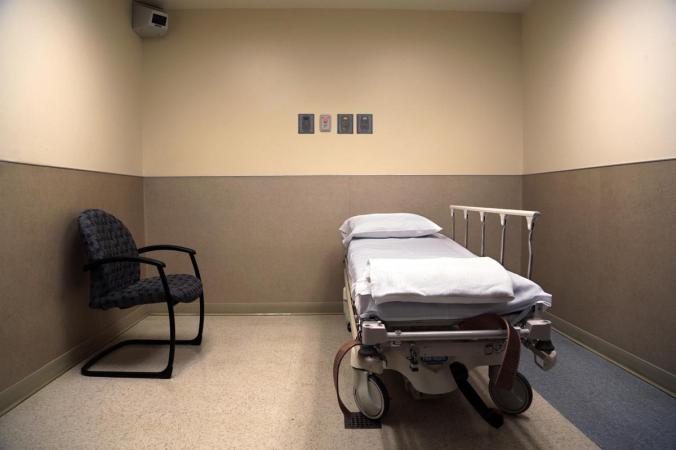
I’d been in the psychiatric emergency rooms at South Street hospital more times than I could count.  But that was an old hospital. The rooms were basically just regular rooms, except the chairs were bolted to the ground.  One of them had an ugly green tiled floor.  One of them had a stretcher in it.  There were chairs just outside for the security guards to sit.

In July 2011, I was in a different hospital emergency room.  This hospital was newer and had an updated PES (Psychiatric Emergency Services) department.  The door to the department was locked at all times.  There were 4 small rooms, similar to the one in the picture above except the chairs were bolted down, and one washroom.  In the washroom the toilet was metal and had no seat.  The sink was metal and attached to the wall.  In the central area between the 4 rooms there was a water fountain and two telephones attached to the wall.  In the central area there was also a stretcher with restraints on it. Separated by another locked door was the nursing station.  Each of the rooms had cameras in them (except the washroom).  The nursing station had a window which looked into the department.  The washroom reminded me of what I imagine a jail looks like.  In fact the whole experience was like being in jail.

My family was out of town visiting my ex-husband’s extended family.  I was in my last weeks of the practical placement that would complete my Masters degree.  Ironically my placement was in a psychiatric hospital.  The depression that had crept back into my life in the Fall of 2009 had worsened.  There were many reasons for this.  I felt desperate and I had tried all the medications that were available.  I began to seriously consider ECT (electroconvulsive therapy aka shock treatments).  This had been suggested to me in the past around 2004, fairly early on in my psychiatric survivorship story.  At that time I felt it was too soon, I hadn’t tried a whole class of medications.

In 2011 I felt like my options were suicide or ECT and I preferred the ECT.

I wasn’t coerced, I wasn’t pressured into it.  I sought out the treatment myself with the support of my outpatient psychiatrist.  Since he has no privileges at the local hospitals my best bet was to go to the ER and ask for a consult.

My plan was to do this as an outpatient.  But things went awry.   When I told the psychiatric resident how much I was struggling and how suicidal I was she wouldn’t let me leave.  The doctor on call told me I had to be admitted to the hospital and that if I didn’t agree to stay she would admit me on a Form, involuntarily.  At this point, locked in PES, I decided my best option was to cooperate.   I hadn’t brought anything with me, and there were no beds open on the Mental Health Unit, so I was forced to spend 24 hours locked in PES.

I can’t remember exactly when I cracked, but I phoned a friend.  I told him where I was and that I wasn’t allowed to leave.  I cried to him on the phone. He was a friend from school and I was so embarrassed to be calling him from the hospital.  I felt like it was my one call to the outside world after being arrested.   I didn’t want to tell my parents, but the next day I finally did, so they could bring me some clothes and items.

Staying overnight in PES was not a pleasant experience.  The lights were always partially dimmed in the center hallway.  There were no windows to the outside world.  This place was literally a prison.

The white sheet on the bed left lint and little pills all over my lululemon yoga jacket.  They are still there to this day!  Also to this day the smell of the soaps and sheets in hospitals triggers me.  Hospitals have this very specific smell, a mix of bleach and antibacterial soap (the cheapest kind).

Meals arrived on a tray, but there was nothing I wanted to eat.  Somehow in the morning, after almost no sleep and nothing to eat, I convinced the nurse to let me go to the cafeteria to buy a snack.  I argued that since I was a voluntary patient I should be allowed and for whatever reason they reluctantly agreed.  I ate a muffin and drank some hot coffee.

The doctors came back the next day, and eventually I was moved up to the 4th floor.  I stayed for one night on the unit.  I told the doctors what I wanted: outpatient ECT.  We called my ex-husband and discussed this with him.   Everything was agreed upon and I was given an appointment to meet the doctor the next week.  I convinced them that I would be safe at home and they discharged me.  They wanted me to stay but I wanted to leave.

The hospital always seems like a good idea from the desperation of home.  But once you are there you realize that it isn’t a very safe place either.  A good part of this is because you are at the mercy of others and have very little control over your own life.  That and the doctors have the power to hold you against your will at any time.

I wonder…why do they make PES look like a prison?

Why are psychiatric patients treated like criminals?

Surely someone could design a safe and secure section of the hospital that actually looked and felt healing.  I’m willing to bet the person that designed PES had previous experience designing prisons.

I’m not a criminal.  I would heal and relax more quickly if I was in a hospital environment that felt welcoming and relaxing.  The very environment of PES conveys a lack of respect and a perspective on the status of the patients/prisoners.  PES brings up a deep sense of shame in me.  I begin to feel crazy because I am trapped and forced to comply with the orders of the staff.  In PES, you feel you have hit rock bottom.

“You are crazy.  You can’t be trusted.  We think you are going to hurt us.  You need to be locked up for our safety and for your own.  Behave or you will be locked up here indefinitely. We couldn’t be bothered to make this place welcoming or comfortable.  Because you are crazy your comfort is not our priority.  Get used to it”

This is what mental health stigma looks like.


It’s Census Time and a box is missing

flexible-gender-identity

I’d like to write about something different today.

Canadians across the country are excited about the 2016 Census.  So many of us wanted to be counted that we collectively crashed the website on the first day.

So why is an entire diverse group of individuals in Canada not able able be counted?

The 2016 Census reads like a 1950 Census.

The options for gender are:

Male

Female

And that’s it. Even though our Prime Minster says he is a feminist, and was often quoted after being elected as saying “Because it’s 2015,” the government completely lost the plot when they created this Census document.  Why?  Because it erases an entire group of folks who already face systemic discrimination and oppression.

Transgender folks, non-binary folks, gender non-conforming folks, intersex folks, two-spirit folks

How can all of these folks correctly indicate their gender when many of them do not identify as male or female, but maybe as both, neither or something that doesn’t fit into any check box?

My Census form would include the following options for gender:

Man

Woman

Transgender Man/Boy

Transgender Woman/Girl

Intersex person

Two-spirit person

Non-Binary Person

Other:__________

Give us options!

Also, for the record sex and gender are not interchangeable terms!

I am a cisgender (born female, identifying as a woman) person who realizes that this is a privilege and I would like to use my voice to be an ally for those who are gender non-conforming.   I certainly do not want to speak over voices of people who are not cisgender.  I do want to tell my government that I do not want their voices ignored. I will write more about why this issue is one I feel passionately about in another blog entry.

This entry is relates directly to the mental health theme of my blog. Supporting, validating, hearing, recognizing and empowering gender non-conforming folks contributes to better mental health outcomes for them.   Also, transphobia is a form of systemic oppression.  Being oppressed isn’t conducive to health.  It’s also important to remember that oppression is layered and multiplicative.  Trans and gender non-conforming folks who are also People of Colour face even more risks and exclusion because they experience with racism and transphobia.  Same goes for trans folks who live with disabilities (abelism) and those who identify as, or are read as women (trans misogyny).

The 2016 Census, in my humble opinion, does not support, validate, recognize or empower gender non-conforming Canadians.  It erases their very existence and clings to the rigid gender binary.  It further marginalizes a marginalized group of  diverse citizens.

Shame on you Census!  It’s 2016 and everyone’s voices deserve to be heard.