


Photo Credit: Galit Yael Rodan
Photo Credit: Galit Yael Rodan

A question that I get asked a LOT when I disclose to people that I’m queer is:
“Were you always attracted to women or do you think is it a result of your trauma?”
I find myself wondering what the answer is. Was I born this way? Or did I become less and less attracted to cisgender men as a result of experiences of sexual assault? Does it matter? And why do other people care about the “cause” of my sexual orientation? Is it really anyone else’s business?
Is my sexual orientation any less valid if I wasn’t born this way?
As a result of recent world events, I find myself feeling less self confident and proud of being queer. I’m afraid that it might make me more of a target, or be perceived as more different. I already feel like I don’t fit in, and being queer sometimes feels like one more way that I’m not “normal.”
I came out gradually to people in my life after 3 decades of living the straight lifestyle. I bought into the “straight agenda” of heteronormativity. Grow up, get married, have children, live happily ever after. But it didn’t turn out that way for me. After dating men for my entire adult life, and after being in a serious relationship/marriage with a man for 13 years, I was single and I had the freedom to explore what not being straight might mean.
I honestly don’t know if I was born this way. Because as a young person, I don’t think I even knew or understood that being gay was an option for me. I did know a few gay guys, but I didn’t know any gay women (or at least I thought I didn’t!). I don’t remember ever having a conscious thought that dating women was something I could explore. I don’t remember NOT being attracted to women, I just remember it not being on my radar. Does this mean I wasn’t born this way? Or does it represent a lack of knowledge that I could explore options other than the heterosexual path.
I have survived a lot of sexual violence perpetrated by men. Because of this I have flashbacks and triggers related to men. There is no doubt that experiencing sexual trauma at a young age impacted my sexuality. But did it “turn me gay?” And again, does it matter?
For me, neither answer rings true. I wasn’t 100% born this way, and it wasn’t entirely trauma either. Most of all, I don’t think it’s important to figure out exactly why, in my 30s, I came out and identified as a queer woman. Maybe for some people there isn’t a clear path. Maybe for some people sexuality is fluid and develops across a life span. I don’t think it makes me any less queer just because I came to the realization in my 30s.
I do know that when I identified as straight, nobody ever questioned me about it. Nobody ever asked me if I was “born that way.” Nobody asked if I’d been abused by women and thus was only attracted by men! Hetero-privilege means that you don’t get questioned about your sexuality.
I do know that my sexual orientation isn’t a choice. It’s not something I can ignore and it’s not something I’m ashamed of. Whatever the reason, I’m not straight. And as much as I’d sometimes like to return to my hetero-privilege, I can’t. Once you come out of the closet, you can’t shove yourself back in there.
I’m here, I’m queer and I’m made this way!
It’s difficult to put into words exactly how triggering recent political events have been for me as a survivor of sexual violence. It’s been difficult to know how to write about my feelings. I’ve been reading the news, my feeds are covered in tweets, blogs, posts and comments related to the election. But honestly, I can’t even look at his face without feeling nauseous and dizzy. I don’t even want to type his name into my blog.
Why am I so triggered by this? Some people around me have said, “it’s not our country, you have to just let it go.” But that is a comment made from a place of privilege. One that I’m not able to occupy because this election impacts me personally. No, it isn’t my country. No, he isn’t my president. But the fact that the democratic country to the south, has elected a man who has openly admitted to sexually assaulting women, is just too much to bear. They say that accusing a man of rape will ruin his reputation. I think this is proof that that is a complete and utter lie. Actually, it will make him leader of one of the most powerful countries in the world.
I’ve watched and heard snippets of news over the last few days. I try to limit any viewing of the man himself, but I’ve gathered some important facts. I’ve seen a new phrase being tossed around: “alternative facts.”
Quite frankly, this is terrifying to me. I am very familiar with “alternative facts.” The word I use for them is gaslighting. I’ve already blogged about my experiences with gaslighting, but to refresh your memory, here is the Wikipedia definition of gaslighting:
“Gaslighting is a form of manipulation through persistent denial, misdirection, contradiction, and lying in an attempt to destabilize and delegitimize a target. Its intent is to sow seeds of doubt in the targets, hoping to make them question their own memory, perception, and sanity.”
I experienced “alternative facts” when my abuser told me that I was responsible for the abuse he was perpetrating. When he told me that if I was a “normal woman” I’d be okay with what he was doing. I experienced “alternative facts” when he told me that the reason I didn’t like being assaulted in my sleep was because I already had PTSD. I then experienced “alternative facts” when he claimed in court that I’d made up all the allegations of abuse, including the ones from my childhood, the ones he’d used to as an excuse for my discomfort. I experienced “alternative facts” when my first abuser told me he would commit suicide if I ended the relationship. I experienced “alternative facts” when my ex-husband spread rumors about my mental health to all the health care professionals and school professionals involved with helping me and my children. I experienced “alternative facts” when the family law system told me that my disclosures of abuse were just “allegations” and were “irrelevant” to the determination of custody of my children. I experience “alternative facts” dealing with Children’s Aid, when workers accuse me of coaching my children, and accuse my children of not being truthful. I experienced “alternative facts” when the police officer who investigated my sexual assault told me he had tried to contact me multiple times and then closed the case (it was proved he never contacted me).
I’ve experienced systemic gaslighting in attempts by multiple people and institutions to silence me, to discredit me, to paint me as insane, to transform my self advocacy into “creating conflict” and to dismiss my feminist principles as extreme.
I am not alone. Women and gender non-conforming folks who come forward with disclosures of their experiences of sexual violence face “alternative facts” at every turn. Male survivors of sexual assault are gaslighted too, within a culture which tells them that men can’t be raped. Survivors are no strangers to gaslighting. We are no strangers to having our ideas dismissed as hysteria. We are no strangers to attempts to control us, our bodies, our minds and our souls.
I believe this is why millions of women marched on Washington and in cities and towns all over the world. Women marched because they are tired of “alternative facts” and they have no interest in being gaslighted by anyone (least of all their government) anymore.
I marched because I didn’t want to surrender to a feeling of hopelessness. I marched to show solidarity with those women who are less privileged then I am. I marched to break the feeling of isolation that I’m experiencing. I marched to know that I am not alone. It was not my first protest, it was not my first march and it won’t be my last.
I know that marginalized groups have experienced oppression and “alternative facts” for centuries. This is not a new phenomenon. I know that and I acknowledge it.
But there is something incredibly unsettling and downright terrifying about someone who does it so publicly, so obviously and so without shame.
There is something deeply sickening about knowing that someone who hates the majority of people I care about (My LGBTQ+ friends, my Women of Colour friends, my friends who came here as refugees, my friends who live with disabilities, my trans friends, my own child, and all of my friends who are survivors of violence) has risen to power in such a way.
When I look at him, I see a reflection of all the perpetrators I have known. I see privilege unchecked and unrecognized. I see destructiveness, ignorance and hate. I see all the things I fight against and oppose in my day to day life.
I see you. I see your alternative facts. But I call them gaslighting lies. And they disgust me.
 Without a doubt, 2016 has been one of the worst years of my life. I survived a massive, never ending family law trial. My psychiatric records were released to my abuser. My privacy was breached again and again. My children’s privacy was destroyed again and again. By the end of the court process I felt like I had only shards of trust left in anything. My belief in justice was shaken to pieces. My trust in the system to protect my family was gone. As I entered into this Christmas season, I felt like believing in justice for my children was akin to believing in Santa Claus. A myth, a tale told to pacify young infants. There is no justice here. Certainly not in 2016, and certainly not for my family.
I’ve been waiting patiently for 2016 to end. On the Winter Solstice I burned a fire with my children, symbolizing the end of the year and welcoming back the light of the new year. An end to the darkness and inviting the brighter days leading to summer. In the fire I burnt away my fears and dark thoughts from 2016, leaving behind those bad memories and making space for positive karma for 2017.
I am a superstitious person. Despite my scientific, thoughtful, highly rational mind…my obsessive compulsive nature leads me to have some strange superstitious, ritualistic thoughts. Some of them are not quite spiritual, but take on an element of obsession. I believe in signs. I want to believe that things happen for a reason, even if we can’t see what that reason is. There is no reason to explain the things I have endured in 2016. None at all, except for oppression, broken systems, delays, inadequacies and incompetent workers. No reasons that can satisfy me, or any reasonable person. But at the end of the year, there are still many things to be grateful for.
I believe that I am a stronger person than anyone should ever have to be. My children are also stronger than children should have to be. I suppose in a way, this is something to be grateful for. Though I almost cry out in pain at times, watching the innocent 2 year old children of my friends’, as they laugh and play with very little cares in the world. I want that for my children again. I miss their baby smiles and laughter. It breaks my heart that they are no longer innocent, though they are still so young. But they are strong and they are kind and they believe in justice, with a fierceness that has replaced their childhood innocence. For that I am proud and grateful.
Things I am Grateful for at the start of 2017:
Thank you all readers, for following my blog, for sharing it, for reading and commenting. I wish you all the best for a peaceful, happy and healthy new year in 2017. Be well. I hope to see you all here in the New Year!

On December 6, 1989, fourteen female engineering students were murdered at school in Montreal. They were murdered because they were women and their murders were extreme acts of gender based violence.
Just last week, on December 1, 2016, a Toronto doctor was murdered by her physician husband. Someone posted something on facebook, commenting that this murderer must be “sick,” or “mentally ill,” and I was angry.
Violence against women, domestic violence, and gender based violence that escalates to femicide is not caused by seriously mentally ill men. That’s a myth and it’s a dangerous one which overlooks the very real structural and societal causes of violence against women. Causes such as patriarchy, rape culture, poverty, racism, sexism, homophobia and other types of oppression and inequality that impact women and gender non-conforming folks. Mentally ill and other folks with disabilities are far more likely to be the victims of violent crime than the perpetrators of it.
Tomorrow night I will be attending a vigil to remember those women and gender non-conforming folks who have lost their lives as result of gender based violence. In particular, the victims of the Montreal massacre.
So many times over the past few years, when I’ve heard news stories about domestic violence escalating to murder, I’ve thought to myself: that could be me. That could be me. What makes me different from those women? What is it that made that particular man, escalate his violence in that particular way, on that day? Statistics show that women are most at risk of being killed around the time when they are planning to leave the perpetrator, or just after leaving. I often wonder what would it take to make my ex snap? What does it take for someone to cross a line between sexual assault, and murder? How thin is that line? How safe am I really?
I could be that woman. I am that woman.
Truth be told, a lot of us could be that woman. And that’s not a reality that many of us want to face. Instead we talk about how the murderer must be seriously mentally ill, a crazy person, someone that must be fundamentally different from us, different from our neighbour, our doctor, our religious leader, our school teachers, our lawyers, our engineers and our bankers. We think of the victims as misfits, as street folks, addicts, people who are “different” or somehow to blame.
But the honest truth is that the victims of domestic violence are all around us. They are you, they are me and they didn’t do anything to provoke the violence.
The perpetrators are all around us too. They are sitting next to you in the cubicle beside you at work, they just served you at the restaurant you ate lunch at.
Gender based violence is everywhere and we all have a responsibility to look for the signs, see the signs, believe survivors, speak out, speak up, ask questions, don’t turn our backs on it and remember those who have lost their lives. Remember them tomorrow on December 6th, say the names of those who have lost their lives, and remember them every day.
I would also like to remember my friends who have not survived their battles with PTSD due to gender based sexual violence. Suicide as a direct result of PTSD that was caused by repeated and horrific sexual assault is akin to slow murder by the perpetrator. My friends were some of the bravest people I have ever known and they were survivors even though they did not survive.
On December 6th, I will remember you.
The 14 women murdered at l’École Polytechnique de Montréal were:
| Geneviève Bergeron Hélène Colgan Nathalie Croteau Barbara Daigneault Anne-Marie Edward Maud Haviernick Barbara Klucznik Widajewicz |
Maryse Laganière Maryse Leclair Anne-Marie Lemay Sonia Pelletier Michèle Richard Annie St-Arneault Annie Turcotte |

I wanted to write a short post about why survivors of sexual assault don’t report and often don’t tell anyone. More specifically, why I didn’t. There are as many reasons not to report and/or tell as there are different survivors.
To distinguish the terms, reporting means telling someone in authority, for example the police, law enforcement or people in a position of power. Telling, could mean talking to a friend, a family member, a doctor, counselor, religious leader etc. Reporting is often done to accomplish some goal related to punishing the perpetrator or holding him accountable. Telling is often done for the benefit of the survivor, finding support, discussing options, being believed and validated.
It can be very dangerous to mix these two concepts. Because the people you might report to (the police for example) are not likely to, nor is it fully their job to, support the survivor. In my opinion, it should be their job to BELIEVE the survivor, but even this cannot be guaranteed.
Some women choose to tell, but not to report. And some survivors neither tell, nor report. It’s important to remember that this choice should always be made by the survivor and she should not be pressured into reporting. Sometimes the question “why didn’t you report it?” can feel extremely judgmental and can shut someone down even further.
Let’s talk about some of the reasons women, and folks in general, tend to stay silent when they experience sexual violence
This list is not exhaustive, but is meant to illustrate some of the complexities related to this topic.
When I was abused as a child and teenager, I neither told nor reported. I didn’t tell anyone because of a combination of the reasons above. I didn’t have the words, I was confused about my relationship with the abuser, I didn’t know reporting was an option and most of all I feared judgment and had deeply internalized shame and guilt about what had happened. I blamed myself.
As an adult, I didn’t report because I was confused about my relationship, because I minimized the abuse as “not that bad,” because I disassociated and coped with self harm, because I had a mental health diagnosis I feared that I would not be believed, because I had children with the abuser and other reasons.
When I was assaulted single times by perpetrators I was not in close relationships with, I didn’t tell because I was ashamed. Because I felt like it was my fault because I agreed to go with them. I didn’t want to face the stigma with people I knew and because I worried people would not believe me or would judge me.
In the end, in all the situations I have faced, I have eventually either told, and in some cases, told and reported. Reporting sometimes felt necessary for various reasons, including protecting other potential victims and attempting to receive external validation within systems, that the abuse actually did occur.
This blog is a way of telling my story and encouraging, or showing, others that telling is an option. There may be a stigma attached to surviving sexual violence, but there are also communities of survivors and allies out there who will believe and who will validate. There are safe people. There are people who believe survivors.
Believing a survivor may seem like something trivial, but it makes all the difference. Believe me!

<trigger warning for those with eating disorders>
This picture was taken 5 years ago. I haven’t owned a scale since. To me, a scale is an actual weapon that only causes damage and pain. I can’t be around them.
Ironically, when I first became anorexic, I never weighed myself. I didn’t own a scale and anorexia wasn’t about achieving a certain weight or ideal of beauty. It wasn’t about how I looked, it wasn’t about my body. Anorexia was a complex and deadly form of disassociation, which over time turned into equally deadly obsessive compulsive disorder. So my eating disorder was not about losing weight, but losing weight was a side effect of my eating disorder. This is a really important thing for people to understand.
Over time though, sexual assault and anorexia F#@ed up my relationship with my body. And as a woman, patriarchy and ideal standards of beauty and thinness began to impact me.
As I began to “recover” the first time (I was forced to gain weight), I was terribly uncomfortable with my body. I equated safety with taking up less space, being smaller and following my strict food rules. Anorexia means that I feel extreme levels of anxiety when I break my food rules. Today, in imperfect recovery, I have fewer rules and more good days, but ultimately, the terror remains.
The terror of becoming “fat” and being out of control and unsafe.
I’m going to admit something terribly un-feminist. Even though I read blog posts about body positivity and I fundamentally hate fat shaming, I am puzzled by larger, rounder bodied and fat people. I’m not judging them. I don’t think they are weak or lazy, or those negative stereotypes that the media forces down our throats. I’m just puzzled and curious. I really honestly want to know “how is that fat person comfortable in their skin?” I want to know because if I could figure that out, maybe I could accept myself.
I’m tortured by the feeling of clothing being tight on my skin. Some days I can’t wear certain clothes just because of the way they touch me and make me feel “fat.” So how do many people I know, who are rounder and love themselves, achieve this self love? I’m struggling just to tolerate my body.
I’ve been in told in therapy that “fat” isn’t a feeling.
That “fat” is a code my mind has made up, as a cover story for real underlying feelings. Objectively, my body is not fat, large, or round. It’s also not unusual, it’s not disgustingly ugly, it’s not misshapen or weird. It’s just a body. Most people would say I have thin privilege and that I’m ridiculous for thinking I’m fat. And even if I were fat, that would be okay. I believe that intellectually, about other people. I’m not judging others, I am holding myself to a standard I would NEVER apply to a friend or even a stranger. I love your body, I will fight for your right to body positivity no matter what your shape is. But I hate my own body.
“Fat” is not a feeling. I think the feelings I have are shame, sadness, anger, grief, guilt, fear and many others. But when I feel “fat” it’s not about my weight, any more than my anorexia was originally about my weight. I was never fat. “Fat” is about the shame I feel as a survivor of sexual abuse. “Fat” is about feeling my own body betrayed me. “Fat” is about me blaming my body for the abuse. “Fat” is me thinking that if I had no body I’d be safe. “Fat” is my fear of being assaulted again.
I never weighed myself. When I was in treatment, they weighed me and I stood backwards on the scale. After leaving treatment I continued this practice at doctors appointments. A few times over the years, I knew my weight. But whatever the number, I was unhappy. The number was never okay. At various times I had F#%ed up goal numbers, but they were not based on anything other than pure magical thinking. And they never correlated with my actual healthy weight range.
In 2011, I was struggling with abuse in my marriage. I was in school and I was struggling with that too. As I would take the bus home from school, I sometimes snuck into a store and used the scale there to weigh myself. I’m not sure why I started doing it. But my OCD anorexia mind told me it would keep me safe and comfort me. I did this for probably a month or more. I was consumed with guilt and shame. I never told a soul. Then one day I decided it would make more sense to buy the scale and take it home, to avoid the shame of sneaking into the shop. I hid it and I never told anyone I had the contraband item.
Big mistake.
It was the first time I’d owned a scale since I developed anorexia. Within a few months of owning it I was suicidal. The thing about OCD, is if you give in to it even one little bit, it will take you for a ride, a hellish ride. First I started weighing myself once a day, first thing in the morning. Then, gradually I started weighing myself at night too. And before I knew it I was weighing myself 8-10 times a day. It was out of control. And it got out of control in a matter of a few weeks. I was controlled by that scale. This was at the same time when I was receiving ECT treatments, I wasn’t eating very much because I felt quite ill. My weight dropped and because I had a scale, I obsessed about it. Then when the ECT was finished and I began eating more normally again, I began to PANIC about the weight gain.
Normal, intellectual, reasonable thought of someone without an eating disorder: “I was sick, I lost weight and it was unhealthy, it’s normal and healthy that I’m gaining it back”
Anorexia: “You are weak, you are “fat”, you are out of control, you are ugly, you need to stay at this number on the scale or something bad will happen”
In the end, the suicidal thoughts became so overwhelming that I decided to get out.
I took a hammer, I went into the garage when nobody was home, and I smashed the hell out of that scale. I smashed it until it was in pieces. It was surprisingly sturdy and difficult to break. I was sore and sweating from exertion by the time it was destroyed. And I felt empowered.
Five years later and I’ve never owned a scale again. Sometimes in weaker moments I will weigh myself on a scale at a friend’s house, or in a store. But I know that this practice is self destructive and only gives Ana ammunition to destroy me and shame me.
Scales are for fish.
I will continue to admire the folks around me who embrace their bodies of all shapes and sizes. I will continue to be mystified and curious about the concept of body positivity. I will continue to strive towards true recovery from anorexia.
True recovery goes so much further beyond weight restoration. True recovery means that the scale is powerless over me. True recovery means I can be comfortable in my clothes. True recovery means that food is nourishment and enjoyment and doesn’t have moral value. That my weight does not mean anything about my self worth. True recovery is freedom from shame and self hatred.
I may “look good” but don’t be fooled, Ana still runs my life.
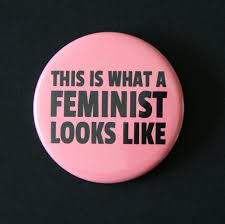
I’m angry, frustrated and upset about some comments that were made to me by a male friend this week. We’d been disagreeing and at odds recently, and he told me in a string of texts a few things that really stuck with me and were triggering given my current situation.
He accused me of treating him badly because he was a man.
First of all, that’s like accusing me of reverse sexism, which isn’t a thing. It’s just not. I was angry at the unreasonableness of the comment.
Then he went on to say that he feels like my court case and my job have changed me (implication was that it wasn’t a change for the better).
I didn’t read everything else in the texts. I deleted them because I wanted to scream and was triggered.
#obvious
Of COURSE my highly prolonged, extremely traumatic, family law case has changed me. It would be miraculous to the point of ridiculous impossibility for an experience as stressful and difficult as facing my abuser in court, fighting for custody of my kids and being re-traumatized by the legal system over and over, not to impact me.
When I’m struggling, when I’m having a difficult week, it’s even more important for people in my life to be more gentle with me, more understanding and more patient. Because when I’m dealing with my court case (and thus my ex), I’m triggered. I feel vulnerable. I’m not always as kind as usual. I’m impatient and irritable, and it’s rarely to do with the people who I care about. Memories from the past and feeling tones from the past are driving me. I’m more suspicious, less trusting and more wary. I need space, time and comfort in order to ground myself. The court case changes me, and I need help from my friends (not their judgment) to get back onto the path to kindness and safety.
My job has changed me too. It has changed me immensely and completely and wonderfully. Working in a feminist organization, helping women and learning from women has helped me grow and gain confidence. Over the years I’ve been working there, I’ve slowly and painstakingly gained back some of the self confidence I had lost during years of abuse, self hatred and isolation. My job has changed me, as I’ve learned a greater appreciation for my own privilege, and a greater respect and depth of understanding and empathy towards the many faceted situations of others.
Feminism is important to me, because without feminism I might not be alive today.
Does that mean that I hate men? Of course not! I hate the patriarchy and white supremacy and heteronormativity and ableism and cis-sexism and sexism and inequality.
And I hate folks who I have to justify this to.
I don’t exist merely as a sexual object for others. I don’t exist merely to uphold systems of privilege without question. I don’t exist merely to please others. Feminism helps me believe that I am worthy of so much more than that. Feminism empowers me and gives me strength and a path towards a meaningful purpose to my life.
A life that, a few short years ago, I considered meaningless and worth ending.
I wouldn’t change this about myself. I wouldn’t want to go back in time and not have this job. I love what I’ve gained from it and I love myself more than I have in years because of the sense of community I’ve gained from feminist allies. I think that not working, and not being able to work outside the home, was an aspect of the abusive environment within my marriage. For that reason, I celebrate my new abilities, my ability to work and my ability to have a greater purpose. I don’t take my ability to work for granted, because I worked hard in recovery to achieve this.
I have changed. I will keep changing.
And I won’t apologize for it to anyone.
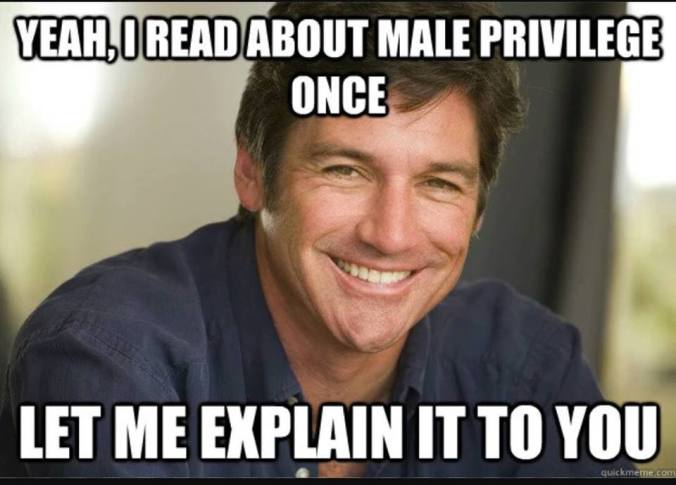
I’m single right now. Single enough that I sometimes frequent online dating apps, despite the peril and the ridiculousness involved.
I’m also queer.
This is the term I use to self identify my sexual orientation. Key word being “self” identify.
Recently, I’ve been hoping to meet another woman or anyone who doesn’t identify as a cisgender man. I haven’t met anyone. There are fewer people online who are also not straight, and so today I switched my profile to show me everyone (men and women).
I messaged briefly with this guy, he seemed interesting and apparently we were a 92% match. That was BEFORE the train wreck of mansplaining that derailed the conversation.
Dude: What’s the difference between bisexual and queer?
Me: It’s just another word for not straight. I’d be open to dating any gender, including trans folks, so bisexual doesn’t seem to quite fit and I just like that way of self identifying. It seems to fit.
Dude: Isn’t that pansexual?
Me: (silently thinking is this actually happening?) Yes, that’s true. pansexual, but I identify more with queer. I just looked it up on Wikipedia and it gives a decent explanation of it:
” Because of the context in which it was reclaimed, queer has sociopolitical connotations and is often preferred by those who are activists—namely, by those who strongly reject traditional gender identities; reject distinct sexual identities such as gay, lesbian, bisexual, or straight; or see themselves as oppressed by the homonormativity of the politics of the broader “gay” or “LGBT” community. In this usage, queer retains its historical connotation of “outside the bounds of normal society” and can be construed as “breaking the rules for sex and gender”. It can be preferred because of its ambiguity, which allows queer-identifying people to avoid the sometimes rigid boundaries that are associated with labels such as “gay”, “lesbian”, or even “transgender”
….so… I like it for those reasons.
Dude: I get that but, assuming the purpose is to indicate who you’re (sexually) attracted to, selecting “queer” seems unnecessarily vague. Especially given that queer could meant that you’re gay, bisexual, pansexual or everything in between.
Me: That’s what it means..and that’s okay.
Dude: silence
What the actual f#@k just happened? This complete stranger,who I’d known for about 5 minutes online, decided that my sexual orientation was “unnecessarily vague” and that he knew a better word (pansexual) for me to use to define myself more clearly.
This is a terrible example of mansplaining and oppression rolled into one.
In my experience, folks choose words to define themselves based on how they feel and how they want to express themselves. The words marginalized groups use to define themselves are important, and often have historical or political significance. Nobody has the right to tell someone else that their identity is incorrect or inconvenient.
This is the type of binary thinking which problematically excludes so many people. People don’t just exist in boxes: gay or straight, man or woman, black or white, disabled or able bodied and so on. There are beautiful spectrums of folks in this world, people who identify all along those spectrums and don’t identify with binary concepts. Self identification doesn’t exist for the convenience of others.
When it comes from outside it’s a label and labels are for jars, not people. When it comes from inside, self identification can be liberating and empowering.
Please, ask questions from a place of curiosity if you do not understand a word or concept. Better yet, educate yourself first. That’s what google is there for! But don’t assume that you know a better, more accurate or clearer word for someone to use to define their own lived experience. It’s not cool, it’s oppressive and it is certainly not attractive.

(photo credit Jessica Bennett)
I’m not an American citizen. I can’t vote in the upcoming election, but today I’ve been triggered and upset due to the state of American politics.
American friends, I urge you to vote and to consider your vote carefully.
I, and other survivors of sexual violence, have struggled today. Women (and others impacted by gender based violence) have felt a little more uncomfortable and that their world is a little less safe. And decent men and masculine folks, you are harmed by these comments as well.
I’m talking about rape culture.
It’s 2016, and one of the people running to be the leader of the most powerful country in the world, is promoting racism, xenophobia, patriarchy, and rape culture. A disturbing proportion of what this man says is actually considered hate speech by many people around the world.
A politician should be a leader and set the tone for the people they lead.
Glorifying sexual assault is disgusting and it gives people the clear message that consent is optional. If you are rich and powerful you have the right to take sex. If someone says no, then just try harder. Or better yet, don’t ask at all…just grab their ****. It sickens me.
I’ve had a difficult day today. As a woman, I do not exist to be a sexual object for others. As a woman, I do not want to be treated as if my word is less valid because of my gender. If I say no, I mean no. Consent culture is important to me. As a woman first and as a survivor of sexual violence.
I don’t want to live in a world where the leader of the country to the south of us grabs women without their consent and then brags about it after. I don’t want my children (or any children!) seeing this as normal behaviour. It’s not just locker room banter, it’s assault, harassment, hate speech and misogyny. A world where this is normal reduces women to sexual objects and men to sex crazed, power hungry rapists. It benefits no one.
I don’t want to live in a world where racism, Islamophobia and xenophobia are being spouted by world leaders. It scares me, and I benefit from white privilege. It scares me that anyone would even consider voting for this man. It scares me to think of the divisive direction this world will take with him at the helm.
It benefits no one.
We are better than this.
 hopeforsanity