Smash the patriarchy!

tumblr_mvn1d9saAx1qh3o10o1_500.gif

Sometimes the systems that exist in society just seem nonsensical to me.  I am bewildered on a regular basis at how poorly systems work to protect the rights of marginalized folks, children, women, trans folks,  People of Colour, Indigenous folks…I start to wonder who or what the systems do support and uphold.

I believe the answer is that they support privilege and privileged people.

When a man accused of sexual assault has his views and ideas on the situation treated as equally, if not MORE valid than those of the survivors, the system is broken.

I’m feeling angry right now and this post may be somewhat cryptic because I can’t write about everything I’m coping with until a later date.

I just wanted to say that not all opinions are equally valid.

Some opinions are based on facts, lived experience, research, expertise or some combination of these things.

Other opinions are just plain lies, untrue and not supported by anything.

Yes, you have the right to think anything you want, but you don’t necessarily have the right to state all those thoughts out loud in every circumstance.

Some opinions are actually oppression and bigotry, cleverly DISGUISED as valid opinions.

In some cases there is an absolute truth, something that exists outside of opinions and is just real.  In some cases, people only have their lived experience and they must be believed that their lived experience is valid.

But what happens when an abuser states that his lived experience, opinion and view is that he didn’t abuse anyone!?  That the survivor is seriously mentally ill and making up accusations to damage his credibility?

Who do we believe?  Where does the absolute truth lie?

I’m willing to concede that for outsiders it can be difficult to tell what is truth and what is fiction.  But when an abuser says that he didn’t abuse anyone, shouldn’t we take this with a grain of salt?

That’s not what I have observed.  In my lived experience, abusers are believed outright.  They are rarely challenged.  Their views on the situation during the time of the abuse are considered true and valid.

Survivors are doubted, questioned, berated, accused and treated like they have every motivation to lie about the abuse.  The system gaslights them and confused them, mirroring the way they have been treated by the abuser they are escaping from.

I don’t even see equity or equal treatment.   It would be easier for me to accept if the systems (police, hospital, court, child protection) viewed both the abuser and the survivor as potentially biased.    Trust no one.  Believe nothing.

But that isn’t what I see.  I see the systems used against the survivor to benefit the opinions, rights and preferences of the abuser.  I see the system used to dismantle the credibility of the survivors who are brave enough to come forward.

Why do we accept to live in a world where abusers are innocent until proven guilty, but survivors are treated as guilty of lying from the start?

I’m angry, I’m frustrated, I want to change the system.  I want to smash all the institutions I see around me and rebuild them from the ground up, grassroots style, with the input of marginalized communities highlighted and validated.

Smash  the white supremacist,  capitalist, cis-heteropatriarchy!

I’d like to see a revolution. I’d like to wake up tomorrow and build a whole new world.

The worst part of it is, that the only thing worse than a woman coming forward to speak out about sexual violence, seems to be a woman survivor advocating and agitating for changes to the systems that have continually failed her.

Silence is the enemy of change.   I’m willing to bet that the majority of “average people” out there still believe we have a justice system, police and child protection systems that are impartial and unbiased.  People speaking out and telling their stories is the only way to shatter this misconception.

I refuse to stay silent.  The systems have failed me and my family, over and over again.
Innocent Until Proven Guilty.

Themis 2652

I’m feeling frustrated today about how survivors of sexual violence and abuse survivors in general have to constantly justify their existence to everyone on this planet, especially to people in authority.

We have a legal system which states that perpetrators are innocent until proven guilty.

But what about survivors?  Where are our rights to be considered innocent until proven guilty?

Why is it when a survivor comes forward and says “He raped me,” she is often met with doubt, blame, judgment, disbelief and then faced with barrier after barrier to being believed and getting support?

Doesn’t this strike you as wrong?

I’m here to suggest a radical position.  Our legal system can still consider perpetrators innocent until proven guilty, while at the same time survivors can be believed, validated, treated with respect and not accused of fabricating.

It’s very unlikely that a survivor would make up claims of abuse, especially considering the lack of support and validation in our society.

A few years ago my psychiatrist told me something I’ve been thinking about this week.  During the session I had been speaking a lot about my negative self esteem, my guilt, my shame, my body hatred, my struggles with anorexia and so on.  He asked me a question “If you were guilty of committing sexual abuse how long would you go to jail for?”   I answered him “Probably I wouldn’t go to jail, and if I did it would be for less than a year.”

He looked at me and said “You’ve been punishing yourself for more than 15 years for crimes you didn’t even commit.  Even if you were as guilty as you say you feel, you would have been out of jail long ago.  Stop punishing yourself.  Even criminals wouldn’t receive a 15 year sentence!”

It was a good point and I thought about it some.  I haven’t thought about it again until this week.

Honestly, my doctor was missing something in his analysis.  Maybe survivors, myself included, would have an easier time recovering and forgiving themselves, if they did not have to spend years justifying their experience and trying to convince others that the abuse really happened.

Maybe if women weren’t labelled as crazy or mentally ill.  Maybe if police treated women who report with respect and investigated their concerns quickly, thoroughly and with dignity for the survivor.  Maybe if the legal system wasn’t founded on white patriarchy.  Maybe if sexual assault conviction rates were higher.  Maybe if sentences for assault charges took into account the amount of harm that was done to the survivor.  Maybe if our society didn’t worry about “how it will impact his career” and instead considered “how it will impact the rest of her life.”

Because make no mistake.  Sexual assault impacts people’s lives.  It is not a crime that lasts for “just a few minutes”  it lives on in people for years, maybe forever.  The impact IS that voice inside the survivor which whispers “it’s your fault, you are dirty, you should be ashamed, nobody will believe you.”

Maybe we punish ourselves because there is no other option in a society that doesn’t validate what actually happened.  Maybe we doubt ourselves because society blames the victim.

I think that a large portion of the guilt and shame carried around by people like me was caused, not just by the perpetrator, but by a set of systems which are designed to blame us.

At this point in my life, I feel I have suffered an equal amount of trauma at the hands of systems that were supposedly designed to help me, as I ever did at the hands of my abusers.   This is a part of rape culture that we need to be talking about.

It was “just” sexual abuse…

20160823_195012[1]

I’ve been thinking about the barriers I faced in coming forward about being sexually abused, as a child and as an adult.  For people who have not experience sexual abuse, the most immediate response to someone disclosing is often: “why didn’t you tell someone?”  or “why didn’t you tell someone sooner?” or my personal favourite “why didn’t you fight back/scream/run?”

The reality is I didn’t even realize I was being abused until long after the abusers had intertwined their lives with mine.

The reality is that abuse in relationships does always not look the way you might expect it to.

The reality is that I spent a long time, as an adult, in counseling, volunteering at a women’s centre etc…stating to other reasonable adults “it was ‘just’ sexual abuse.”  I made all sorts of excuses for why it didn’t count, why it wasn’t important, why it wasn’t real abuse, why I didn’t deserve help, why other people had it worse off, why I was making a big deal over nothing, why I didn’t want to tell anyone and ruin his life etc.

Because they never hit me, it wasn’t abuse.  Because they didn’t threaten to kill me, it wasn’t abuse.  Because I said yes some of the time, it wasn’t abuse.

I was (and am) pretty mean to myself and a lot of my perceptions were just plain wrong.

I think it takes a lot of strength and courage to really come face to face with the fact that your romantic relationship is unhealthy, abusive and actively making you sick.  It’s not something that comes easily, turning your back on the father of your children.

I told myself the abuse didn’t count.  I knew I felt uncomfortable, I knew it very early on in both relationships.  I saw the red flags, but somehow I interpreted them differently.  I wanted to believe that things weren’t really that bad.  I wanted to believe I could help the abusers change.  That they were depressed, that they needed me.  That their needs were more important than my own.  I wanted to believe that love would be enough.

I did start to talk about the abuse.  I did tell people.  In some ways, I wasn’t really challenged by those people.  I think many of them instinctively knew I wasn’t ready to leave.  They knew I needed time to come to the realization that it was abuse and that I needed to get out.  For the most part they didn’t push me.  I was still ambivalent about the abuser and I still wanted things to “work out.”

One day someone I volunteered with called me out.  I mentioned something about it being “just” sexual abuse.  She challenged me.  She sat there and said “what you are saying doesn’t make sense.  It’s not ‘just’ sexual abuse.”  I think it was the first time someone had openly called me out on my own denial.  This was in the month or 2 leading up to my decision to leave.

At the time I left him I still believed it was “just” sexual abuse.  I told almost nobody why I was leaving.  I thought that moving would solve the problem, because since it was “just” sexual abuse I would be safe.

I was wrong.  Sexual assault is not about sex.   It’s about power and control.  It’s about a level of narcissism that exists in this world that allows one person to disregard the consent of another person.  Within any type of relationship it’s about manipulation, it’s about gaslighting, it’s about making the victim feel crazy, worthless, broken, damaged, and most of all dependent on the abuser.   The sex is a tool of control.  It rarely happens in isolation.  Emotional abuse, psychological abuse, physical abuse, threats, coercion…it’s all part of the same package.  Even if the package is wrapped in a disguise that makes you believe that sex is the only issue and that otherwise the person is “basically a good guy.”

At the end of the day, if someone doesn’t respect your consent sexually, they don’t respect you.  They aren’t “basically a good person.”  They are a person who does not value your basic right to say yes or no in a given situation.  They are a person who puts their own needs before yours, and possibly even denies your needs are real, valid or even exist.

It’s a long road back from that place.  The place where you question whether your needs are reasonable, valid or even exist.  It’s a long way back from the place where you believe that your consent is not relevant, where your needs are not relevant.  Where you are blamed for not wanting to consent, even in a situation where there is no trust, no safety and almost no relationship left.

I’m writing this to tell you:

  1. if you have been abused, it’s never “just” anything.  Your experience is valid and real.  If you are uncomfortable, afraid, hurt, feeling crazy then trust yourself.  It’s abuse.
  2.  if you have been abused and even if you have not, please remember that there is no specific way an abuse survivor looks, copes or experiences violence.  There may be no physical marks, there may be denial, there may be almost no signs at all.  Trust yourself, if you have the feeling something isn’t right in your relationship or in the relationship of someone you care about, reach out.  Get help, talk it over, ask gentle questions, be there to support yourself or the person you care about.
  3. believe the survivor.  If you are the survivor, believe yourself
  4. if you still blame yourself, or the person you care about is blaming themselves, tell them it is not their fault.  Repeat step 3.  Repeat step 3 again.  Repeat it again and again and again.

I believe you.  It’s not your fault.  It counts.  It’s is real.  You deserve support.


No uniformed officers please.

what-is-gay-pride-300x187

It’s Pride Week and I want to write about why I don’t think uniformed police officers should be in the Parade.   The police should be welcome, but they should attend the parade as civilians, dressed in ordinary clothing.

I’m not anti-police, so much as pro-safe spaces.  There are a number of groups of people and communities that may feel threatened by uniformed police officers (no matter how nice those officers might be!).  I know some LGBTQ* folks who have declined to attend Pride this year because they don’t feel it is a safe space for them.

Some communities that have experienced marginalization, violence and oppression perpetrated by police include (but are not limited to): Trans* folks, People of Colour, Indigenous communities, sex workers, immigrant and refugee folks, lesbians, gay people, queer folks, survivors of sexual violence, people with disability and people with mental health and addiction diagnoses.  Especially people who embody any of these intersecting identities in a visible or public way.   The police have a lot of power and privilege and this has often been used against, and not for/with, marginalized groups.

My own experience, and the focus of this blog, is related to my experience of living with a mental illness that does not always allow me to “pass” as normal or neurotypical.

I will describe one of my interactions with the police, as an illustration of my own preference not to have uniformed officers at Pride.

When I used to self harm and attempt suicide on a regular basis, I used to get to the hospital by car, bus, taxi or on foot.  Near the end of the years of regular ER visits, a doctor told me she didn’t think it was safe for me to drive myself to the hospital after cutting myself deeply.  I thought about it for a while and figured she was right.  The next time I hurt myself I was suicidal, not just cutting as coping.  I was home alone and I decided to call 911 rather than a taxi.   During the 911 call I told the truth to the operator.  I told them that I had cut myself on purpose and that I wasn’t feeling safe.  I sat on the staircase in the front entryway and waiting for the ambulance to arrive.

Suddenly there was a knock at the door and I could see tall people in dark uniforms outside.  I opened the door and two huge uniformed police officers stood there.  I was confused, already upset and I started panicking.  I asked where the ambulance was, I told them I changed my mind, I didn’t need police.  They came into the house and told me to sit on the steps.  They started asking me what seemed like hundreds of questions and told me I couldn’t move.  They asked me if there were weapons in the house, if I was alone in the house, if there was medication in the house, where the tools I had cut myself were, whether I had a doctor, what medications I took etc.

I felt more and more panicked.  I knew I couldn’t visibly keep panicking because I knew they wouldn’t leave until they felt I wasn’t a danger to anyone. The feeling of being out of control and knowing you can’t properly show your feelings is an unsafe and triggering one for a survivor of violence.

I felt like I had no choice but to do exactly what they said.  They told me the paramedics couldn’t come into the house until they were sure it was safe.  I tried to explain that I had harmed myself and had no intention of harming anyone else.  I was crying.  I offered to get the things they wanted (the blade, the medication) but they wouldn’t allow me to move.  I had to explain where the items were and one uniformed officer walked around my house collecting them, while the other stood and watched me.  They both had guns.  Generally, guns do not make a suicidal panicky person feel calmer.  Just FYI.

Then they were both back in the room.  I was sitting on the couch, now in the living room.  They asked me questions about my treatment and my medication. I didn’t want to answer them.  They were taking notes in a small black book.  I was keenly aware that this information could be used against me in the future.  I was scared I might have a police record, when what I really needed was medical attention.  I was confused and I didn’t understand how harming myself was a police matter.

Finally, at some point they determined the situation was safe.  Two paramedics, one man and one woman came into the house.  At some point the police left and went outside, making further notes in their cars.  I was embarrassed and ashamed because I knew my neighbours would see the commotion.  I felt my face burning with shame as I walked to the ambulance with the paramedics.  I begged them not to turn on the sirens because I was so embarrassed already.  I’d spent every minute since I opened the door to the house wishing that I had never called 911.     The female paramedic drove the ambulance and the male sat inside with me.  He was calm and kind and he didn’t have a gun.  I felt safer once the police were gone.

In the past, I’d had security guards sit by my bed, or just outside the door in the ER.  Ensuring that I didn’t run away before being assessed by the doctor.  That was associated in my mind with feeling unsafe and not being trusted.  Being a prisoner within a hospital rather than a patient.  That’s how I felt in my own home that day.

The ambulance took me to the hospital and I received treatment for my cut.  I wasn’t admitted to the hospital, because nobody really took my self harm seriously by that point.  They had labelled me borderline and didn’t believe I would ever actually kill myself.  I was often treated like a misbehaving child.

This memory is one reason why I don’t feel safe around uniformed police officers.  The other reasons, related to reporting violence, I will talk about more in future posts.

If I have a serious mental health crisis again in the future, I hope nobody will call the police.  I can’t think how that would calm me down or de-escalate the situation.  I would feel more at risk, rather than safer.

So, for this reason and for many others, I believe there are other ways to create safer and more inclusive spaces.  And LGBTQ* police officers, please feel welcomed by me at Pride…just leave the uniforms and guns behind.


No words.

13435484_10157005988155494_6265503939891784398_n

I don’t have words to express my thoughts and feelings today.  50 queer folks shot, and as many as 50 more injured, in a mass shooting in Orlando.

It saddens me, as a queer person and as a human being, to think that I live in a world that is  filled with deadly homophobia and transphobia.  And let’s not forget racism and Islamophobia.  Please remember that the majority of folks killed and injured were queer People of Colour and the shooter is likely to be vilified as a Muslim terrorist, rather than a homophobic misogynist.

It’s terrifying to think about the magnitude of this crime, the number of lives impacted.  Marginalized folks, trying to relax, share love and have a great night in what they thought was a “safe space.”

I don’t really know what to say.  I’ve been disturbed and upset by the oppressive, ignorant and transphobic laws that are being passed and debated in some USA states.   The fact that governments think these types of bathroom laws are protecting people would be laughable, if it weren’t so damn offensive.  When governments stir up hate…it’s a dangerous situation.   Transgender folks just want to pee in peace.   Just like those queer folks in Orlando just wanted to dance with friends and loved ones and enjoy a Saturday night out.

At the end of the day, transphobia and homophobia don’t make a lot of sense.  Neither does racism.  I won’t start with that “all people are the same” nonsense.  No, people aren’t all the same.  People have different lived experiences. People have different paths and different options.  But that’s okay, it’s great, it’s a wonderful thing.  Diversity  should be celebrated.  It shouldn’t be erased with a colour blind attitude, and it shouldn’t be erased through violence.  Diversity should not be feared.

You can’t make a rainbow with only one colour.   You can’t bake a cake with only one ingredient.  You can’t solve every problem using one approach.

Diversity is what gives humanity it’s strength and resilience. All people’s voices must be heard, and that often means that dominant groups need to speak more quietly and listen carefully.

Oh, and ban guns.


Robbery and Sexual Assault

10115235.jpg

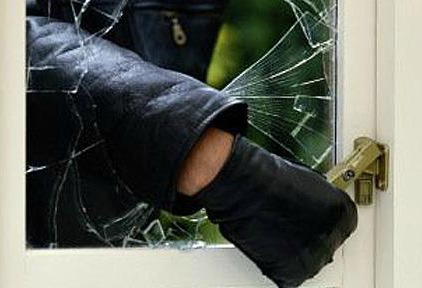
If someone robs your house and steals everything you own, you feel unsafe, violated and on high alert for future thefts.

If someone breaks into your house everyday and steals just one CD, you feel unsafe, violated and on high alert for future thefts.

In either case, someone is inside your house without your consent and taking something belonging to you without asking.

Sexual violence is like having your house broken into.

When I was raped, I felt unsafe, violated and on high alert for future violence.

When I was touched sexually without my consent I felt unsafe, violated and on high alert for future violence.

When I was looked at sexually without my consent I felt unsafe, violated and on high alert for future violence.

Whether the perpetrator was forcing sex without my consent or just touching me when I was asleep, the impact was the same.  Something was being taken from me without my consent.  I wasn’t freely participating so it was assault, not sex.

Sexual violence impacts survivors, it doesn’t have to be rape to impact you.

I want to break down the myth that certain types of sexual violence are “more serious” than others.  All sexual violence is happening without consent, and when something happens to your body without consent it can have a major impact.

I’ve experienced the spectrum of violence, from voyeurism, to touching without consent, to forced intercourse.  It’s just not true that the rape was always the worst.  What was the worst was not knowing if my house was going to be broken into that night or not.  Not how much was stolen during the break in.

During my marriage the sexual assault took place when I was drugged and asleep.  There was no ability to provide consent.  In fact, I often said no while I was awake.  Sometimes I said no again when I woke up, sometimes I didn’t.

If you don’t say no, it does not mean you consented.  There are many reasons why someone might not say no.  They might be drugged or intoxicated, they might be too afraid, they might disassociate or freeze as a response to the trauma or they might have learned through repeated experience that saying no is not effective, or provokes further violence.

I was impacted by all the violence I experienced.   And the impact built and multiplied together.  It wasn’t any one incident that caused me to have PTSD, or made me feel unsafe, it was a collection of experiences that took place over a number of years.   Except for in one case, I knew all the perpetrators.   Except for one of those, I had contact with all of them after the abuse.  They were friends, dates, boyfriends and my husband.  The fact that I had contact with them does not mean I consented.  In some cases it takes time to end a relationship with an abuser.  There can be further risks for women in the period when they are leaving, the violence can escalate and the abuser can become more unpredictable.  The abuser senses they are losing control and they tighten and increase their efforts to control the survivor.

I was abused multiple times and I never screamed.  I never really physically fought back except in one instance.   This does not mean I consented.  There were reasons why I didn’t fight back.  I was ashamed, I was scared, I froze…my kids were in the room next door, I was afraid of further violence.

All the assaults that happened to me except one, happened in places I knew, my home, their home, school etc.   If you go with someone to a location it does not mean you are consenting to sex.  Most violence happens in places and with people known to the survivor, it is a  myth that the most dangerous place is walking down a dark street at night.

No matter how your house was broken into and what was stolen, even if nothing was stolen, your experience is valid.  No matter where on the spectrum your assault falls, your experience is valid.  Your coping reactions and what you did to survive are all valid too.

I believe you.  I hope you believe yourself.   I hope that the thefts stop or have stopped.  You deserve to be safe.  Without consent, it is assault.


It’s Census Time and a box is missing

flexible-gender-identity

I’d like to write about something different today.

Canadians across the country are excited about the 2016 Census.  So many of us wanted to be counted that we collectively crashed the website on the first day.

So why is an entire diverse group of individuals in Canada not able able be counted?

The 2016 Census reads like a 1950 Census.

The options for gender are:

Male

Female

And that’s it. Even though our Prime Minster says he is a feminist, and was often quoted after being elected as saying “Because it’s 2015,” the government completely lost the plot when they created this Census document.  Why?  Because it erases an entire group of folks who already face systemic discrimination and oppression.

Transgender folks, non-binary folks, gender non-conforming folks, intersex folks, two-spirit folks

How can all of these folks correctly indicate their gender when many of them do not identify as male or female, but maybe as both, neither or something that doesn’t fit into any check box?

My Census form would include the following options for gender:

Man

Woman

Transgender Man/Boy

Transgender Woman/Girl

Intersex person

Two-spirit person

Non-Binary Person

Other:__________

Give us options!

Also, for the record sex and gender are not interchangeable terms!

I am a cisgender (born female, identifying as a woman) person who realizes that this is a privilege and I would like to use my voice to be an ally for those who are gender non-conforming.   I certainly do not want to speak over voices of people who are not cisgender.  I do want to tell my government that I do not want their voices ignored. I will write more about why this issue is one I feel passionately about in another blog entry.

This entry is relates directly to the mental health theme of my blog. Supporting, validating, hearing, recognizing and empowering gender non-conforming folks contributes to better mental health outcomes for them.   Also, transphobia is a form of systemic oppression.  Being oppressed isn’t conducive to health.  It’s also important to remember that oppression is layered and multiplicative.  Trans and gender non-conforming folks who are also People of Colour face even more risks and exclusion because they experience with racism and transphobia.  Same goes for trans folks who live with disabilities (abelism) and those who identify as, or are read as women (trans misogyny).

The 2016 Census, in my humble opinion, does not support, validate, recognize or empower gender non-conforming Canadians.  It erases their very existence and clings to the rigid gender binary.  It further marginalizes a marginalized group of  diverse citizens.

Shame on you Census!  It’s 2016 and everyone’s voices deserve to be heard.