The leaving.

Open-Door.jpg

When I was 19 years old, I made the biggest mistake of my life.

This mistake potentially changed the entire course of my life until my children are adults and possibly longer.  I was a teenager.  I was in fragile recovery from anorexia and depression and had not yet been correctly diagnosed with PTSD.  I was living in a city away from my family and the majority of my close friends.  I was happy that year, doing well and enjoying life. I had taken up swing dancing and I loved it.  I’d made some friends and we often went out dancing together.  Shortly before my 20th birthday I met him.  He proposed to me after 3 months.  It was one of the worst moments of my life.  I remember physically shaking, thinking frantically in my head “oh my god, this can’t be happening, why is this happening, why is he doing this, why, what should I do, what will I say, why is this happening right now!!!”  In the moment I didn’t want to break up with him, so I said yes.  I honestly figured I had lots of time to get out of the promise, but life didn’t turn out that way.

Thirteen years passed.

Three years ago this week I made the biggest and most complicated decision of my life.

Ironically, the things that ended my marriage came together in a culmination of empowerment and decision for me.  I’d been battling with thoughts of leaving for over a year, slowly gaining strength, processing the ideas and planning.

The soul crushing depression I’d been living with for a few years slowly began to lift about a year before I left him.  I began to see options for myself.

For many years I had seriously considered suicide.  After trying ECT (electro-convulsive therapy) and slews of meds, I believed I had exhausted all options for treatment resistant depression. I was ready to give up and only my children held me to this world.  I had irrational, almost psychotic thoughts, in the depths of that depression.   But in my mind, when I was thinking more clearly, I told myself that suicide was only an option for those who had literally tried everything, people who had no other option.  Sometime in summer 2012 I realized that wasn’t my situation:  there was something I hadn’t tried.

I hadn’t tried moving. Living in my own house away from my partner.  I hadn’t tried starting over, changing my environment, removing myself from the ongoing sexual abuse which I knew was both triggering me and traumatizing me in equal measure.

In 2012, I was experiencing terribly severe migraines which at times left me unable to function.  I remember throwing up in the parking lot of a restaurant on my daughter’s birthday.  I went to the ER at times to receive IV pain meds.  Around that time I began taking a medication called Topimax for the migraines.  And suddenly, my depression lightened.  My obsessive compulsive suicidal and self destructive thoughts relented almost immediately.  I never self harmed in a way that required medical attention again. My migraines improved.  I began to see colours again.  I noticed the world around me.  I began to re-emerge into the world of the living.  And I started to consider my options for leaving my partner

As I grew stronger over the course of the next year, I started talking to more people in my life about the abuse.  I chose very carefully.  I told people who didn’t live in my city.  I told counselors and doctors who were sworn to keep confidentiality.  I was careful, but I started to talk.

I had some good friends who began to tell me that what I was experiencing was not okay.  Friends encouraged me to leave, to tell my parents, to get more counseling and they empowered me.  I started volunteering at a women’s organization. It happened gradually, slowly, almost imperceptibly.

In the end, the last time we had sex was the end of that marriage.  I made the decision the next day and told him a few days later.  That night he initiated sexual touching while I was asleep and drugged.  I woke up with him touching my breasts.  Maybe he had been touching me for a while before I fully responded.  On that occasion I woke up and was lucid enough to respond.  Because he had been touching me (without consent), I said yes to sleeping with him.  I verbally said yes.  We had sex and I felt disgusted.   Even though I said yes to the sex, I knew in my mind that I had not consented to the touching. I knew if he had asked me when I was wide awake I would have said no.   I realized that even IF I said yes, I still wouldn’t feel safe, comfortable or at all okay.  I knew it was over.  I knew that would be the last time.  So many times, when I was lying awake at night after being assaulted, I thought to myself “this could be the last time, I could get up and walk away” but I never did.  I was always afraid and I didn’t want to leave my kids.

There are a lot of reasons why people who are being abused do not leave.

And at the end of the day, it only takes one reason to decide to leave.

Leaving an abusive relationship can’t be rushed or forced.  The person being abused has to hit a breaking point and decide that “enough is enough” and that point is different for each individual survivor.

This happened three years ago, but anniversaries are always difficult for me.  I feel it all again.  I have more nightmares, more anxiety and lower self esteem.  I don’t believe in myself.  I have difficulty trusting. I hate my body so intensely that I struggle to look in mirrors or wear certain clothes. I don’t feel safe or relaxed anywhere.  I return to the automatic living, zombie like state.  I have trouble remembering things and difficulty concentrating.  I sometimes wonder if it has been worth the fight.  The suicidal thoughts creep in suddenly, ambushing me in my day to day life.

But at the end of the day, I have to remember that there were only 2 options left for me:

  1. Leaving
  2. Suicide

As difficult as my life is, and as much pain as I’m in, I believe I made the right choice.

I’m still alive.

 

Zombie.

maxresdefault

Pushing through trauma.  Trauma layered on more trauma.   Decades of trauma.

Brain shuts down.  Eerie quiet and an empty space inside where my thoughts should be.  Ears ringing.  Body feels heavy and difficult to move. Words come slowly, sticky in my mouth.  Sometimes movement and speech is impossible.  Days blur together.  Conversations become difficult to follow.  Confusion.  Short term memory loss.

When disassociation is the only way to get through the day.  There isn’t even enough energy left to panic.  When stress is something that can’t be changed, when there is no solution, when the fear is overwhelming and I am helpless.  Panic is scary, but there is motion there and emotion.  The blank space is less human somehow.

It’s not a choice.  It’s like a switch is flipped.  My brain says “NO!”  That’s enough, time to quiet down.  Anxiety becomes a physical reaction rather than worries, feelings or thoughts.

I feel like a zombie.  I’m walking around, doing day to day tasks.  I know from experience though that I’m only part there.  I know from experience that days or weeks from now my memory of this time will be divided into two extremes.  Traumatic memories, seared into my brain for life…and blank space, nothing, no memories at all.  Part of the day will be remembered for ever and part of it…it’s like it never even existed.

When stress levels are chronic and traumatic memories from the past are re-enacted in present life, new traumas in the present are linked in the brain to old traumas.  They are no longer separate events.  The brain stores them all together and confirms the facts as PTSD knows them:

“You are not safe”

“You can’t trust anyone”

“Nobody believes you”

This shifts along into another layer of faulty PTSD thinking:

“You are fat.  Your body is disgusting.  Your stomach is too big”

“Nobody likes you.  You are bothering people with your existence”

“People think you are doing a bad job.  People think you are not capable”

“You are letting everyone down”

“It’s all your fault”

In a way the thoughts and the blank space are flashbacks.  They are here, in the present moment, and they are flashbacks to times similar to this one.  The past and the present are linked in PTSD.  Like invasive vines taking over the brick wall of me.

I can’t cry.  I have to feel safe to cry.  There are no tears in the blank space.

I shrink away from being touched.  I jump and startle.

What I want most is to be held.  To be comforted.  To be kept safe.

What I can’t do is let anyone close enough to do this.  The blank space is so large, the buzzing is so loud.


No words.

13435484_10157005988155494_6265503939891784398_n

I don’t have words to express my thoughts and feelings today.  50 queer folks shot, and as many as 50 more injured, in a mass shooting in Orlando.

It saddens me, as a queer person and as a human being, to think that I live in a world that is  filled with deadly homophobia and transphobia.  And let’s not forget racism and Islamophobia.  Please remember that the majority of folks killed and injured were queer People of Colour and the shooter is likely to be vilified as a Muslim terrorist, rather than a homophobic misogynist.

It’s terrifying to think about the magnitude of this crime, the number of lives impacted.  Marginalized folks, trying to relax, share love and have a great night in what they thought was a “safe space.”

I don’t really know what to say.  I’ve been disturbed and upset by the oppressive, ignorant and transphobic laws that are being passed and debated in some USA states.   The fact that governments think these types of bathroom laws are protecting people would be laughable, if it weren’t so damn offensive.  When governments stir up hate…it’s a dangerous situation.   Transgender folks just want to pee in peace.   Just like those queer folks in Orlando just wanted to dance with friends and loved ones and enjoy a Saturday night out.

At the end of the day, transphobia and homophobia don’t make a lot of sense.  Neither does racism.  I won’t start with that “all people are the same” nonsense.  No, people aren’t all the same.  People have different lived experiences. People have different paths and different options.  But that’s okay, it’s great, it’s a wonderful thing.  Diversity  should be celebrated.  It shouldn’t be erased with a colour blind attitude, and it shouldn’t be erased through violence.  Diversity should not be feared.

You can’t make a rainbow with only one colour.   You can’t bake a cake with only one ingredient.  You can’t solve every problem using one approach.

Diversity is what gives humanity it’s strength and resilience. All people’s voices must be heard, and that often means that dominant groups need to speak more quietly and listen carefully.

Oh, and ban guns.


I’m triggered.

20160610_213558[1]

Being triggered is exhausting.

It feels like being in a constant state of fight or flight.  It feels like panic.  It feels like a reduced ability to think clearly and stay calm.  It feels like fog, a buzzing in my ears.  Everything sounds too loud, lights are too bright, smells too strong.  My clothes touching my body make me feel disgusting, fat and out of control.  Ana is screaming at me not to eat, while another part of me is saying that not eating will make me more panicked.  An internal war begins.  I feel like I’m in danger.

If someone tells me to “calm down” or “not worry,” the panicked feeling turns to desperate anger and I find it hard to keep it hidden inside.

If the trigger goes on for a long time, especially if it is combined with actual real life danger or stress, I eventually become exhausted.  I am desperate for the uncomfortable feelings to pass.

And in the desperation I always begin obsessing about self harm and sometimes suicide.  Intellectually I know that this doesn’t make sense, but it’s my brain’s default setting for  TOO MUCH STRESS!  I learned about 4 years ago that my suicidal ideation is a red flag, it’s a signal from my brain that I need to reduce my stress ASAP.  It’s not really about dying, it’s about ending the horrible painful, out of control panic feeling.  NOW.

My main ways of coping with self harming thoughts and suicidal ideation is by trying to tune out.  I do this mainly by surfing the internet, checking facebook, texting, checking my phone and also by blogging.  I find that technology is a good way of tuning out the self destructive thoughts for a while.   So sometimes, when I’m checking my phone too often, even if it annoys you, even if it seems impolite, try not to judge, I might be coping and distracting myself from negative thoughts.

Another great way of coping with triggers is exercise.  Before I developed arthritis I used to cope by running.  That was amazing.  I miss it so much.  Walking can help, getting out into nature can help, dancing can help, moving my body and letting some of the pressure release.   But when I’m at home, my go to coping during the evening (the most difficult time of day for self harm urges) is texting and internet time.

It’s hard to explain triggers to people who don’t have PTSD.  People who live with panic attacks or generalized anxiety can understand parts of it.  But PTSD triggers are a little different somehow, because they are connected very tightly with actual bad events which have happened in a person’s life.  It becomes very difficult at times to distinguish between immediate stressors in day to day life, and abuse/danger/violence.

Triggers can also be emotional.  For example one of my main triggers is feeling like I am not being believed, or even might not be believed when I’m speaking my truth.  Another is feeling like I’m going to get into trouble for doing something which is reasonable and not generally perceived as negative.  These feelings are related to gaslighting, emotional abuse and systemic/systematic institutional abuse and neglect.

When I’m triggered what I need is to get grounded as quickly as possible.  If I can’t get grounded then what I need is to keep myself safe and as calm as possible.  Sometimes this means that I want to be at home, be alone, or be with people I feel safe expressing myself with.  Staying safe sometimes means spending hours online after the kids are asleep, or lying in bed all evening because I don’t trust myself to make safe choices.   I’m not being lazy, I’m protecting myself in the best ways I have learned how.

Sometimes when I’m triggered I disassociate or space out.  I might seem emotionally distance or cold.  I might be more emotional, or my emotions might seem out of proportion with reality.  That’s because they are!  They are a reaction to reality PLUS the past trigger related to abuse and violence.

I know I’m not doing a perfect job at life when I’m triggered.  I constantly worry that others will judge me because my capacity to perform at my highest level is reduced.  My brain will literally shut down, I will have problems remembering things, trouble finding the right words under pressure, I might cry or freeze up, grow silent or suddenly angry.  I might be impatient with the kids when they haven’t really done anything wrong.  I might snap at those close to me, or not be as kind as usual.   I don’t mean to.  Believe me my level of guilt is so high that it contributes to the problem!  I know I’m not acting “normal” but I can’t help it.   Sometimes I need space to get grounded, sometimes I need others to remind me that even though it’s difficult I’m doing my best and that is good enough.

If the triggers are entirely related to the past, and no danger exists in the present, for example during consenting sex, it helps for the other person to remind me “you are safe right now, it’s 2016, you are with _____, nobody is going to hurt you”

If the triggers are related to the past, but there is some threat in the present moment, it helps to acknowledge both sets of feelings are real.  Yes, this situation reminds me of the past, that is difficult and scary.  Yes, there is some threat in the present and that is scary too.   I  might need to get grounded FIRST and then brainstorm solutions to the present situation.  Sometimes self care can play an important role in grounding.

PTSD is invisible, triggers are invisible, all this is happening inside my brain and my body is reacting.  It sometimes feelings as if the past is happening all over again.  Especially when triggers lead to flashbacks.

Please understand I’m doing the best I can.  PTSD is a difficult illness and because it is invisible it can be hard for others to understand.

Compassion helps triggers.  Everyone deserves to feel safe.  But when you live with PTSD, feeling safe can be like searching for the proverbial needle in a haystack.  When you aren’t quite sure what the needle looks like, or if it is REALLY in the haystack!  You aren’t even sure exactly why you need the needle and what you are going to do with it when you find it!

Yes, life can be confusing.  Triggers can be confusing.  PTSD can be confusing.

Tonight I’m confused, but I’m coping as I write.


The moment you know…

index

I think for every person who experiences ongoing abuse there is a moment:  a moment when the person knows it is over.  They know they are not willing to take even one more minute of lying, gaslighting, physical violence, sexual assault or devaluing of their humanity.  At that  moment the survivor becomes empowered and powerful.

Some survivors are forced to stay with their abuser after this point.  Do not equate what I’m describing as “just leave” or “why didn’t you just leave?”   Leaving is complicated.  There are lots of reasons why someone is not able to leave.  Never judge a survivor for how long it takes them to walk away from violence.  Everyone has access to different options at different points in their lives.  Even if they are still living in violence, do not judge, for at that time they need your support more than ever.

I’m not talking just about leaving.  I’m talking about the moment of realization “enough is enough!”  After that point the survivor begins to take her power back, even if it is just internally.  She realizes she is worth more than the abuse and that a good portion, if not everything, the abuser tells her is untrue and designed to control and confuse.

Everyone has a breaking point, and after that point they begin to grow stronger in the broken places.

I remember the moment I decided that I couldn’t stay married any longer.   I’d played around with the idea of leaving for about a year, seriously for about 13 months.  I tried to leave 6 months before, but was lured back with promises of him attending counseling.

The sexual assault followed a predictable pattern.  It always involved me saying no when I was awake, or saying nothing when I was awake.  Later in the marriage I wrote my “no” in letters, emails and discussed it verbally during the day.  I explicitly spelled out in numerous ways that I did not consent to sex or sexual touching when I was asleep.   During the majority of the marriage I took varying doses of psychiatric medications that made me tired, sleepy, drugged, slower to respond, and quicker to fall back asleep.  I would fall asleep and wake up 45-60 minutes later (at the time when the medication was at it’s peak strength) to him touching me sexually or initiating sex.  I won’t get into all the details here, but it was non-consenting by definition, since I was asleep and drugged.  He knew I would say no if he asked me when I was fully conscious, so he just waited until I was asleep and impaired.  The medication also can make it harder for me to form thoughts or speak clearly and quickly, it delays my reaction times, especially around speaking.

When I did wake up I sometimes said no again, I sometimes froze and he eventually stopped, sometimes I moved his hand away, sometimes silently went along with it, and rarely I said yes once I was awake.  Even when I said yes when I woke up, I still experienced it as assault, because my body was already reacting physiologically by the time I was conscious.  Then it sometimes felt easier to go along with it because it bought me more time before he would ask or take again.

The last time we had sex was the end of our marriage.  Yes, ironically I can say that the sex was so awful I left him because of it.

I’d already been thinking about leaving, many times when he assaulted me I lay there thinking “This will be the last time”  or “I could just get up and walk out”  but I stayed because I had kids and I was afraid.

The last time was in early July, around July 7.  It was one of the times where he started touching me while I was asleep and when I woke up I decided to say yes.   We had sex.  I felt awful.  I knew it was over.  I realized that if I felt violated even when I said  yes, then there was no hope.  And I still felt upset that he couldn’t understand that if the sex started while I was asleep I didn’t have the chance to consent.

The next few days I spoke to my counselor at the abused women’s centre.  I spoke to one of my best friends, who had consistently been giving me the advice to tell my parents, get help, consider leaving.  Everything just clicked and a few days later I told him it was over.

From then on I never really looked back.  It took me 7 weeks to move out into a place of my own.  Those weeks were a living hell.  But I was never confused again.  I never wondered if I was doing the right thing or not.   I felt empowered to take some action to reclaim my life.

Sadly, in my story moving did not completely stop the abuse, and this week almost 3 years later, I watched someone else hit that breaking point.  Someone very close to me.  My own child.  I’m not sure whether or not to be absolutely devastated at what she’s been going through, or glowing with pride and inspiration at how empowered and strong she is.  At such a young age she is more self assured, confident and has better self esteem that I do as an adult.  She’s learned things as a child that I was taught in therapy as an adult.

At the same time I feel like the world’s worst and best parent.  I feel like the worst parent because I feel responsible for what they’ve gone through, and I feel like the best parent because I have, on my own, created empathetic, strong, caring and brave children who care about social justice and equality.  Sometimes I feel we are good people in spite of, despite and almost to spite him.  Being a kind person is one thing he can never take away and that empower us.

I’m not sure whether I’m triggered or inspired.  It’s been an emotional, upside down week.  I feel like I’ve been fighting to justify my entire existence for 3 years, probably longer.  I’m tired.  I’m so tired.  I sometimes feel I don’t have the strength to carry on, but I also don’t have the option to stop.  It’s a marathon.  Sometimes the decision to leave can happen in a split second, but the leaving can take a life time.

Photograph

5863519_orig

I have vivid memories from very young ages of freezing in response to stress.

I remember staying at my Nana’s house while my parents were away.  One time she got sick.  It was just her and I in the house together.  She was in the bathroom upstairs throwing up loudly. I was terrified and I hid under the dinning room table.  I remember just being frozen there and being afraid.  I don’t remember anything before or after.

Pretty much my whole life since then I’ve had a phobia and very strong panic reactions when I hear other people throwing up.  Even watching it on TV bothers me.  I did get over it to a certain extent when my kids were young, but it still makes me irrationally afraid.  Even though I know intellectually that there is nothing to be afraid of, a part of me is still that little child, hiding under the table, not understanding what was happening to her Nana, or if she was okay.

Another time I was visiting extended family.  I was about 5 years old.  My Aunt and Uncle were going through a separation and he was abusive.  I remember standing on the landing of their house.  I remember hearing yelling and standing there frozen and afraid.   As with the first memory, I don’t remember much before or after.  I don’t really remember their house, I only remember the landing of the staircase.

I went to a school in a fairly central part of town for Grade 1-4.  My first experience with sexual abuse happened at that school.  It was either spring of Grade 1 or fall of Grade 2.  I know because the grass was still green and I wasn’t wearing a coat.  My best friend S and I were playing imagination games together as we usually did at recess.  We used to imagine we were characters from books we’d read.  Her favourite was Anne of Green Gables.  At that time mine was Laura Ingells Wilder from the Little House series.   We had vivid imaginations and we became the characters from the books we read.

The school had a massive play yard with different sections.  Part of the yard was a large L shaped field, the furthest away from the school, pavement and climbers.  The yard monitors rarely strayed far from the pavement and climbers.   S and I were right at the edge of the yard, by the fence.  There was a small grassy hill there and on the other side of the fence was a place large enough to park a few cars.  We could see the main road just on the other side of that parking space.

S and I were playing, deep in our imagination that day.  I remember it being warm and sunny and there were dandelions outside.  Suddenly a car pulled up parallel to the chain link fence.  It was a four door sedan, I think it was burgandy or dark brown.  The door of the car opened and a man stepped out.   He was white and had dark curly hair.  I think he was wearing jeans.  The man walked up to the fence, about 4 metres down from where we were sitting on the grassy hill.  There was some weeds and tall grass on his side of the fence, the parking area was unused and mainly abandoned.

I didn’t fully understand what happened next until I was much older.  And I certainly had no idea what it meant.  What I do remember is that I was afraid and I froze.  I think we both froze.

The dark haired man undid his belt, unzipped his pants and started touching himself.   His eyes were fixed on us, staring at us with a strange look on his face.  It wasn’t a look I recognized, or one I liked.   This was a stranger, the type of stranger our parents had warned us about, but we didn’t know what to do other than wait silently.

When the man finished, he zipped up his pants, did up his belt and walked over to his car.  He looked at us the entire time.  The car was parked parallel to where we were playing.  He got into the car and he rolled down the window.  It was the 1980s and he had to crank it open.  The car started, but before he drove away he looked at us one last time.  His hands made the shape of a camera in front of his face, one finger clicking the imaginary button.  It felt like he had captured us.  Captured a part of us for himself, and I knew that it wasn’t right.  I felt dirty and afraid.

As soon as the car pulled away the spell was broken.  S and I ran back to the paved area and to safety.  I don’t remember what happened after.  I don’t remember ever speaking to her about what happened.

What happened next?  S went home and told her mother who called the school.  The school sent home a note saying to be alert for a suspicious person and the description was there.

To be honest I don’t remember talking about it to anyone.  I don’t remember anyone talking to me.  I don’t know if I did talk to someone and I just don’t remember, but I’m almost positive I didn’t tell my parents.

Even at the age of 6 or 7 I felt ashamed and I felt I had done something wrong.  Maybe we shouldn’t have been playing there, so far away from the other kids.  Maybe we would be the ones to get in trouble.

S and I talked about this a few years ago.  It turns out she wrote a story about it at one point in her adult life.  It comforted me to know that she still remembered and that it had impacted her too.

It feels strange to write about this now, something that happened nearly 30 years ago.  What I find interesting is that my tendency to freeze as a way of coping was formed early in my life.  When I was abused as a teenager and an adult I coped in the very same way.  The first time I actually fought back physically I was 33 years old.

I don’t know exactly what makes some people fight, some people flee and some people just freeze.  I don’t know what was different about S and I, that she went home and told her mother and I don’t remember telling anyone.   This was a pattern that continued later in my life as well.  I just didn’t tell.  I froze,  I blamed myself, and I stayed silent.

Part of writing this blog is about breaking that silence.  I want other people to know they are not alone.  That they didn’t do anything wrong, even if they didn’t fight back or ask for help.

We all did the best we could to survive.

Robbery and Sexual Assault

10115235.jpg

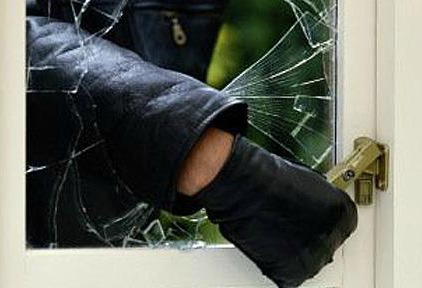
If someone robs your house and steals everything you own, you feel unsafe, violated and on high alert for future thefts.

If someone breaks into your house everyday and steals just one CD, you feel unsafe, violated and on high alert for future thefts.

In either case, someone is inside your house without your consent and taking something belonging to you without asking.

Sexual violence is like having your house broken into.

When I was raped, I felt unsafe, violated and on high alert for future violence.

When I was touched sexually without my consent I felt unsafe, violated and on high alert for future violence.

When I was looked at sexually without my consent I felt unsafe, violated and on high alert for future violence.

Whether the perpetrator was forcing sex without my consent or just touching me when I was asleep, the impact was the same.  Something was being taken from me without my consent.  I wasn’t freely participating so it was assault, not sex.

Sexual violence impacts survivors, it doesn’t have to be rape to impact you.

I want to break down the myth that certain types of sexual violence are “more serious” than others.  All sexual violence is happening without consent, and when something happens to your body without consent it can have a major impact.

I’ve experienced the spectrum of violence, from voyeurism, to touching without consent, to forced intercourse.  It’s just not true that the rape was always the worst.  What was the worst was not knowing if my house was going to be broken into that night or not.  Not how much was stolen during the break in.

During my marriage the sexual assault took place when I was drugged and asleep.  There was no ability to provide consent.  In fact, I often said no while I was awake.  Sometimes I said no again when I woke up, sometimes I didn’t.

If you don’t say no, it does not mean you consented.  There are many reasons why someone might not say no.  They might be drugged or intoxicated, they might be too afraid, they might disassociate or freeze as a response to the trauma or they might have learned through repeated experience that saying no is not effective, or provokes further violence.

I was impacted by all the violence I experienced.   And the impact built and multiplied together.  It wasn’t any one incident that caused me to have PTSD, or made me feel unsafe, it was a collection of experiences that took place over a number of years.   Except for in one case, I knew all the perpetrators.   Except for one of those, I had contact with all of them after the abuse.  They were friends, dates, boyfriends and my husband.  The fact that I had contact with them does not mean I consented.  In some cases it takes time to end a relationship with an abuser.  There can be further risks for women in the period when they are leaving, the violence can escalate and the abuser can become more unpredictable.  The abuser senses they are losing control and they tighten and increase their efforts to control the survivor.

I was abused multiple times and I never screamed.  I never really physically fought back except in one instance.   This does not mean I consented.  There were reasons why I didn’t fight back.  I was ashamed, I was scared, I froze…my kids were in the room next door, I was afraid of further violence.

All the assaults that happened to me except one, happened in places I knew, my home, their home, school etc.   If you go with someone to a location it does not mean you are consenting to sex.  Most violence happens in places and with people known to the survivor, it is a  myth that the most dangerous place is walking down a dark street at night.

No matter how your house was broken into and what was stolen, even if nothing was stolen, your experience is valid.  No matter where on the spectrum your assault falls, your experience is valid.  Your coping reactions and what you did to survive are all valid too.

I believe you.  I hope you believe yourself.   I hope that the thefts stop or have stopped.  You deserve to be safe.  Without consent, it is assault.


I don’t care if it hurts, I want to have control…


20160522_220818[1]“I don’t care if it hurts, I want to have control,  I want a perfect body, I want a perfect soul”
-Radiohead

One of the worst parts of living with anorexia is also the part that is the most difficult for others to understand.  Body dysphoria or distorted body image.

In the context of an eating disorder, and in my own case, this basically means that I’m never really sure if I’m seeing my body accurately or not.  When I look in the mirror sometimes I see a lot of things I don’t like.  I don’t like the majority of the middle of my body for example.  Lots of people can relate to that.  But for me what I see in the mirror can sometimes change dramatically from one day to the next.  Sometimes I look at myself and I can see the parts of me that are slim, sometimes thin even.  But when I’m stressed, upset or triggered I see myself as big…too big…taking up too much space.  I hate the way certain parts of my body look and feel.  I get upset at the feeling of clothing touching my body and I sometimes have to change my clothes a few times in the morning before I feel okay to go out.

It’s important to know that 90% of this is not about how I look to other people.  It’s not about vanity.  It’s not about wanting to look like a model in a magazine or an actress on TV.  It’s not a life style choice.  It’s not a choice, period.

Distorted body image and body dysphoria are symptoms of many eating disorders.  Eating disorders are medical illnesses.  You don’t have to “look sick” or be extremely thin to be medically at risk from an eating disorder.

Sometimes I want to scream because if I could get rid of Ana and live a “normal life” around food my days would look very different.  I don’t want to waste even one more minute obsessing about my fat stomach, or how much I should or shouldn’t eat.

I’ll tell you something about Ana…she is a total bitch.  She is also incredibly boring.  Probably the most boring person I’ve ever met.  Ana is abusive too.

Who is Ana?  She is my eating disorder.  I personify her and I experience or imagine her as a young girl, maybe about 15 years old, with dark hair and pale skin.  She never looks happy and she is never satisfied.  She’s often full of rage and full of anger and she seems to want to destroy the both of us.

Ana talks to me like this:

“Your stomach is fat. You are out of control.  You are so disgusting. You don’t even deserve to be alive.  You probably shouldn’t eat very much because it’s the only way you will feel better.”

Ana lies. Ana is cruel.  I’ve been living with her for almost 20 years now and she rarely gives me much of a break.

Because of Ana I have a hard time remembering what it is like to eat and feel relaxed, just enjoying the flavours.  I have a hard time imagining eating without obsessive thoughts and rituals.  Ana has this idea that by controlling food and controlling the size of our body she will solve all our problems and make us feel in control and safe.

Ana wants to be safe more than anything.  Unfortunately, she is young and she doesn’t know that controlling food makes her MORE at risk, more vulnerable and certainly more unhappy.

If I could live one day without Ana…

  1. I would get SO much done.  I’d have more energy because I’d be eating more regularly and more healthfully.
  2. I’d be able to actually concentrate because my body would have all the energy it needs AND my mind would be de-cluttered and not distracted by obsessive thoughts about food and weight
  3. I’d be able to relax and enjoy social time.  Until you live with Ana you never realize how much of society centers around food
  4. Did I mention how much more energy I would have?  Listening to, or fighting off Ana’s abusive inner monologue takes so many spoons.  It leaves me exhausted and on bad days depressed and hopeless

But even knowing all this intellectually, I have a hard time letting Ana go.  She does sort of keep me company, and she does sometimes give me the illusion that by controlling food, I’m controlling my life and managing overwhelming problems.

At the end of the day the truth is that Ana was born during the time I was being abused as a teenager.  Ana promised me things, and she deceived me into thinking that if I was smaller and took up less space I’d be safer.  But I wasn’t safe, I almost died.  And then when I was in imperfect recovery, I was abused again and again.

Ana doesn’t keep me safe.  Eating disorders have the highest mortality rate of any mental illness, especially among young woman.  They aren’t a choice and they do destroy lives.

I hope one day Ana will leave me alone.  I hope I will be able to look in the mirror and like what I see.  I hope  I will be able to eat without fear and guilt.  I hope I will pick my clothing based on what I like and not what will allow me to tolerate the body distortions for that day.

I still have some hope that I will let Ana go, instead of fumbling along in imperfect anorexia recovery forever.

Please Believe me!

Believe-Me-on-chalkboard.jpg

One of lasting impacts of experiencing abuse within the psychiatric system and oppression within the legal system, medical system, child protection system and police (mainly due to the combination of being a woman and having a psychiatric history),  is that I’m very sensitive to not being believed or not feeling believed.

Honestly, sometimes I feel like I spend the majority of my life just trying to justify my lived reality to other people.  Trying to convince professionals, friends, neighbours, family members and strangers that I am telling the truth.  It’s exhausting.

And even when people DO believe me, I have trouble trusting.  I get defensive when I even perceive that I might not be being believed, or that someone is challenging me on the facts of my own life.  Not being believed or not feeling believed are major triggers for me.  They bring me back to times in my life, during abuse, when the abusers did not believe that what they were doing was abuse.  It brings me back to times when health care professionals did not believe me about various things.  These triggers cause me to feel unsafe in the present moment.

Survivors of sexual violence spend a lot of time fighting to be believed.  Because “systems of oppression” (aka the medical, legal, police, CAS etc) exist within, and to maintain, rape culture, folks who speak out about experiencing violence are often viewed with suspicion.  There are a lot of myths out there about sexual violence and not a lot of people who see the facts.

The more marginalized a survivor is, the more likely it will be that she will face oppression within these oppressive systems.  Thus, systems which supposedly exist to serve justice are not applied equally to all folks.  Stigma based on mental health status is one form of oppression, perhaps it is a part of abelism, perhaps it is it’s own type of oppression.  But survivors who are women face the patriarchy, People of Colour and Indigenous folks face racism and colonialism, queer survivors face homophobia, trans survivors face transphobia, folks with disabilities face abelism, economically marginalized folks experience discrimation related to poverty, and some people, due to intersecting oppression, experience all of these things.

For me, the fact that there have been important times in my life where I was not believed, has impacted on my ability to feel safe in speaking my truth. I find myself constantly justifying myself and sadly sometimes even second guessing myself.

Maybe I am crazy.  Maybe I really did make things up.  Maybe I am really the abusive one.  Maybe I’m not a good parent.  Maybe I am seriously mentally ill…

The worst part of having survived emotional abuse and systemic abuse through the mental health care system is that I don’t even believe myself half the time.

I’m tired today.  I’m doing my best, but I don’t feel capable.  I’m working as hard as I can, but I feel like a failure.  But I feel vulnerable.  I feel very vulnerable.  I feel more alone than I technically am.  I had to justify myself too much this week and I let it get to me.

My advice to survivors is this:

You are the expert in your own life.  Be your own hero.  Believe yourself, you have no reason to lie. You can trust your memories.  You can trust your instincts and gut feelings, even if you have no memories.  You can trust your body. 

You don’t have to justify yourself to anyone.  No is a complete sentence.

I believe you.  I believe that this isn’t your fault.  I know that if you could do better you would do better.  Your best is enough.