It was “just” sexual abuse…

20160823_195012[1]

I’ve been thinking about the barriers I faced in coming forward about being sexually abused, as a child and as an adult.  For people who have not experience sexual abuse, the most immediate response to someone disclosing is often: “why didn’t you tell someone?”  or “why didn’t you tell someone sooner?” or my personal favourite “why didn’t you fight back/scream/run?”

The reality is I didn’t even realize I was being abused until long after the abusers had intertwined their lives with mine.

The reality is that abuse in relationships does always not look the way you might expect it to.

The reality is that I spent a long time, as an adult, in counseling, volunteering at a women’s centre etc…stating to other reasonable adults “it was ‘just’ sexual abuse.”  I made all sorts of excuses for why it didn’t count, why it wasn’t important, why it wasn’t real abuse, why I didn’t deserve help, why other people had it worse off, why I was making a big deal over nothing, why I didn’t want to tell anyone and ruin his life etc.

Because they never hit me, it wasn’t abuse.  Because they didn’t threaten to kill me, it wasn’t abuse.  Because I said yes some of the time, it wasn’t abuse.

I was (and am) pretty mean to myself and a lot of my perceptions were just plain wrong.

I think it takes a lot of strength and courage to really come face to face with the fact that your romantic relationship is unhealthy, abusive and actively making you sick.  It’s not something that comes easily, turning your back on the father of your children.

I told myself the abuse didn’t count.  I knew I felt uncomfortable, I knew it very early on in both relationships.  I saw the red flags, but somehow I interpreted them differently.  I wanted to believe that things weren’t really that bad.  I wanted to believe I could help the abusers change.  That they were depressed, that they needed me.  That their needs were more important than my own.  I wanted to believe that love would be enough.

I did start to talk about the abuse.  I did tell people.  In some ways, I wasn’t really challenged by those people.  I think many of them instinctively knew I wasn’t ready to leave.  They knew I needed time to come to the realization that it was abuse and that I needed to get out.  For the most part they didn’t push me.  I was still ambivalent about the abuser and I still wanted things to “work out.”

One day someone I volunteered with called me out.  I mentioned something about it being “just” sexual abuse.  She challenged me.  She sat there and said “what you are saying doesn’t make sense.  It’s not ‘just’ sexual abuse.”  I think it was the first time someone had openly called me out on my own denial.  This was in the month or 2 leading up to my decision to leave.

At the time I left him I still believed it was “just” sexual abuse.  I told almost nobody why I was leaving.  I thought that moving would solve the problem, because since it was “just” sexual abuse I would be safe.

I was wrong.  Sexual assault is not about sex.   It’s about power and control.  It’s about a level of narcissism that exists in this world that allows one person to disregard the consent of another person.  Within any type of relationship it’s about manipulation, it’s about gaslighting, it’s about making the victim feel crazy, worthless, broken, damaged, and most of all dependent on the abuser.   The sex is a tool of control.  It rarely happens in isolation.  Emotional abuse, psychological abuse, physical abuse, threats, coercion…it’s all part of the same package.  Even if the package is wrapped in a disguise that makes you believe that sex is the only issue and that otherwise the person is “basically a good guy.”

At the end of the day, if someone doesn’t respect your consent sexually, they don’t respect you.  They aren’t “basically a good person.”  They are a person who does not value your basic right to say yes or no in a given situation.  They are a person who puts their own needs before yours, and possibly even denies your needs are real, valid or even exist.

It’s a long road back from that place.  The place where you question whether your needs are reasonable, valid or even exist.  It’s a long way back from the place where you believe that your consent is not relevant, where your needs are not relevant.  Where you are blamed for not wanting to consent, even in a situation where there is no trust, no safety and almost no relationship left.

I’m writing this to tell you:

  1. if you have been abused, it’s never “just” anything.  Your experience is valid and real.  If you are uncomfortable, afraid, hurt, feeling crazy then trust yourself.  It’s abuse.
  2.  if you have been abused and even if you have not, please remember that there is no specific way an abuse survivor looks, copes or experiences violence.  There may be no physical marks, there may be denial, there may be almost no signs at all.  Trust yourself, if you have the feeling something isn’t right in your relationship or in the relationship of someone you care about, reach out.  Get help, talk it over, ask gentle questions, be there to support yourself or the person you care about.
  3. believe the survivor.  If you are the survivor, believe yourself
  4. if you still blame yourself, or the person you care about is blaming themselves, tell them it is not their fault.  Repeat step 3.  Repeat step 3 again.  Repeat it again and again and again.

I believe you.  It’s not your fault.  It counts.  It’s is real.  You deserve support.


Inpatient bonds.

20160727_214408[1]One of the bright sides of spending so much time in hospitals during my teens and early twenties is the people I met there.  Some of them became lasting friends and the bonds between us defied understanding by outsiders.
If you’ve never spent a significant amount of time as an inpatient in psychiatric wards and mental health treatment facilities you probably won’t understand.

I’ve had people close to me tell me that I “shouldn’t have so many friends with problems” or that I should “try to make healthier friends” or that I “shouldn’t talk to people who depress me.”

These comments miss the point for a number of reasons.

First of all, if my “friends with problems” aren’t worthy and I shouldn’t be friends with them, does that mean nobody should be friends with me either?  In case you hadn’t realized from reading this blog, the secret is out.  I identify as living with mental illness! I’m not exactly 100% well myself, otherwise I wouldn’t have been in the hospital in the first place!  Does this make me less of a good friend?  Does this make me a person who should be shunned and avoided?  I certainly hope not.  I would like to afford my other hospital friends the same courtesy.

Two, it’s hard for people who are mentally well, neurotypical, never struggled with severe mental illness to understand me.  Sure, I have well friends who empathize and who don’t judge me.  But the bonds and mutual understanding I’ve shared with other people who struggle with PTSD, eating disorders, depression and suicide are very strong.   It’s like I can breathe again, when I talk to a friend who I know “just gets it.”

Three, when you are living in a hospital ward, you naturally form friendships and alliances with the people you are living with.  Some of them become friends.  It happens and it helps us survive.

So please, don’t judge these special friendships.  Even when I’ve lost friends to suicide, even when I’ve been triggered by friends and had to set boundaries, even when it feels like listening to their struggles is too much to bear, I never regret them.

My dear friends who are gone.  I desperately miss that feeling of belonging I had when I talked to you, laughed with you.  MJ, there was never anything I shared about PTSD that you hadn’t breathed and experienced yourself.  I never had to explain myself, you just knew.  This blog entry’s photograph is a picture of all the cards you wrote to me during our friendship.

Who else could I share my strange experiences with?  When I told her one day, crying in the bathroom in my ex-husband’s house, that I was scared because I thought I was seeing X everywhere.  I literally thought I could see him all around the city.  Intellectually, I knew he wasn’t there, but it felt real and my heart skipped a beat each time.   She almost laughed and said, “It happens to me all the time.  I see everywhere too”  We breathed out together, suddenly this PTSD symptom was normal and okay.  We understood each other, we weren’t crazy.  I loved her for this and I know she loved me for it too.

When I was in treatment for anorexia when I was 17, I met another young woman named M.  She and I were stuck on the eating disorder for 5 weeks together, while other patients attended groups.  We were on “modified activity phase” until we gained a certain percentage of our goal weight and it took forever.  During this time we talked, bonded and sometimes sneaked around doing things we should not have.   She was painting rocks when I got there.  I asked her what I was doing and if I could help.  She told me she wanted to paint 1000 rocks so her wish would be granted.  Soon, we had an assembly line going.  We would fill our pockets with rocks on our 15 minute outside break, sometimes walking further than we should have away from the break area.   Once inside, I would paint the rocks a solid colour, then when they dried she would write “Expect a Miracle” in careful lettering on each one.  The final step was applying a clear glaze once all the paint was dry.   We painted so many rocks, I don’t remember how many we had finished when I discharged myself 3 months later.  I still have some of them in my bedroom almost 20 years later.  I’m still waiting for a miracle.   I often wonder what happened to M.  We lost contact and I still think of her often.  I wonder if her miracle came true and I wonder if she recovered.

I met my friend Lexi at a support group in my city.  It was the first place I really talked at any length about leaving my ex-husband and what was going on in the marriage.  Lexi loved to crochet and knit.  She loved her family.  I used to go to her apartment sometimes and we would chat about all sorts of things.  Sometimes we shared stories of our trauma and sometimes we joked and laughed about our future.  I was inspired to try online dating because of Lexi.   I lost her suddenly last summer, about  a year ago now.  I still miss her.

Darlene, whose story I recounted in another blog post, her anniversary was this week.  14 years ago I lost her.   I wish I’d had the chance to know her better, but I won’t ever forget her.

Some friends like my dear sister LJ, I have kept in contact with for over 12 years, through email, fb, text and phone.  She lives in a different country, but she calls me sister.  I miss her and I hope to see her again one day.  I have ever letter and card she has ever sent me. She has inspired me in many ways and her commitment to recovery and to survival is tremendous.

My friend John, he is also gone now.  But his music lives on and I have his CD which I listen to from time to time and remember his gentle courage.

I will never forget the stories of survival I heard and witnessed during my hospital stays.  I met so many survivors.  I met war veterans who were kind and brave enough to share small details of their own private hells with me.  I met residential school survivors who shared with me the abuse they endured.  I met childhood abuse survivors who overcame.  I met women who were admitted to the hospital in full psychosis, speaking in delusions and making little sense.  I saw those same women, mere days later, completely calm and rational again after taking their medication.  I met people who had lost family members in tragic circumstances.  I met people who had nearly died from multiple heart attacks due to anorexia and bulimia and some of those women have children and are well and healthy today.

These friends give me hope.  They remind me that I’m not alone.  They remind me that recovery is possible.  And the ones that have died, I will hold in a special place in my heart forever.

Inpatient bonds are something to be celebrated.

Electroconvulsive Therapy (ECT)

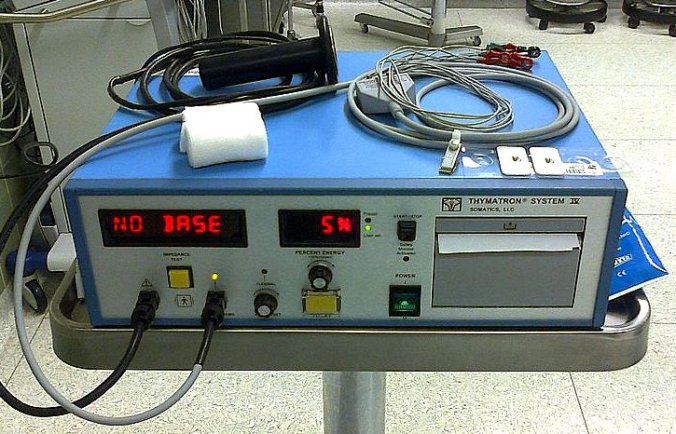
Thymatron-ect-machine.jpg

“Electroconvulsive therapy (ECT), formerly known as electroshock therapy, and often referred to as shock treatment, is a psychiatric treatment in which seizures are electrically induced in patients to provide relief from psychiatric illnesses” -Wikipedia

Basically, ECT is a treatment by which patients consent to have seizures intentionally triggered by electric shocks which are applied to the brain.

When you put it that way, it sounds barbaric and unnecessary.  Why would someone consent to have electric currents put through their brain under general anesthetic and undergo seizures?

The desperation and intense suicidal ideation that can accompany treatment resistant depression can be unbearable and even fatal.  Given the choice between suicide and ECT, some people choose ECT.  I was one of those people.

In 2011, I was caught in the grips of one of the worst depressive episodes of my life.  I was fighting off constant thoughts of suicide and severe self harm.  I was having difficulty functioning in my day to day life.  I had tried every medication known to human kind.  I was truly desperate and ECT was a last resort, something I hadn’t tried and something I hoped would provide even brief respite from my suicidal depression.

Over the course of about 8 weeks I received 15 electroconvulsive treatments.  This means I was put under general anesthetic 15 times and I had 15 seizures.  Some were unilateral (one side of the brain) and some were bilateral (both sides shocked simultaneously). I received the treatment as an outpatient, twice a week, Monday and Friday mornings at a hospital near my home.

Each morning I would report to the inpatient psychiatry floor around 6:30AM.  I would change into a hospital gown, remove my jewelry and be taken on a stretcher, by an orderly, down to the surgical area of the hospital.  I would wait in the semi-darkness, dimmed light of the surgical recovery room.  While in this room, nurses would place an IV into my hand so the necessary medications could be injected.  I was hooked up to heart rate monitor and other monitors.  There were usually 4-6 of us lying there, side by side, waiting our turn in the treatment room.  As I would wait, I would see the previous person being wheeled out of the treatment room, unconscious.  It was unsettling, as I knew my turn was coming soon.

The ECT room was a small procedure room attached to the surgical recovery room.  It was just large enough for a stretcher, the medical professionals and the necessary equipment.  It was bright and clinical.

Nurses and doctors began to work on me quickly.  I had the impression of an assembly line, a schedule being kept, patient in, treatment given, next patient in and so on.  My temples were wiped with alcohol swabs and electrodes attached.  The anesthesiologist talked to me about the medications he was going to administer.  A nurse would often hold my hand, there to keep me calm as everything was arranged.  The medications were injected one by one through the IV.  I could feel the cold fluid entering into the veins in my left hand.  I would keep my eyes fixed on the clock, trying to remember the time as I went unconscious, to later compare to the time on the clock when I awoke.  Sometimes I would lose no more than 15 minutes of time, the procedure was very quick.

I remember feeling afraid.  The nurse asked me to count backwards.  An oxygen mask was applied to my face and nose, ready to breath for me while I was unconscious.  The medications worked quickly and then nothing.  There was only one time of the 15 when I was aware of part of the process.  The medications they injected to relax my muscles began to act before I was unconscious, I felt like I was suffocating.  I couldn’t breathe and I started panicking.  I literally couldn’t breathe, but I was awake.  I could hear them talking and feel the next medication being injected and then nothing.

I would wake up 15 minutes later.  Back in a different curtained bay of the recovery room.  I could hear the nurses helping the other patients on either side of me, also recovering from ECT.   This was the part of the treatments that I hated most.  I had to stay in the recovery room for 30 minutes following the treatment, as they monitored my blood pressure and other vital signs.  I felt trapped.  I was hooked up to machines.  I often had a sense of panic and wanting to flee, to leave, to be outside.  Sometimes I would cry and I don’t think the nurses understood why.  Eventually the Doctor would come, talk to me briefly and I would be released.   The first time I could barely walk and the nurses wheeled me to the entrance to meet my family member.  I was usually home by 9 am.  The whole process taking 2-3 hours.

Usually I would stumble, drowsy and disoriented to the car.  I would be driven home and I would go straight to bed.  Usually I would sleep and rest for most of the day.  I lost a lot of weight over those few weeks because I ate so little due to missing breakfast and then being nauseous from the medications.  I also had severe headaches due to the shocks, and many side effects from the medications.  I felt like a zombie.  My short term memory was foggy as to the events during those 8 weeks.  During that time, my grandmother passed away and the experience was surreal through the state of mind I was in.  I have no memory of my own birthday that year, and few of my daughter’s.

In terms of long term side effects from the treatments, I found that the area of my brain which recalled the order of the months of the year and the seasons of the year were impacted.   If someone asked me “What season comes before Fall?”  I would feel confused and have to think very hard to answer “Summer”   Similarly with the months of the year and the order of the holidays in the calendar.

Overall I don’t think I suffered any major memory loss.   At the time I thought that the treatments helped my depression a little.

Sadly, I only realized about 9 months later that a large portion of my depression was situational, related to my abusive marriage.  In the end, the treatment for my depression was to move away from him.

If I’d realized this sooner, I probably would not have endured ECT.

Looking back on the whole series of treatments, it feels unreal.  It feels traumatic.  It feels strange and difficult to process.

In what world does it make sense to further traumatize a traumatized brain?  But desperation will make a person take desperate measures.  I survived and that is what matters.

I’m triggered.

20160610_213558[1]

Being triggered is exhausting.

It feels like being in a constant state of fight or flight.  It feels like panic.  It feels like a reduced ability to think clearly and stay calm.  It feels like fog, a buzzing in my ears.  Everything sounds too loud, lights are too bright, smells too strong.  My clothes touching my body make me feel disgusting, fat and out of control.  Ana is screaming at me not to eat, while another part of me is saying that not eating will make me more panicked.  An internal war begins.  I feel like I’m in danger.

If someone tells me to “calm down” or “not worry,” the panicked feeling turns to desperate anger and I find it hard to keep it hidden inside.

If the trigger goes on for a long time, especially if it is combined with actual real life danger or stress, I eventually become exhausted.  I am desperate for the uncomfortable feelings to pass.

And in the desperation I always begin obsessing about self harm and sometimes suicide.  Intellectually I know that this doesn’t make sense, but it’s my brain’s default setting for  TOO MUCH STRESS!  I learned about 4 years ago that my suicidal ideation is a red flag, it’s a signal from my brain that I need to reduce my stress ASAP.  It’s not really about dying, it’s about ending the horrible painful, out of control panic feeling.  NOW.

My main ways of coping with self harming thoughts and suicidal ideation is by trying to tune out.  I do this mainly by surfing the internet, checking facebook, texting, checking my phone and also by blogging.  I find that technology is a good way of tuning out the self destructive thoughts for a while.   So sometimes, when I’m checking my phone too often, even if it annoys you, even if it seems impolite, try not to judge, I might be coping and distracting myself from negative thoughts.

Another great way of coping with triggers is exercise.  Before I developed arthritis I used to cope by running.  That was amazing.  I miss it so much.  Walking can help, getting out into nature can help, dancing can help, moving my body and letting some of the pressure release.   But when I’m at home, my go to coping during the evening (the most difficult time of day for self harm urges) is texting and internet time.

It’s hard to explain triggers to people who don’t have PTSD.  People who live with panic attacks or generalized anxiety can understand parts of it.  But PTSD triggers are a little different somehow, because they are connected very tightly with actual bad events which have happened in a person’s life.  It becomes very difficult at times to distinguish between immediate stressors in day to day life, and abuse/danger/violence.

Triggers can also be emotional.  For example one of my main triggers is feeling like I am not being believed, or even might not be believed when I’m speaking my truth.  Another is feeling like I’m going to get into trouble for doing something which is reasonable and not generally perceived as negative.  These feelings are related to gaslighting, emotional abuse and systemic/systematic institutional abuse and neglect.

When I’m triggered what I need is to get grounded as quickly as possible.  If I can’t get grounded then what I need is to keep myself safe and as calm as possible.  Sometimes this means that I want to be at home, be alone, or be with people I feel safe expressing myself with.  Staying safe sometimes means spending hours online after the kids are asleep, or lying in bed all evening because I don’t trust myself to make safe choices.   I’m not being lazy, I’m protecting myself in the best ways I have learned how.

Sometimes when I’m triggered I disassociate or space out.  I might seem emotionally distance or cold.  I might be more emotional, or my emotions might seem out of proportion with reality.  That’s because they are!  They are a reaction to reality PLUS the past trigger related to abuse and violence.

I know I’m not doing a perfect job at life when I’m triggered.  I constantly worry that others will judge me because my capacity to perform at my highest level is reduced.  My brain will literally shut down, I will have problems remembering things, trouble finding the right words under pressure, I might cry or freeze up, grow silent or suddenly angry.  I might be impatient with the kids when they haven’t really done anything wrong.  I might snap at those close to me, or not be as kind as usual.   I don’t mean to.  Believe me my level of guilt is so high that it contributes to the problem!  I know I’m not acting “normal” but I can’t help it.   Sometimes I need space to get grounded, sometimes I need others to remind me that even though it’s difficult I’m doing my best and that is good enough.

If the triggers are entirely related to the past, and no danger exists in the present, for example during consenting sex, it helps for the other person to remind me “you are safe right now, it’s 2016, you are with _____, nobody is going to hurt you”

If the triggers are related to the past, but there is some threat in the present moment, it helps to acknowledge both sets of feelings are real.  Yes, this situation reminds me of the past, that is difficult and scary.  Yes, there is some threat in the present and that is scary too.   I  might need to get grounded FIRST and then brainstorm solutions to the present situation.  Sometimes self care can play an important role in grounding.

PTSD is invisible, triggers are invisible, all this is happening inside my brain and my body is reacting.  It sometimes feelings as if the past is happening all over again.  Especially when triggers lead to flashbacks.

Please understand I’m doing the best I can.  PTSD is a difficult illness and because it is invisible it can be hard for others to understand.

Compassion helps triggers.  Everyone deserves to feel safe.  But when you live with PTSD, feeling safe can be like searching for the proverbial needle in a haystack.  When you aren’t quite sure what the needle looks like, or if it is REALLY in the haystack!  You aren’t even sure exactly why you need the needle and what you are going to do with it when you find it!

Yes, life can be confusing.  Triggers can be confusing.  PTSD can be confusing.

Tonight I’m confused, but I’m coping as I write.


Darkness and Light

indexindex

It’s been almost 3 years now since my last full-out episode of major depression lifted.  It started to shift about 4 years ago and lifted when I moved away from my ex-husband.

The last 2 months I’ve been struggling a little.  I developed low iron and I was feeling burnt out and stressed.  For a short time I was depressed again.

I wanted to write a little bit about my experiences with the difference between depression and a clear mind.  Usually the shifts are subtle, but startling, and it’s all to do with darkness and light.

The last few days, I felt startled, caught of guard by the brightness of the colours around me as I drove through the city.  Granted, it is spring and the leaves, buds, grass and flowers are growing, but this is something more than noticing natures beauty.   Today I was driving home with my kids and I saw a set of traffic lights across a field.

My mind: “Wow, those traffic lights are SO bright, so colourful, so orange yellow, they are jumping out of that field”  They looked almost psychedelic and other worldly to me.  Yesterday, as I was driving, the green grass looked almost neon and startled my eyes.  It’s a striking yet not unpleasant feeling waking up from a time of depression.   Suddenly there is light in the world, when you were not always aware of the depth of its absence.

When I get depressed I also struggle with varying levels of disassociation related to my PTSD.  Depression tends to blunt feelings at the best of times, while disassociation can leave you numb.

The last few months I described my feelings as “being a zombie.”  Going through the motions of my day to day life, functioning on the surface, but feeling like I didn’t care, wasn’t connected, wasn’t engaged and wasn’t happy.  Depression feels like living in a world without colours.  Everything pleasant is muted because I cannot connect with my feelings or my environment and then I start to feel hopeless.  It’s like looking through a dirty lens and being wrapped in a blanket that prevents me from feeling things fully.  I can see people around me, I know how I “should” be acting, but it’s an effort to complete the actions in a genuine manner.

For many years, I was severely depressed and this became my “normal” state.  I remember in 2012, I had been depressed consistently since 2009, with 2011 being a particularly bad year.  In July 2012 I was in England on a family holiday.  One day we were at the beach, my family, my cousins and my cousin’s children.  It was a warm day, not hot, but sunny and very pleasant.  We were walking by the seaside along a rocky beach.  I sat down on the stones and I placed my hand on them.  I remember the moment so vividly because I was aware that the stones were warm.  I sat soaking the warmth from the stones into my hand and I felt alive.  I felt something that probably saved my life (again).  I felt hope.  It was the first moment I truly felt connected with the world around me in all its vivid reality in many years.

That moment was one impetus on the journey towards finding my path away from my abusive marriage.  Just those smooth warm rocks and a single moment of the depression cloud lifting and hope streaming in.

People often wonder what moments have changed your life, and sometimes the truth is that the most simple, unplanned moments can elicit major change.

Christmas 2013 I had another moment of hope, it was bittersweet though as I realized how dark my world had been.  We were at my parents house and my younger cousin and her boyfriend at the time were teasing me about someone I was dating.  I was laughing and laughing because the situation was funny, hilarious even.  My children were playing in another room and my older daughter ran in, looked at me confused, then ran into the kitchen shouting “Grandma! Why is  Mommy laughing?”

My daughter needed reassurance that I was happy, she hadn’t heard me genuinely laughing in years, maybe never.  Connection.  In that moment I was connected with the world and I was enjoying my life.   During a dark depression I don’t laugh very much, I feel isolated in a room full of people, I feel like a shadow with clouds hanging over me.  I sometimes don’t even feel like a real person!  My memory is terribly bad after a period of depression.  I think I’m functioning normally, but later, because of disassociation, I realize that I didn’t form proper memories of the events.  I’ve realized that without connection, sometimes memories aren’t completed and stored correctly.

Seeing those yellow traffic lights today felt similar to the stones on the beach and the Christmas laughter.  Yellow shining beacons of hope and connection!  Maybe the opposite of depression is connection?

I’m very lucky that my periods of depression are much further apart now and usually very brief.  They don’t last long enough for me to truly lose hope.  I can always hold onto the memories of those moments of connection.

Even if you are struggling with depression you feel will never lift, please don’t lose hope.  Look for small moments of connection in your day to day life.  It could be as small as noticing a flower that has bloomed, feeling the warmth of the sun on your face, feeling the cool water while you are washing your hands, enjoying a smile with a friend.  I believe you can build on those moments and slowly build a path to recovery.


Love letter to my body

20160416_232127[1]

April 22, 2004

To My Body,

I resent that you make me so uncomfortable.  I hate it when you trigger me. I hate it when you feel unsafe. I’m tired of feeling unsafe.  I wish you would just disappear or leave me alone. I don’t like it when you feel fat and dirty. I resent that you have power over how I feel. I’m fed up with you. You’ve caused me so much pain and suffering. I’m angry at you for making me feel ugly and unattractive.

I hate it when you feel too big and out of control.  I hate it when you feel too small and out of control. I hate it when you feel average. I want you to feel average. I want you to be a safe place to live. I resent that I can’t leave you behind.

I’m angry that you attracted abusers to me. I’m angry that you allowed yourself to be abused. I’m angry that you didn’t run away or fight back.  I’m tired of blaming you. I’m tired of not being able to forgive you.  I hate it when you cause me painful memories. I resent that you remember everything. I resent that I can’t replace you. I hate it that you feel dirty and broken. I want to be able to wash that feeling away.

I hate that you’ve had so much control over my life. I’m tired of you getting in the way of my happiness. I’m angry at your scars. I’m angry that you’ll never look normal. I’m angry because you make me hate myself.

I feel sad that you have been so badly hurt. I’m sad that you were violated. I feel awful because your boundaries were disrespected. I feel disappointed because you are permanently damaged. I feel hurt because you have not been respected. I feel sad because I have caused you so much pain and suffering. I feel awful because I blame you for everything. I feel awful because it wasn’t your fault.

I want to be able to forgive you. I feel afraid that I will never forgive you. I feel afraid that you will never heal. I feel afraid because you are vulnerable. I’m afraid I will abuse you again. I’m afraid someone else will abuse you again.  I wish I could protect you. I wish I could keep punishing you. I’m afraid that you will never feel whole again. I’m afraid of your suffering.  I feel awful because I know you are suffering.  I feel awful because I have never given you the chance to heal.  I feel awful because I don’t know if you can heal.

I’m scared of you.  I’m scared of the way you look.  I’m scared of the way you feel. I’m terrified because of how powerless you are. I’m terrified of how powerful you are.

I’m sorry that you have been abused. I’m sorry that I couldn’t protect you.  Please forgive me for the years I’ve spent abusing you.  Please forgive me for torturing you, scarring you, poisoning you and starving you.  I didn’t mean to destroy you.  I’m sorry that I still want to destroy you.  I’m sorry for all you’ve been through.  I’m sorry that the past cannot be erased or forgotten.

Please forgive me for not protecting you. I’m sorry that I don’t respect you. I’m sorry that others have not respected you.  Please forgive me for blaming you.

I’m ashamed of you, I hate you and I’m sorry.  I wish I could make you disappear so you wouldn’t be hurting anymore.  I wish I could take away your pain.  I wish I could learn to respect you.  I’m angry and sad that I feel so resentful.  I’m tired of being ashamed.  I’m so sorry for all these years of abuse.

I love you because you remind me that I have survived.  Thank you for the pain, thank you for reminding me that I’m alive. I understand that you are hurting. I want to let you grieve.  I forgive you for being sensitive and still in pain.  I understand that you need time to heal.

Thank you for not giving up on me. Thank you for giving me a second chance and a third chance and for not abandoning me.

I understand your pain. I hope that one day I will begin to forgive you.  I’m angry because I don’t trust you and because you don’t feel safe.  I wish I could learn to trust you. I hope one day you will feel safe. I feel sad because you don’t feel like you truly belong to me.  I’m sorry I haven’t forgiven you.

I’m angry that you are still alive.  Thank you for still being alive. I love you for that.  I hope one day you can find peace and safety.

-Me

Flashbacks. Better out than in?

Yes, doctors do give you medication that makes you worse.

Yes, misdiagnosis and mental illness stigma are real.

Yes, I spent the better part of 4 “lost years” on the psychiatric wards of beaten down hospitals that had been slated for closure decades before.

Yes, I left the system an order of magnitude more traumatized than when I first “sought help.”

I survived sexual abuse, emotional, psychological and physical abuse by multiple perpetrators.  But I also survived what I call, for lack of a better word, institutional abuse within the mental health care system.

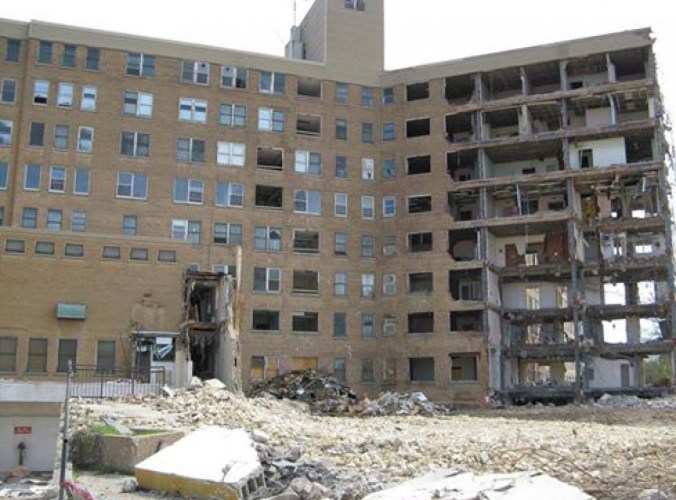
South Street Hospital in London, Ontario has now been torn down, demolished to the ground.  The psychiatric wards were the last ones to be closed, years after all the medical inpatients had been relocated to a newer and more adequate facility.  Once the building was abandoned I re-visited the grounds, the building stood like a ghost, an empty shell, holding the untold stories of so many people just like me.  Some of them, like my friend Darlene, didn’t survive those years and lost their lives to suicide.  But I made it out and I now provide feminist based peer support to survivors of violence as my full time job.

So many memories from those years mix together with memories of the other traumas in my life and have been resurfacing more than usual recently as intrusive flashbacks.  Sometimes I worry that those around me tire of my ongoing struggle with post-traumatic stress disorder (PTSD) and it is difficult to share the memories.  At times I fear I will face disbelief, dismisal or disgust rather than validation and acceptance.  I’ve decided the memories are surfacing for a reason and they have to go somewhere.  Better out than in?   Why not share them with the world?

I am a psychiatric survivor.cropped-10267763_10152018756625936_5945078775421952754_n.jpg