I’m triggered.

20160610_213558[1]

Being triggered is exhausting.

It feels like being in a constant state of fight or flight.  It feels like panic.  It feels like a reduced ability to think clearly and stay calm.  It feels like fog, a buzzing in my ears.  Everything sounds too loud, lights are too bright, smells too strong.  My clothes touching my body make me feel disgusting, fat and out of control.  Ana is screaming at me not to eat, while another part of me is saying that not eating will make me more panicked.  An internal war begins.  I feel like I’m in danger.

If someone tells me to “calm down” or “not worry,” the panicked feeling turns to desperate anger and I find it hard to keep it hidden inside.

If the trigger goes on for a long time, especially if it is combined with actual real life danger or stress, I eventually become exhausted.  I am desperate for the uncomfortable feelings to pass.

And in the desperation I always begin obsessing about self harm and sometimes suicide.  Intellectually I know that this doesn’t make sense, but it’s my brain’s default setting for  TOO MUCH STRESS!  I learned about 4 years ago that my suicidal ideation is a red flag, it’s a signal from my brain that I need to reduce my stress ASAP.  It’s not really about dying, it’s about ending the horrible painful, out of control panic feeling.  NOW.

My main ways of coping with self harming thoughts and suicidal ideation is by trying to tune out.  I do this mainly by surfing the internet, checking facebook, texting, checking my phone and also by blogging.  I find that technology is a good way of tuning out the self destructive thoughts for a while.   So sometimes, when I’m checking my phone too often, even if it annoys you, even if it seems impolite, try not to judge, I might be coping and distracting myself from negative thoughts.

Another great way of coping with triggers is exercise.  Before I developed arthritis I used to cope by running.  That was amazing.  I miss it so much.  Walking can help, getting out into nature can help, dancing can help, moving my body and letting some of the pressure release.   But when I’m at home, my go to coping during the evening (the most difficult time of day for self harm urges) is texting and internet time.

It’s hard to explain triggers to people who don’t have PTSD.  People who live with panic attacks or generalized anxiety can understand parts of it.  But PTSD triggers are a little different somehow, because they are connected very tightly with actual bad events which have happened in a person’s life.  It becomes very difficult at times to distinguish between immediate stressors in day to day life, and abuse/danger/violence.

Triggers can also be emotional.  For example one of my main triggers is feeling like I am not being believed, or even might not be believed when I’m speaking my truth.  Another is feeling like I’m going to get into trouble for doing something which is reasonable and not generally perceived as negative.  These feelings are related to gaslighting, emotional abuse and systemic/systematic institutional abuse and neglect.

When I’m triggered what I need is to get grounded as quickly as possible.  If I can’t get grounded then what I need is to keep myself safe and as calm as possible.  Sometimes this means that I want to be at home, be alone, or be with people I feel safe expressing myself with.  Staying safe sometimes means spending hours online after the kids are asleep, or lying in bed all evening because I don’t trust myself to make safe choices.   I’m not being lazy, I’m protecting myself in the best ways I have learned how.

Sometimes when I’m triggered I disassociate or space out.  I might seem emotionally distance or cold.  I might be more emotional, or my emotions might seem out of proportion with reality.  That’s because they are!  They are a reaction to reality PLUS the past trigger related to abuse and violence.

I know I’m not doing a perfect job at life when I’m triggered.  I constantly worry that others will judge me because my capacity to perform at my highest level is reduced.  My brain will literally shut down, I will have problems remembering things, trouble finding the right words under pressure, I might cry or freeze up, grow silent or suddenly angry.  I might be impatient with the kids when they haven’t really done anything wrong.  I might snap at those close to me, or not be as kind as usual.   I don’t mean to.  Believe me my level of guilt is so high that it contributes to the problem!  I know I’m not acting “normal” but I can’t help it.   Sometimes I need space to get grounded, sometimes I need others to remind me that even though it’s difficult I’m doing my best and that is good enough.

If the triggers are entirely related to the past, and no danger exists in the present, for example during consenting sex, it helps for the other person to remind me “you are safe right now, it’s 2016, you are with _____, nobody is going to hurt you”

If the triggers are related to the past, but there is some threat in the present moment, it helps to acknowledge both sets of feelings are real.  Yes, this situation reminds me of the past, that is difficult and scary.  Yes, there is some threat in the present and that is scary too.   I  might need to get grounded FIRST and then brainstorm solutions to the present situation.  Sometimes self care can play an important role in grounding.

PTSD is invisible, triggers are invisible, all this is happening inside my brain and my body is reacting.  It sometimes feelings as if the past is happening all over again.  Especially when triggers lead to flashbacks.

Please understand I’m doing the best I can.  PTSD is a difficult illness and because it is invisible it can be hard for others to understand.

Compassion helps triggers.  Everyone deserves to feel safe.  But when you live with PTSD, feeling safe can be like searching for the proverbial needle in a haystack.  When you aren’t quite sure what the needle looks like, or if it is REALLY in the haystack!  You aren’t even sure exactly why you need the needle and what you are going to do with it when you find it!

Yes, life can be confusing.  Triggers can be confusing.  PTSD can be confusing.

Tonight I’m confused, but I’m coping as I write.


The moment you know…

index

I think for every person who experiences ongoing abuse there is a moment:  a moment when the person knows it is over.  They know they are not willing to take even one more minute of lying, gaslighting, physical violence, sexual assault or devaluing of their humanity.  At that  moment the survivor becomes empowered and powerful.

Some survivors are forced to stay with their abuser after this point.  Do not equate what I’m describing as “just leave” or “why didn’t you just leave?”   Leaving is complicated.  There are lots of reasons why someone is not able to leave.  Never judge a survivor for how long it takes them to walk away from violence.  Everyone has access to different options at different points in their lives.  Even if they are still living in violence, do not judge, for at that time they need your support more than ever.

I’m not talking just about leaving.  I’m talking about the moment of realization “enough is enough!”  After that point the survivor begins to take her power back, even if it is just internally.  She realizes she is worth more than the abuse and that a good portion, if not everything, the abuser tells her is untrue and designed to control and confuse.

Everyone has a breaking point, and after that point they begin to grow stronger in the broken places.

I remember the moment I decided that I couldn’t stay married any longer.   I’d played around with the idea of leaving for about a year, seriously for about 13 months.  I tried to leave 6 months before, but was lured back with promises of him attending counseling.

The sexual assault followed a predictable pattern.  It always involved me saying no when I was awake, or saying nothing when I was awake.  Later in the marriage I wrote my “no” in letters, emails and discussed it verbally during the day.  I explicitly spelled out in numerous ways that I did not consent to sex or sexual touching when I was asleep.   During the majority of the marriage I took varying doses of psychiatric medications that made me tired, sleepy, drugged, slower to respond, and quicker to fall back asleep.  I would fall asleep and wake up 45-60 minutes later (at the time when the medication was at it’s peak strength) to him touching me sexually or initiating sex.  I won’t get into all the details here, but it was non-consenting by definition, since I was asleep and drugged.  He knew I would say no if he asked me when I was fully conscious, so he just waited until I was asleep and impaired.  The medication also can make it harder for me to form thoughts or speak clearly and quickly, it delays my reaction times, especially around speaking.

When I did wake up I sometimes said no again, I sometimes froze and he eventually stopped, sometimes I moved his hand away, sometimes silently went along with it, and rarely I said yes once I was awake.  Even when I said yes when I woke up, I still experienced it as assault, because my body was already reacting physiologically by the time I was conscious.  Then it sometimes felt easier to go along with it because it bought me more time before he would ask or take again.

The last time we had sex was the end of our marriage.  Yes, ironically I can say that the sex was so awful I left him because of it.

I’d already been thinking about leaving, many times when he assaulted me I lay there thinking “This will be the last time”  or “I could just get up and walk out”  but I stayed because I had kids and I was afraid.

The last time was in early July, around July 7.  It was one of the times where he started touching me while I was asleep and when I woke up I decided to say yes.   We had sex.  I felt awful.  I knew it was over.  I realized that if I felt violated even when I said  yes, then there was no hope.  And I still felt upset that he couldn’t understand that if the sex started while I was asleep I didn’t have the chance to consent.

The next few days I spoke to my counselor at the abused women’s centre.  I spoke to one of my best friends, who had consistently been giving me the advice to tell my parents, get help, consider leaving.  Everything just clicked and a few days later I told him it was over.

From then on I never really looked back.  It took me 7 weeks to move out into a place of my own.  Those weeks were a living hell.  But I was never confused again.  I never wondered if I was doing the right thing or not.   I felt empowered to take some action to reclaim my life.

Sadly, in my story moving did not completely stop the abuse, and this week almost 3 years later, I watched someone else hit that breaking point.  Someone very close to me.  My own child.  I’m not sure whether or not to be absolutely devastated at what she’s been going through, or glowing with pride and inspiration at how empowered and strong she is.  At such a young age she is more self assured, confident and has better self esteem that I do as an adult.  She’s learned things as a child that I was taught in therapy as an adult.

At the same time I feel like the world’s worst and best parent.  I feel like the worst parent because I feel responsible for what they’ve gone through, and I feel like the best parent because I have, on my own, created empathetic, strong, caring and brave children who care about social justice and equality.  Sometimes I feel we are good people in spite of, despite and almost to spite him.  Being a kind person is one thing he can never take away and that empower us.

I’m not sure whether I’m triggered or inspired.  It’s been an emotional, upside down week.  I feel like I’ve been fighting to justify my entire existence for 3 years, probably longer.  I’m tired.  I’m so tired.  I sometimes feel I don’t have the strength to carry on, but I also don’t have the option to stop.  It’s a marathon.  Sometimes the decision to leave can happen in a split second, but the leaving can take a life time.

Photograph

5863519_orig

I have vivid memories from very young ages of freezing in response to stress.

I remember staying at my Nana’s house while my parents were away.  One time she got sick.  It was just her and I in the house together.  She was in the bathroom upstairs throwing up loudly. I was terrified and I hid under the dinning room table.  I remember just being frozen there and being afraid.  I don’t remember anything before or after.

Pretty much my whole life since then I’ve had a phobia and very strong panic reactions when I hear other people throwing up.  Even watching it on TV bothers me.  I did get over it to a certain extent when my kids were young, but it still makes me irrationally afraid.  Even though I know intellectually that there is nothing to be afraid of, a part of me is still that little child, hiding under the table, not understanding what was happening to her Nana, or if she was okay.

Another time I was visiting extended family.  I was about 5 years old.  My Aunt and Uncle were going through a separation and he was abusive.  I remember standing on the landing of their house.  I remember hearing yelling and standing there frozen and afraid.   As with the first memory, I don’t remember much before or after.  I don’t really remember their house, I only remember the landing of the staircase.

I went to a school in a fairly central part of town for Grade 1-4.  My first experience with sexual abuse happened at that school.  It was either spring of Grade 1 or fall of Grade 2.  I know because the grass was still green and I wasn’t wearing a coat.  My best friend S and I were playing imagination games together as we usually did at recess.  We used to imagine we were characters from books we’d read.  Her favourite was Anne of Green Gables.  At that time mine was Laura Ingells Wilder from the Little House series.   We had vivid imaginations and we became the characters from the books we read.

The school had a massive play yard with different sections.  Part of the yard was a large L shaped field, the furthest away from the school, pavement and climbers.  The yard monitors rarely strayed far from the pavement and climbers.   S and I were right at the edge of the yard, by the fence.  There was a small grassy hill there and on the other side of the fence was a place large enough to park a few cars.  We could see the main road just on the other side of that parking space.

S and I were playing, deep in our imagination that day.  I remember it being warm and sunny and there were dandelions outside.  Suddenly a car pulled up parallel to the chain link fence.  It was a four door sedan, I think it was burgandy or dark brown.  The door of the car opened and a man stepped out.   He was white and had dark curly hair.  I think he was wearing jeans.  The man walked up to the fence, about 4 metres down from where we were sitting on the grassy hill.  There was some weeds and tall grass on his side of the fence, the parking area was unused and mainly abandoned.

I didn’t fully understand what happened next until I was much older.  And I certainly had no idea what it meant.  What I do remember is that I was afraid and I froze.  I think we both froze.

The dark haired man undid his belt, unzipped his pants and started touching himself.   His eyes were fixed on us, staring at us with a strange look on his face.  It wasn’t a look I recognized, or one I liked.   This was a stranger, the type of stranger our parents had warned us about, but we didn’t know what to do other than wait silently.

When the man finished, he zipped up his pants, did up his belt and walked over to his car.  He looked at us the entire time.  The car was parked parallel to where we were playing.  He got into the car and he rolled down the window.  It was the 1980s and he had to crank it open.  The car started, but before he drove away he looked at us one last time.  His hands made the shape of a camera in front of his face, one finger clicking the imaginary button.  It felt like he had captured us.  Captured a part of us for himself, and I knew that it wasn’t right.  I felt dirty and afraid.

As soon as the car pulled away the spell was broken.  S and I ran back to the paved area and to safety.  I don’t remember what happened after.  I don’t remember ever speaking to her about what happened.

What happened next?  S went home and told her mother who called the school.  The school sent home a note saying to be alert for a suspicious person and the description was there.

To be honest I don’t remember talking about it to anyone.  I don’t remember anyone talking to me.  I don’t know if I did talk to someone and I just don’t remember, but I’m almost positive I didn’t tell my parents.

Even at the age of 6 or 7 I felt ashamed and I felt I had done something wrong.  Maybe we shouldn’t have been playing there, so far away from the other kids.  Maybe we would be the ones to get in trouble.

S and I talked about this a few years ago.  It turns out she wrote a story about it at one point in her adult life.  It comforted me to know that she still remembered and that it had impacted her too.

It feels strange to write about this now, something that happened nearly 30 years ago.  What I find interesting is that my tendency to freeze as a way of coping was formed early in my life.  When I was abused as a teenager and an adult I coped in the very same way.  The first time I actually fought back physically I was 33 years old.

I don’t know exactly what makes some people fight, some people flee and some people just freeze.  I don’t know what was different about S and I, that she went home and told her mother and I don’t remember telling anyone.   This was a pattern that continued later in my life as well.  I just didn’t tell.  I froze,  I blamed myself, and I stayed silent.

Part of writing this blog is about breaking that silence.  I want other people to know they are not alone.  That they didn’t do anything wrong, even if they didn’t fight back or ask for help.

We all did the best we could to survive.

Robbery and Sexual Assault

10115235.jpg

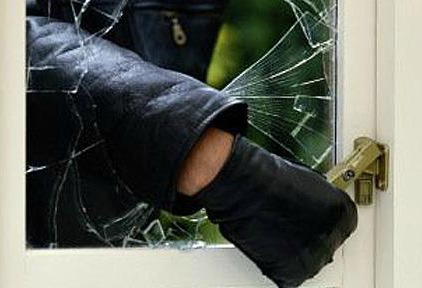
If someone robs your house and steals everything you own, you feel unsafe, violated and on high alert for future thefts.

If someone breaks into your house everyday and steals just one CD, you feel unsafe, violated and on high alert for future thefts.

In either case, someone is inside your house without your consent and taking something belonging to you without asking.

Sexual violence is like having your house broken into.

When I was raped, I felt unsafe, violated and on high alert for future violence.

When I was touched sexually without my consent I felt unsafe, violated and on high alert for future violence.

When I was looked at sexually without my consent I felt unsafe, violated and on high alert for future violence.

Whether the perpetrator was forcing sex without my consent or just touching me when I was asleep, the impact was the same.  Something was being taken from me without my consent.  I wasn’t freely participating so it was assault, not sex.

Sexual violence impacts survivors, it doesn’t have to be rape to impact you.

I want to break down the myth that certain types of sexual violence are “more serious” than others.  All sexual violence is happening without consent, and when something happens to your body without consent it can have a major impact.

I’ve experienced the spectrum of violence, from voyeurism, to touching without consent, to forced intercourse.  It’s just not true that the rape was always the worst.  What was the worst was not knowing if my house was going to be broken into that night or not.  Not how much was stolen during the break in.

During my marriage the sexual assault took place when I was drugged and asleep.  There was no ability to provide consent.  In fact, I often said no while I was awake.  Sometimes I said no again when I woke up, sometimes I didn’t.

If you don’t say no, it does not mean you consented.  There are many reasons why someone might not say no.  They might be drugged or intoxicated, they might be too afraid, they might disassociate or freeze as a response to the trauma or they might have learned through repeated experience that saying no is not effective, or provokes further violence.

I was impacted by all the violence I experienced.   And the impact built and multiplied together.  It wasn’t any one incident that caused me to have PTSD, or made me feel unsafe, it was a collection of experiences that took place over a number of years.   Except for in one case, I knew all the perpetrators.   Except for one of those, I had contact with all of them after the abuse.  They were friends, dates, boyfriends and my husband.  The fact that I had contact with them does not mean I consented.  In some cases it takes time to end a relationship with an abuser.  There can be further risks for women in the period when they are leaving, the violence can escalate and the abuser can become more unpredictable.  The abuser senses they are losing control and they tighten and increase their efforts to control the survivor.

I was abused multiple times and I never screamed.  I never really physically fought back except in one instance.   This does not mean I consented.  There were reasons why I didn’t fight back.  I was ashamed, I was scared, I froze…my kids were in the room next door, I was afraid of further violence.

All the assaults that happened to me except one, happened in places I knew, my home, their home, school etc.   If you go with someone to a location it does not mean you are consenting to sex.  Most violence happens in places and with people known to the survivor, it is a  myth that the most dangerous place is walking down a dark street at night.

No matter how your house was broken into and what was stolen, even if nothing was stolen, your experience is valid.  No matter where on the spectrum your assault falls, your experience is valid.  Your coping reactions and what you did to survive are all valid too.

I believe you.  I hope you believe yourself.   I hope that the thefts stop or have stopped.  You deserve to be safe.  Without consent, it is assault.


Migraines.

635787012203546833-1156820432_01-memorable-quote_2x.imgopt1000x70

This will be a short post because I’ll be heading back to bed shortly.

Migraines and other chronic pain issues seem to overlap frequently with PTSD.

My migraines are genetic and heavily hormone related. I also have certain food triggers and stress is a factor, especially in the severity and duration of the migraine.

Basically for 10-14 days of the month my migraine threshold is lowered due to hormonal changes.  If during that time I also have a high amount of stress, I will be more likely to get severe migraines that last for multiple days without relief.  If I also eat certain things like caffeine, chocolate, red food dyes and artificial flavours or colours during that time…well…you get the idea.  It’s not a pretty picture.

If you have never experienced a migraine consider yourself lucky.  If you do live with migraines, you have my sympathy.

For me, migraines are much more than “just a headache.”  I get visual distortions and blurry vision in my right eye.  This makes it difficult to drive and difficult to focus.  I get a fog in my brain which makes it hard to think clearly (probably due to the severe pain).  I often get nausea and occasionally in the past even vomiting.  I become extremely sensitive to smells and the smells make me more nauseous and make the pain worse.  The worst smells are perfumes, peeling oranges, and coconut scented lotions or air freshners.  A random collection of scents, but things I can’t tolerate during a migraine.  Bright lights hurt my eyes and cause me to squint.  Loud noises and even vibrations will cause increased pain and sensory reactions.  During some migraines I also experience a lot of dizziness and sometimes shaking or general feelings of weakness.

But I don’t look sick and this happens on a regular basis so I can’t just put my life on hold, take day off or stop caring for my kids.  Sometimes I have to leave work early or ask for help with the kids, but the majority of the time I just keep on going.

I have had trouble getting treatment for my migraines for various reasons.  One of them is that because of my scars and my mental health history doctors don’t believe me.  They won’t prescribe me narcotics, even though pure codeine does help me with a severe migraine.  I’m always afraid to go to Emerg for pain relief because sometimes I will be believed and treated and other times ignored as a “drug seeker.”

The intersection between chronic pain and mental health stigma is real.  I also have a less common form of arthritis which took years to be properly diagnosed and treated because doctors blamed the pain on my depression and eating disorder.  They didn’t seem to understand that it is possible to have a physical and mental health problem simultaneously.

When my migraines are bad I know that I need to get a referral to a neurologist and explore other treatment options.  But when they are bad I have no energy to get this done.  When I’m feeling better I go into avoidance mode due to my fears of facing discrimination when seeking health care.  It’s a vicious cycle resulting in more pain because I don’t have a doctor following this.

Today I’ve spent quite a few hours lying in bed with ice on the back of my neck, the room spinning whenever I open my eyes.  It’s discouraging.  I have things I want to do, I have plans, I have work…but my body is saying NO! and I am forced to listen.

People with chronic pain aren’t lazy.  They don’t want to be sick or to need to slow down.  People with chronic pain are doing the best they can and even if their limitations are invisible they are valid.

Please don’t say “you don’t look sick” to anyone ever again.  You never know what battles people are facing (physically or mentally).  As with surviving trauma, sometimes the most helpful thing to hear about my chronic pain is “I believe you. How can I help?

Post-it notes

images

Possibly one of the saddest moments in my entire story revolves around a post-it note.

During a particularly dark time in my life, sometime in early 2011, I wrote a series of 3 suicide post-it notes.  This is something I haven’t really shared with anyone.

I was completing my Master in Social Work, I was about to start my final placement.  I was working as a Teaching Assistant, attending classes and taking care of my kids.  On the outside I was functioning, but on the inside I was consumed with depression.  Looking back, I know a good part of the darkness was being caused by my increasing unhappiness within a sexually abusive marriage.  I began to feel like I had exhausted every option for recovery, every medication, every type of therapy, every treatment program and as a parent of two young kids I felt I had even fewer options.  I felt trapped and disconnected from myself and the ones I loved.

I don’t remember why I was upset or what happened that day, I do remember I wanted the pain to stop.  I was home alone, the kids were at school or daycare.  I saw a pad of yellow post-it notes one of the kids had left in my bedroom.  On it I scrawled three separate notes, one for my husband and one for each of my kids.  The notes basically said “I love you ___” and had a heart drawn under the words.   They looked like innocent little notes, the kind family members leave for each other to wish them a happy day.

But to me those were the most tragic post-it notes in existence.  In that moment where nothing was really making sense, I was saying goodbye.

I did hurt myself that day, but I went to the hospital to get it taken care of.  I didn’t tell the hospital staff about the post-it notes or about my despondent thoughts.  I let them fix me up and I went home.  I rarely discussed my suicidal thoughts in the Emergency Room unless I wanted to be admitted to the hospital.

When I got home my family was there and so were the post-it notes, unassuming and cheerful yellow papers.  But seeing them reminded me of my dark plans.  I hated those post-it notes with great passion.  They made me angry every time I saw them, but luckily anger was at least a feeling and not just numb emptiness.

The post-it notes stuck around the house for months before I finally threw them away.  I won’t ever forget them though.  They are a symbol of just how little anything ACTUALLY makes sense when you are severely depressed.  Things that seem logical in the moment are completely ridiculous and nonsensical when you are feeling brighter.  Choices that seem like the only option are revealed as unhelpful and fatalistic when you are recovered.

It’s important to hold onto this realization.  When you are severely depressed you are not thinking clearly.  When you are starved from an eating disorder you are not thinking clearly.  When you are triggered and in the middle of flashbacks you are not thinking clearly.

Don’t make decisions that could harm you or someone else when you are not thinking clearly.  Chances are you might regret it when you are calmer.   If possible focus on grounding and self care, or get help from others if you realize you are not thinking clearly.

Suicide wouldn’t have solved the problems in my life, it would have passed them on to my children, my parents and my close friends.  I can say this now, but I know for a fact that in a dark place I just won’t care.  The only thing I will think about is getting the pain to stop.

Luckily, in recovery, I know that depression is temporary and impulses to harm myself are passing thoughts.  Suicidal thinking and gestures are symptoms of depression and PTSD for some people.  Thinking about suicide can be a normal coping reaction to surviving violence.  Just thinking about suicide is not necessarily dangerous.  Sometimes it can be a way of feeling in control of something, which is actually a method of self preservation.  It is necessary to challenge the self destructive behaviours, but I try not to judge myself for the thoughts.

At the end of the day there is no difference between a person who sometimes thinks about suicide and one who does not.  There is not a special “crazy” class of folks who contemplate dying.  Suicide doesn’t discriminate.  Anyone can have the thoughts and it doesn’t make them weird, dangerous or a person to be feared or shunned.

Suicide survivors walk among us.

Sometimes the best thing you can do for a friend who contemplates suicide is to allow her to talk about her thoughts and impulses and listen without panicking and without judgment.  Validate her, let her know that you are sorry she is feeling SO awful that she feels life is hopeless.  Allow her to explore the thoughts with you, or encourage her to talk to a counselor, support worker, crisis line or doctor.  It isn’t your job to save her, it’s your job to be her friend.  Thank her for trusting you.  Let her know you care. By letting someone talk about suicide, you are reducing shame and creating a connection.

Connection is the opposite of depression.

Misdiagnosis.

20160425_190808[1]

This is the piece of paper I was given as a “formal” diagnosis back in 2001.  It was the first time I learned about PTSD.  It was also the first time I was misdiagnosed with Borderline Personality Disorder.  In reality, my PTSD is severe, my current Dr told me it was one of the worst cases he had ever seen.  But Dr. X, in his wisdom, after knowing me for a only a few months decided the impact of my trauma was “mild” and instead the main factor in my illness was untreated borderline personality disorder.  As far as I can see, this assumtion was made due to my self cutting behaviour.  He failed to take into account that before being abused I had no mental health problems.  He failed to take into account that self harm and anorexia are common coping techniques for sexual abuse, especially in young women.  He failed to notice that my out of control self harming behavior and suicide attempts began only AFTER taking a cocktail of psychiatric meds. He failed to see that I have almost none of the diagnostic criteria for BPD, except the self harm.  I had long term friends, stable relationships in my life.  I was not impulsive or risk seeking, except with regard to the self harm.

Over the next few months Dr X also placed a value judgment on this misdiagnosis of Borderline.  He was the first person I talked to about the sexual abuse, and as such I trusted him and looked to him for support.  This was a mistake.  I didn’t have a choice as to what psychiatrist I saw, he was the one assigned to me.  He gradually saw me less and less in his individual practice.  I would show up for appointment only to find he had left for the day or was on call in the ER.  Then he changed his practice to work solely in the urgent psychiatry clinic.  The only way to get an appointment was through the ER.

I had no family Dr and nobody to renew, monitor or change my medications.  He told all the psychiatrists at South Street that I was borderline and so they would not take me on as a patient.  He refused to give me a referral to a community psychiatrist and I had no family doctor.  I felt betrayed.  I felt rejected.  I felt worthless.

I started to use the ER on a regular basis, mainly after cutting myself.  I would ask for a psych consult about 50% of the times I cut myself.  I would ask the doctor on call to please assign me a regular psychiatrist to follow me.  I begged.  I pleaded.  I was rejected.  I was sometimes given an appointment at the urgent psychiatry clinic, where I knew I would see Dr. X again.  No way to break free, systemic barriers and misdiagnosis kept me trapped.  The more I protested, the more I harmed myself, the worse the situation got for me.

The treatment that I received at South Street was appalling. I know I am not the only one and I know this hospital is not the only one with issues.  Women survivors of childhood sexual, emotional and physical abuse are often misdiagnosed with borderline, a diagnosis I see as basically a wastepaper basket label.

I remember during my second last year at South Street, 2003, I attempted suicide again.  This time I cut myself extremely deeply, diagonally across my arm.  I remember lying on the floor in the hallway of the apartment I shared with my boyfriend.  I was dizzy, almost blacking out.  I felt the quiet empty feeling in my head and I tried to decide whether or not to keep pressure on the cut or let it bleed and let myself give in to the pull of unconsciousness.  I lay there for a while, I’m not sure how long.  I finally decided to go to the hospital.  I think I took a cab, but I’m not sure.

At the hospital, the medical doctor that first assessed me actually put me on a Form.  He got a security guard to sit in my curtained area to watch over me.  I remember I was studying for my 4th year Health Sciences exams.  Somehow the irony of this was lost on me at the time.  I had just tried to kill myself, I had a security guard watching me and I was studying for a university exam in the ER.  The medical doctors fixed up my cut with stitches.  By this time the routine of receiving stitches was, just that, routine.  I had received hundreds, sometimes as many as 50 at a time.  After I was fixed up I was transferred to the psych section of the ER.  I don’t remember too much about what happened but I do remember I was told that there were no beds, that I could not be admitted.  I told them that the cut had been a suicide attempt, not “just” self harming like I usually did.  I begged to be admitted. But the psychiatry doctor was firm, there were no beds for me.  I couldn’t understand it, the medical doctor had thought I was a risk to myself, so much so he had security watch over me, but psychiatry released me.  I learned over the years at South Street that as soon as a doctor had access to my past charts I was treated very differently.  I was generally taken seriously when a health care provider spoke to me and listened to me.  When that same health care provider saw my chart, I was turned away, disrespected, ignored and mistreated.  This is what misdiagnosis with BPD means to me.

I remember being discharged from the ER that day.  I was desperate.  I still wanted to die.  I remember standing in between the double doors of the ER crying.  I didn’t know where to go or what to do.  I felt hopeless.  It was late evening, it was spring or summer and it was still light outside.  As I stood there crying a door opened, it led out to the ambulance bay right beside the place I was standing.  Our of the door came a gurney, with a black body bag on it.  The door led to the morgue which was also in the basement of South Street.  The body was loaded into a funeral home vehicle and drove away.  The image impacted me and haunted me.  I wondered if my friend Darlene was wheeled out that very same door a year before. I was preoccupied with death.  I felt scared and I felt lost.  I just wanted someone to help me.  I’m not even sure I really wanted to die at that point, I just wanted the pain and confusion to stop.

Eventually I left.  I took the bus home, back to the apartment where I’d tried to end my life a few hours earlier.

I think that people often conclude that because an injury is self inflicted, that the person chose it.  That they are not traumatized by it or impacted by it.  But I believe that self inflicted trauma also needs to be recognized as a contributor to PTSD.  I think that my experiences within the psychiatric system alone could have caused PTSD in a healthy person.  In a person who was already traumatized they were that much more severe.  Sometimes comfort and sympathy are not provided to self injuring people.  We are treated as though we “knew better” and are essentially “wasting time and health care resources” or taking away care from those who “really need it.”  I believe that every person who self harms would have chosen a different option if they felt they truly had a choice.  Self harm isn’t cool, it’s not fun, it’s not something to envy or idolize.  It’s dangerous, it’s terrifying, it is not glamorous in any way.   It leaves lasting scars.  Scars I will live with for the rest of my life, and scars that trigger memories of times in my life I would much rather forget.  I get flashbacks around my self inflicted trauma in the same ways I do to the abuse inflicted on me by others.  And because I was abused in the health care system the two are not distinct.

There is no easy solution to these problems.  People who self harm need and deserve compassion.  PTSD should be taken seriously and not dismissed as a disordered personality.  PTSD is treatable.  Believing survivors is the first step.  Yes, this means as a society we all have to step up and acknowledge that violence and abuse is much more prevalent than we ever imagined.  We need to collectively work to end victim blaming and shaming and fight rape culture.  Because powerful white male doctors, with all their privileges, labeling my personality as disordered is rape culture.  I became sick and disabled because of abuse; I’m not disordered, I am a survivor.


Dental Floss. When the truth is I miss you so…

Wonder-Woman

I met my dear friend MJ during the summer months of 2002.  We were both patients in the Post-traumatic Stress Recovery Program at Homewood Health Centre in Guelph.  We became friends very quickly, even though we were both struggling.  In so many ways she was struggling, coping with the impact of years, a lifetime really, of abuse.  We were close in age, we were both looking for hope and for something to hold on to.

I won’t write too much about MJ’s story, because it is not my own.  I will say that she was also a survivor and spent a good portion of our friendship hospitalized in various places.

MJ and I would write letters to each other, cards mostly.  Words of encouragement.  We would speak by phone, sometimes almost daily and sometimes months would go in between.  The amount of contact varied along with our health statuses at any given moment.

MJ was the person who I felt completely understood my experience of living with PTSD.  She never judged me.  She was always so grateful for our friendship.  I could tell her my strangest thoughts and she knew exactly what I was going through.  She was one of the bravest people I’ve even known.

MJ and I had an inside joke.  I don’t remember anymore who started it, but I think it was her.  We both struggled with near constant thoughts of suicide and self harm.  But we would talk about holding on and about being there for each other.  She used to say “hold on to hope, even if what you are holding onto is as thin as dental floss.”  We often talked about holding onto the dental floss, each of us holding one end and clinging to life.

I supported MJ through many hospitalizations and numerous suicide attempts.  I always knew in my heart that MJ would not be with me forever.  I almost lost her too many times to count.  We had a special connection, one that I’ve only had with a few other people in my life. I would dream about her, nightmares about things happening to her. Waking with a terrible, panicked pit in my stomach, I would know the dream was true. We were so connected I often knew something was wrong or something had happened before she told me.  I would call and find that she was in hospital.

MJ died one year ago.  She died from complications from chronic, terminal PTSD.  I was not there, I did not get to say goodbye.  For some reason I was not invited to the funeral.  I found out over a week later when her Mom answered her cell phone.  I was sitting in my car and I instantly knew.  I cried as her Mom described what happened.

MJ did not die alone.  Her family was with her and she was peaceful.  I take great comfort in this.  I said thank you hundreds of times.

But my heart aches and aches.  I can’t believe she is gone.  I feel devastated that some people don’t survive violence. There are days when I think if I pick up the phone to call her she will answer.  If I get on a plane and fly to her city, she will be there waiting for me.  I dream about her still and wake up crying when I realize she is dead.  She will always be a true survivor to me, even though she didn’t make it out alive.

I still have all the cards she ever sent to me.  I have about 25.  I keep them, along with photos of us together, under my bed.  I’ve read and re-read them, my eyes filled with tears of gratitude that these small pieces of her, her words of encouragement to me, will always be with me.

If I could have one wish, to speak to anyone, living or dead, it would be her.  Just one more time.  I wonder if anyone else will ever understand me so well.  I know I won’t ever have a friend just like her.  The bonds that are formed through shared experiences of trauma are difficult to break.  And I don’t want to break them.  As much as this hurts, I don’t regret being her friend.

I miss you MJ.  I miss you so much.  I’m still here, I’m still holding my end of the dental floss.  I’m still trying to be the Wonder Woman I know you believed I was.  Thank you for being my friend.

Cowboy take me away
Fly this girl as high as you can
Into the wild blue
Set me free oh I pray
Closer to heaven above and
Closer to you closer to you”   -Dixie Chicks


No, you don’t have the right to torture me

20160418_215945[1]

This is what the stigma of being misdiagnosed with borderline personality disorder means to me.  Trigger warning for description of self harm and abuse.

Monday November 8, 2004

I presented to the Emergency Room at South Street Hospital with a self inflicted cut on my arm.  By this time I had been using hospital psychiatric services for over 3 years.  I was a frequent flyer, a regular, a repeat customer and I was not popular.  I had experienced many unpleasant experiences in the ER.  I had grown accustomed to medical students poking at me and asking ridiculously offensive questions.  The worst was “Why don’t you cut yourself deeper so it would hurt more?”

I’m only going to say this once.  In my opinion someone who uses psychiatric services heavily is actually in MORE need, likely MORE desperate and experiencing MORE complex issues that someone who is visiting for the first time.  As mental illnesses progress folks become sicker and more marginalized by society.  What is needed are more individualized care plans, more compassionate care, more empathy and more listening to the survivor.  The survivor themselves is the expert in her own healing.  One size fits all models of care do not work, they have never worked, and will never work.  Each person is unique and experiences a unique mix of oppression and marginalization as they live with their illness.  Social and structural factors are an important thing to consider.  The survivor does not exist in a vacuum.

Believe me, if someone truly had options, they would NOT choose to spend their lives in psychiatric institutions.

Part of the reason I used the Emergency Room so frequently at that time was because I had neither a family doctor, nor a psychiatrist seeing me for ongoing care.  Lack of access to primary and preventative mental health care is a huge issue.  Another major barrier is the existence of a two-tiered mental health care system; whereby folks who have financial resources are able to access private care from psychologists and social workers and economically marginalized people (the sickest and most at risk) often face long waiting lists, lack of affordable housing and gaps in services.

By that time Dr. X had stopped seeing me.  This happened over a period of months.  First he would cancel appointments, then not show up for them.  I was busing across town to meet him and he just would not be there.  Then he switched from an outpatient practice and seeing inpatients on the 7th and 8th floor to working full time in the Urgent Psychiatry Clinic and the ER.  When he switched his practice I was not assigned to another doctor, nor was a given a community referral.  Thus, my only option was to attend at the ER to get a psych consult and an appointment with Urgent Psychiatry.  I begged and pleaded and searched for a new doctor but I was not able to find one.  I found out later that Dr. X had essentially blacklisted me at South Street and no psychiatrist would take me on because I had “borderline personality disorder.”  I was also denied access to the PTSD treatment program, after waiting on their list for 18 months.  I was told I didn’t meet the criteria for the program.  Ironic since PTSD is my main, if not only, diagnosis.

But I digress…back to November 8, 2004.

I waiting in the waiting room for about 1 hour before being brought back into the curtained treatment area known as OR 2.  When I was directed to a bed I began crying and was visibly upset.  A nurse arrived to take my history, but she was interrupted by Dr. P who dismissed her saying “you are wasting your time.”   Dr. P spoke to me in a curt and derogatory manner, asking to see my laceration.  He took a quick look at it and said he was going to staple it.  I began crying and asking him to please stitch the cut instead because staples really scared and triggered me.  Dr. P laughed at me and asked me to lie down and proceeded to quickly clean the cut.  He then held my arm down and proceeded to place 8 sutures into my forearm without using any local freezing or pain relief.  I was sobbing and screaming and he continued offering no sign of sympathy or concern.  I couldn’t understand why he was not following procedure and I was confused and distressed.  I felt as though I was being purposely targeted and tortured because my wound was self inflicted.  I felt like Dr. P wanted to “teach me a lesson.”  I was known to him from previous visits and I got the sense he did not want to see me in “his” ER again.

After he was finished the nurse came back and tried to calm me down.  She reported the incident to the charge nurse who also comforted me and offered me Advil.  I was then taken to the psych waiting area to meet with the doctor on call.  I was very upset, triggered and in a lot of pain.  I remember curling up into the smallest ball I could make in the uncomfortable plastic chair which was bolted to the ground.  The floor was covered in green tiles.  All the furniture was bolted down, presumably to stop patients from injuring themselves of others.  It was a cold room, I remember I was shaking and probably in shock.

I reported the incident to the College of Physicians and Surgeons a few days later.  The treatment I received was abusive and was physical assault.  I came to the hospital (already living with PTSD) and I was traumatized in a time of crisis.  I firmly believe that if my cut had not been self inflicted and if I had not been labelled within the hospital as a “hopeless case” this assault would not have taken place.

Procedure allowed Dr. P to write a response to my complaint.  In his response he actually admitted to speaking with Dr. X who told him that I “had long standing borderline personality disorder and that none of his colleagues would take [me] because of this.”  Incredible!  Psychiatrists in the hospital were actively denying me care due to a psychiatric misdiagnosis?  I wouldn’t believe it except I’ve seen my charts and I know it to be true.

Dr. P’s explanation for not using freezing was that he thought my arm was so full of scar tissue that I would not be able to feel the sutures.  This made no sense since I was screaming while he stitched my arm.  He wrote that he offered me anesthetic which was a lie.  Luckily the two nurses who were working supported my account of events.  Also the Dr did not note in the chart that I had refused local anesthetic which is standard protocol before proceeding without it.   I found out later that my complaint was not the first one made to the College about Dr. P and his behaviour in the ER.

The College upheld my complaint and Dr. P was ordered to appear before the College for discipline.   I’m not 100% sure what that entailed but my complaint was heard.  I did feel validated by that, but it did not undo the trauma that I experienced.

I experienced torture within a Canadian hospital.   This happened because of the label of borderline personality disorder.  This happened because I wasn’t getting better quickly enough, because I wasn’t acting in a way that was expected of a survivor of violence.

But this should not have happened, not to me, not to any person.  Especially not to a survivor of abuse.  Self harm was a normal coping reaction for me.  My personality is not disordered, I survived ongoing sexual and emotional abuse; as well as dangerous side effects to the very medications the hospital kept pushing at me.

My message to the world:

Please treat folks who harm themselves with care and compassion.  Chances are they are already judging themselves far more harshly than you ever could.  Self harm is a misunderstood coping technique, it is not a way to get attention.  If you haven’t harmed yourself, please don’t judge, you haven’t walked in our shoes.  The reasons why people turn to self harm are complex and layered. By showing love and compassion to the self-injuring person you could be literally saving their life.  We don’t want or need to be saved, we just want to be respected, heard, and valued.

If you do harm yourself, please know that you are loved and important.  I hope one day you will find other ways to cope.I support you and I am glad you are fighting rather than giving up.

The world is a better place because you are in it.


Don’t judge me. I’m coping.

hope-hero

The most important thing to remember about survivors of sexual, emotional and physical abuse is that if we are alive chances are we are coping and that’s a good thing.

One way the psychiatric system as a whole fails survivors, especially women, is by labeling our normal coping reactions as “symptoms” of various psychiatric illnesses.  Please consider this: it was the situations I survived that were not normal, the ways I coped were normal healthy reactions.  I did what I had to do to survive and that’s okay.

Yes, you are normal!  No, this is not your fault!  I believe you.

If you turned to “disordered eating” as a way of coping with your trauma, you are normal.

If you engage in self harming behaviours as a way of coping, you are normal.

If you take drugs and alcohol as a way of coping, you are normal.

If you zone out or disassociate as a way of coping (either voluntarily or involuntarily), you are normal.

These are all examples of common coping reactions that women utilize to survive the abnormal and terrifying situation of experiencing abuse.

You did the best you could at the time to survive and that was enough.  If I had known better or had other options, I might not have used anorexia, self harm and suicide attempts to cope.  Those tools worked for me for a time, until they didn’t.  When they stopped being useful to me and started causing more harm to me than good, I became motivated to learn new methods of coping.    I don’t have borderline personality disorder, I don’t harm myself to manipulate others or to seek attention.  I do it because I am a survivor of trauma, doing what survivors do best: surviving.

If you are working towards recovery be proud of yourself.  We aren’t aiming for perfection here, because it doesn’t exist.  Your best is enough.  You are enough.

I identify with the label PTSD and my experience with it is that it is chronic and more of a disability than an illness.   Living with PTSD takes an incredible amount of energy.  If you regularly hear me say “I’m tired, I’m so tired” I’m not whining.  I am fatigued and tired almost all time, some days worse than others.  And no, taking a nap won’t help but thanks for thinking of me.

Let me explain why living with PTSD is so exhausting.  It’s an invisible illness, for the most part you can’t see my struggles, but that doesn’t mean they are not real or valid.

Facts about PTSD and why it sucks away a massive amount of my energy each and every day:

  1. Even though I might be in bed for 8 hours in a given night I’m often experiencing nightmares.  Sometimes these nightmares cause me to wake in a panic attack, unsure what is real and what was just a dream.  I sometimes wake up covered in sweat, making sounds and fighting off imaginary threats.  When I wake up I often do not feel rested and I sometimes avoid going to bed at night when the dreams have been particularly troublesome.
  2. One word:  hypervigilance.  This means my danger sensors are on high alert 24/7, 365 days a year.  I can’t “just relax.”
  3. Hyperarousal and exaggerated startle response.  Every time there is an unexpected noise, or sometimes even an unexpected movement I jump about 10 feet in the air.  This is a symptom that people around me tend to notice and comment on.  Again, I cannot control it. Reassuring me that there is no danger does not stop the response.
  4.  Depression and anxiety.  Obsessive compulsive worries.  Yes, PTSD impacts my mood.  No, I can’t just “cheer up” or “think positive.”
  5. Flashbacks and body memories.  Yes, intellectually I know it happened “a long time ago” and that I’m “safe right now” but my body and my physiology haven’t caught up. I can go from feeling perfectly fine to crying, terrified and in physical pain within seconds and the trigger can be sometimes as inconsequential as a touch, a word, a memory crossing my mind.  Intense flashbacks are accompanied by panic attacks, rapid breathing, hot and cold sweats, disorientation, confusion between past and present.  After a particularly bad one it can take up to 7 days for the residual effects to pass.  And though technically, in the present moment, nothing bad has happened to me, I often feel as though the abuse has occurred all over again.  I feel exhausted, scared and sometimes hopeless about how little control I have over the memories.
  6. Flashbacks, body memories, hypervigilance etc are not the same as day to day worries.  They are not something I spend time thinking about or worrying about, it’s easier to understand them as physiological reactions, rather than connected to specific thoughts or behaviours.   This is not an intellectual problem, so no, I can’t just “look on the bright side”
  7. PTSD is often accompanied by deep shame and sense of self as being damaged, broken or somehow faulty.  Even though you might not see me this way, and struggle to understand why my self concept is so “distorted” please hear me and believe me.  I really do feel that internalized shame as a result of being abused.  Be patient with me, I can’t just “love myself.”  It’s more complicated than that.
  8. PTSD causes actual changes in your brain.  In the military it is referred to as an operational stress INJURY or post-traumatic stress INJURY and this makes perfect sense to me.  My brain was injured by the trauma I survived.  The eating issues and self harm behaviours are symptoms of PTSD, they were the ways I reacted and coped with the initial injuries.

For those of you who do not live with PTSD, I hope this explanation of my experience makes sense.

Last night I had a new flashback, to the original abuse with X, 20 years ago.  It wasn’t a lot of fun.  It led me to think about how PTSD uses up a massive amount of spoons (google spoon theory of chronic illness for more information).

I’m trying to be compassionate with myself tonight.  My hope levels are staggeringly low.  I’m tired of life, but I won’t give up.

Tonight I’m coping.  I hope you are coping too.