September 10 -World Suicide Prevention Day

20160509_204444

On this day I remember the friends I have lost to suicide.  I think of the friends I know who are suicide survivors.  I think about the service users I work with who struggle with suicidal thoughts.  I think about what it means to be a suicide survivor.

I am a suicide survivor.

I can’t speak to the experiences of other people who have survived suicide attempts, but I would like to share my own thoughts.  I think there are a lot of myths out there related to surviving suicide, how to help people who are suicidal and why people attempt or complete suicide.   It’s a taboo subject, one that people skirt around.  Sometimes the mere mention of suicide can silence a room, create uncomfortable looks and make those around you ill at ease.  I think this is mainly due fear.  It’s almost like people think that suicide is contagious.

I rarely talk about my experiences as a suicide survivor.  There seems to be a tacit agreement that it is not a suitable conversation topic.  Even in therapy there is the worry that talking about suicide will lead to unwanted consequences, trips to the hospital, worrying others, making others think that you are “crazy” or “unstable.”

Here are some of the myths surrounding suicide that I’d like to dispel.  These are my own thoughts and I don’t claim to speak for everyone who has these experiences.

  1. Suicidal thoughts and suicide attempts are impulsive reactions and pass quickly.
  2. Talking about suicide means that someone is not serious and is not really at risk
  3. Suicide attempts are always a “cry for help” and the person doesn’t want to die
  4. People who survive suicide attempts are grateful to be alive and recover quickly
  5. Talking about suicide will just “give someone ideas” and it will increase their risk
  6. The best way to help someone who is suicidal is to call 911 or take them to hospital
  7. If someone is habitualy suicidal, the experience is normal for them and they don’t feel afraid or need support.

Realities

  1. I’ve struggled with suicidal thoughts on an ongoing basis since I was 17 years old.  That’s almost 20 years.  My suicidal thoughts can sometimes be impulsive, but in my experience they are usually long lasting, persistent and even obsessive in nature.  I wouldn’t even like to hazard a guess as to the number of hours I’ve spent planning ways to die and thinking about ending my life.  In my experience, the impulsive thoughts are the most dangerous and the scariest, but the chronic obsessing about suicide is more exhausting and creates  a sense of hopelessness.   Many people struggle with suicidal thoughts over a long period of time, just because they don’t act on it or don’t talk about it, does not mean they are not at risk.
  2. I hear this a lot.  “If she is willing to talk about her suicide plan it means she isn’t serious and she really wants help.”  This is a dangerous assumption.  Every person is different, every situation is different.  Some of the times I tried to kill myself I didn’t tell anyone, I didn’t talk about it before hand, there wasn’t an opportunity to intervene.  Other times I spoke about it to many people, I asked for help, I went to the hospital without harming myself, and I often found that I was not believed or taken seriously.   It was incredibly frustrating because when I went to the hospital AFTER harming myself the doctors were angry that I didn’t “ask for help.”  When I went without harming myself, they assumed I was safe and rational and did not need help.  It was a vicious unhealthy cycle.  In my opinion, if someone is talking about suicide you should listen and you should take it seriously.  Many people who complete suicide have talked about their thoughts prior to taking the final step.  On the other hand, if someone never talks about suicide we can’t assume they are not at risk.
  3. Suicide attempts are not always a cry for help.  Sometimes the suicide survivor really did want to die and their attempt failed.  Suicide attempts are not a way to seek attention.  They are not a way to control or manipulate people.
  4. When I attempted suicide and survived, I was not grateful.  I felt like a failure.  I felt worthless and ashamed.  I felt like I couldn’t do anything right.  I felt ill and I had physical effects from harming myself.  I felt alone and I felt stigma. Even today, years later I regularly wish I had died years ago when I attempted.   Not all suicide survivors are happy to be alive.  We don’t all wake up the next day, thankful for a second chance.  It’s also common to be happy to be alive sometimes and wish you had died at other times.  The recovery process can take a long time and will last far longer than the short time someone might spend in the hospital or away from work/school.
  5. Talking to someone who you think may be suicidal will not increase their risk.  It’s far more risky to stay silent, not ask the questions, not check in with someone.  If you are concerned about someone you care about, I recommend asking them directly if they have thoughts of harming themselves, ending their lives, or wishing they were not alive.  Ask them if they feel like a burden, ask them about what connections they have in their lives, ask them if they feel hopeless.  It’s better to know the answers, then to assume someone is not suicidal.  Sometimes a suicidal person feels like nobody cares about them, and staying silent could reinforce that belief.  I can’t even remember the number of times that I was stopped from harming myself by receiving a phone call from a friend, or a connection with someone around me.  Connection is the opposite of depression.  Asking someone about suicidal thoughts is not easy, but losing them to suicide will be harder.
  6. Calling 911 or taking someone to the hospital is not always the best way to help a suicidal person.  Sometimes involving the police, ambulance or hospital can escalate a situation.  Sometimes it can destroy the trust you have with that person.  In many situations it can be helpful to give the suicidal person choices and options.  Thank them for opening up to you.  Ask them what they feel would be most helpful.  In my experience, suicidal feelings are often linked to feeling out of control and overwhelmed.  Taking away choices from someone or punishing them for suicidal thoughts can add to feelings of powerlessness.  Offering choices can be an antidote.  Maybe the person wants company, maybe they don’t.  Maybe they just want a chance to talk about their suicidal feelings without being judged.  Maybe they do need medical intervention, maybe you can take them to the hospital and stay with them.  If someone is suicidal and impaired by drugs and alcohol, or has access to lethal methods such as a gun, you may have fewer options.   But calling 911 without somoene’s permission should be a last resort.  Hospitals don’t even always admit someone who is suicidal.   I’ve been in the ER, highly suicidal and at huge risk, and just sent home.  I’ve been told “she isn’t psychotic so  she can go home, she isn’t at risk.”  I’ve often felt WORSE after unpleasant and unhelpful interactions in the ER.  It’s a myth that hospitals always help suicidal people.  Consider all your options and include the suicidal person in decision making as much as possible.  Also make sure you take care of yourself.  You are not responsible for saving anyone.
  7.  People like me, who struggle with suicidal thoughts on a chronic basis, still get scared.  Feeling suicidal is a scary thing.  It doesn’t matter that I’ve felt this way hundreds of times before.  I’m afraid.  I always worry that I will become impulsive and make bad choices.  I always feel afraid of telling someone, afraid of their reaction, afraid of the stigma.  Afraid people will think I shouldn’t be working, parenting, left alone etc.  If you know someone who chronically talks about suicide or habitually harms themselves, don’t give up on them.  Don’t assume they don’t want to get better.   Suicidal thoughts and self harm behaviours can be a coping mechanism for many survivors of violence.  Sometimes thinking about harming myself feels like the only way I can have control in an out of control and scary world.  Suicidal people need and deserve compassion.  Never underestimate how much good you can do by just non-judgmentally acknowledging someone’s struggle:  “Those thoughts sound very scary, you must feel pretty overwhelmed right now, I’m sorry you are struggling, what can I do to help?”


I miss my friends who completed suicide, but they are not cowards.  They are some of the bravest, most beautiful people I have ever known.  Suicide survivors are all around us.  We are regular people, living regular lives.  Suicide isn’t just something that happens to “crazy” people.  It can happen to anyone.  Breaking down the stigma helps everyone.  I think about suicide on a regular basis, but I still have an ordinary, productive life.  If you struggle with suicidal thoughts, or have lost someone to suicide, you are not alone and you should not be ashamed.  Be good to yourself, I’m happy you are alive.

Innocent Until Proven Guilty.

Themis 2652

I’m feeling frustrated today about how survivors of sexual violence and abuse survivors in general have to constantly justify their existence to everyone on this planet, especially to people in authority.

We have a legal system which states that perpetrators are innocent until proven guilty.

But what about survivors?  Where are our rights to be considered innocent until proven guilty?

Why is it when a survivor comes forward and says “He raped me,” she is often met with doubt, blame, judgment, disbelief and then faced with barrier after barrier to being believed and getting support?

Doesn’t this strike you as wrong?

I’m here to suggest a radical position.  Our legal system can still consider perpetrators innocent until proven guilty, while at the same time survivors can be believed, validated, treated with respect and not accused of fabricating.

It’s very unlikely that a survivor would make up claims of abuse, especially considering the lack of support and validation in our society.

A few years ago my psychiatrist told me something I’ve been thinking about this week.  During the session I had been speaking a lot about my negative self esteem, my guilt, my shame, my body hatred, my struggles with anorexia and so on.  He asked me a question “If you were guilty of committing sexual abuse how long would you go to jail for?”   I answered him “Probably I wouldn’t go to jail, and if I did it would be for less than a year.”

He looked at me and said “You’ve been punishing yourself for more than 15 years for crimes you didn’t even commit.  Even if you were as guilty as you say you feel, you would have been out of jail long ago.  Stop punishing yourself.  Even criminals wouldn’t receive a 15 year sentence!”

It was a good point and I thought about it some.  I haven’t thought about it again until this week.

Honestly, my doctor was missing something in his analysis.  Maybe survivors, myself included, would have an easier time recovering and forgiving themselves, if they did not have to spend years justifying their experience and trying to convince others that the abuse really happened.

Maybe if women weren’t labelled as crazy or mentally ill.  Maybe if police treated women who report with respect and investigated their concerns quickly, thoroughly and with dignity for the survivor.  Maybe if the legal system wasn’t founded on white patriarchy.  Maybe if sexual assault conviction rates were higher.  Maybe if sentences for assault charges took into account the amount of harm that was done to the survivor.  Maybe if our society didn’t worry about “how it will impact his career” and instead considered “how it will impact the rest of her life.”

Because make no mistake.  Sexual assault impacts people’s lives.  It is not a crime that lasts for “just a few minutes”  it lives on in people for years, maybe forever.  The impact IS that voice inside the survivor which whispers “it’s your fault, you are dirty, you should be ashamed, nobody will believe you.”

Maybe we punish ourselves because there is no other option in a society that doesn’t validate what actually happened.  Maybe we doubt ourselves because society blames the victim.

I think that a large portion of the guilt and shame carried around by people like me was caused, not just by the perpetrator, but by a set of systems which are designed to blame us.

At this point in my life, I feel I have suffered an equal amount of trauma at the hands of systems that were supposedly designed to help me, as I ever did at the hands of my abusers.   This is a part of rape culture that we need to be talking about.

It was “just” sexual abuse…

20160823_195012[1]

I’ve been thinking about the barriers I faced in coming forward about being sexually abused, as a child and as an adult.  For people who have not experience sexual abuse, the most immediate response to someone disclosing is often: “why didn’t you tell someone?”  or “why didn’t you tell someone sooner?” or my personal favourite “why didn’t you fight back/scream/run?”

The reality is I didn’t even realize I was being abused until long after the abusers had intertwined their lives with mine.

The reality is that abuse in relationships does always not look the way you might expect it to.

The reality is that I spent a long time, as an adult, in counseling, volunteering at a women’s centre etc…stating to other reasonable adults “it was ‘just’ sexual abuse.”  I made all sorts of excuses for why it didn’t count, why it wasn’t important, why it wasn’t real abuse, why I didn’t deserve help, why other people had it worse off, why I was making a big deal over nothing, why I didn’t want to tell anyone and ruin his life etc.

Because they never hit me, it wasn’t abuse.  Because they didn’t threaten to kill me, it wasn’t abuse.  Because I said yes some of the time, it wasn’t abuse.

I was (and am) pretty mean to myself and a lot of my perceptions were just plain wrong.

I think it takes a lot of strength and courage to really come face to face with the fact that your romantic relationship is unhealthy, abusive and actively making you sick.  It’s not something that comes easily, turning your back on the father of your children.

I told myself the abuse didn’t count.  I knew I felt uncomfortable, I knew it very early on in both relationships.  I saw the red flags, but somehow I interpreted them differently.  I wanted to believe that things weren’t really that bad.  I wanted to believe I could help the abusers change.  That they were depressed, that they needed me.  That their needs were more important than my own.  I wanted to believe that love would be enough.

I did start to talk about the abuse.  I did tell people.  In some ways, I wasn’t really challenged by those people.  I think many of them instinctively knew I wasn’t ready to leave.  They knew I needed time to come to the realization that it was abuse and that I needed to get out.  For the most part they didn’t push me.  I was still ambivalent about the abuser and I still wanted things to “work out.”

One day someone I volunteered with called me out.  I mentioned something about it being “just” sexual abuse.  She challenged me.  She sat there and said “what you are saying doesn’t make sense.  It’s not ‘just’ sexual abuse.”  I think it was the first time someone had openly called me out on my own denial.  This was in the month or 2 leading up to my decision to leave.

At the time I left him I still believed it was “just” sexual abuse.  I told almost nobody why I was leaving.  I thought that moving would solve the problem, because since it was “just” sexual abuse I would be safe.

I was wrong.  Sexual assault is not about sex.   It’s about power and control.  It’s about a level of narcissism that exists in this world that allows one person to disregard the consent of another person.  Within any type of relationship it’s about manipulation, it’s about gaslighting, it’s about making the victim feel crazy, worthless, broken, damaged, and most of all dependent on the abuser.   The sex is a tool of control.  It rarely happens in isolation.  Emotional abuse, psychological abuse, physical abuse, threats, coercion…it’s all part of the same package.  Even if the package is wrapped in a disguise that makes you believe that sex is the only issue and that otherwise the person is “basically a good guy.”

At the end of the day, if someone doesn’t respect your consent sexually, they don’t respect you.  They aren’t “basically a good person.”  They are a person who does not value your basic right to say yes or no in a given situation.  They are a person who puts their own needs before yours, and possibly even denies your needs are real, valid or even exist.

It’s a long road back from that place.  The place where you question whether your needs are reasonable, valid or even exist.  It’s a long way back from the place where you believe that your consent is not relevant, where your needs are not relevant.  Where you are blamed for not wanting to consent, even in a situation where there is no trust, no safety and almost no relationship left.

I’m writing this to tell you:

  1. if you have been abused, it’s never “just” anything.  Your experience is valid and real.  If you are uncomfortable, afraid, hurt, feeling crazy then trust yourself.  It’s abuse.
  2.  if you have been abused and even if you have not, please remember that there is no specific way an abuse survivor looks, copes or experiences violence.  There may be no physical marks, there may be denial, there may be almost no signs at all.  Trust yourself, if you have the feeling something isn’t right in your relationship or in the relationship of someone you care about, reach out.  Get help, talk it over, ask gentle questions, be there to support yourself or the person you care about.
  3. believe the survivor.  If you are the survivor, believe yourself
  4. if you still blame yourself, or the person you care about is blaming themselves, tell them it is not their fault.  Repeat step 3.  Repeat step 3 again.  Repeat it again and again and again.

I believe you.  It’s not your fault.  It counts.  It’s is real.  You deserve support.


No uniformed officers please.

what-is-gay-pride-300x187

It’s Pride Week and I want to write about why I don’t think uniformed police officers should be in the Parade.   The police should be welcome, but they should attend the parade as civilians, dressed in ordinary clothing.

I’m not anti-police, so much as pro-safe spaces.  There are a number of groups of people and communities that may feel threatened by uniformed police officers (no matter how nice those officers might be!).  I know some LGBTQ* folks who have declined to attend Pride this year because they don’t feel it is a safe space for them.

Some communities that have experienced marginalization, violence and oppression perpetrated by police include (but are not limited to): Trans* folks, People of Colour, Indigenous communities, sex workers, immigrant and refugee folks, lesbians, gay people, queer folks, survivors of sexual violence, people with disability and people with mental health and addiction diagnoses.  Especially people who embody any of these intersecting identities in a visible or public way.   The police have a lot of power and privilege and this has often been used against, and not for/with, marginalized groups.

My own experience, and the focus of this blog, is related to my experience of living with a mental illness that does not always allow me to “pass” as normal or neurotypical.

I will describe one of my interactions with the police, as an illustration of my own preference not to have uniformed officers at Pride.

When I used to self harm and attempt suicide on a regular basis, I used to get to the hospital by car, bus, taxi or on foot.  Near the end of the years of regular ER visits, a doctor told me she didn’t think it was safe for me to drive myself to the hospital after cutting myself deeply.  I thought about it for a while and figured she was right.  The next time I hurt myself I was suicidal, not just cutting as coping.  I was home alone and I decided to call 911 rather than a taxi.   During the 911 call I told the truth to the operator.  I told them that I had cut myself on purpose and that I wasn’t feeling safe.  I sat on the staircase in the front entryway and waiting for the ambulance to arrive.

Suddenly there was a knock at the door and I could see tall people in dark uniforms outside.  I opened the door and two huge uniformed police officers stood there.  I was confused, already upset and I started panicking.  I asked where the ambulance was, I told them I changed my mind, I didn’t need police.  They came into the house and told me to sit on the steps.  They started asking me what seemed like hundreds of questions and told me I couldn’t move.  They asked me if there were weapons in the house, if I was alone in the house, if there was medication in the house, where the tools I had cut myself were, whether I had a doctor, what medications I took etc.

I felt more and more panicked.  I knew I couldn’t visibly keep panicking because I knew they wouldn’t leave until they felt I wasn’t a danger to anyone. The feeling of being out of control and knowing you can’t properly show your feelings is an unsafe and triggering one for a survivor of violence.

I felt like I had no choice but to do exactly what they said.  They told me the paramedics couldn’t come into the house until they were sure it was safe.  I tried to explain that I had harmed myself and had no intention of harming anyone else.  I was crying.  I offered to get the things they wanted (the blade, the medication) but they wouldn’t allow me to move.  I had to explain where the items were and one uniformed officer walked around my house collecting them, while the other stood and watched me.  They both had guns.  Generally, guns do not make a suicidal panicky person feel calmer.  Just FYI.

Then they were both back in the room.  I was sitting on the couch, now in the living room.  They asked me questions about my treatment and my medication. I didn’t want to answer them.  They were taking notes in a small black book.  I was keenly aware that this information could be used against me in the future.  I was scared I might have a police record, when what I really needed was medical attention.  I was confused and I didn’t understand how harming myself was a police matter.

Finally, at some point they determined the situation was safe.  Two paramedics, one man and one woman came into the house.  At some point the police left and went outside, making further notes in their cars.  I was embarrassed and ashamed because I knew my neighbours would see the commotion.  I felt my face burning with shame as I walked to the ambulance with the paramedics.  I begged them not to turn on the sirens because I was so embarrassed already.  I’d spent every minute since I opened the door to the house wishing that I had never called 911.     The female paramedic drove the ambulance and the male sat inside with me.  He was calm and kind and he didn’t have a gun.  I felt safer once the police were gone.

In the past, I’d had security guards sit by my bed, or just outside the door in the ER.  Ensuring that I didn’t run away before being assessed by the doctor.  That was associated in my mind with feeling unsafe and not being trusted.  Being a prisoner within a hospital rather than a patient.  That’s how I felt in my own home that day.

The ambulance took me to the hospital and I received treatment for my cut.  I wasn’t admitted to the hospital, because nobody really took my self harm seriously by that point.  They had labelled me borderline and didn’t believe I would ever actually kill myself.  I was often treated like a misbehaving child.

This memory is one reason why I don’t feel safe around uniformed police officers.  The other reasons, related to reporting violence, I will talk about more in future posts.

If I have a serious mental health crisis again in the future, I hope nobody will call the police.  I can’t think how that would calm me down or de-escalate the situation.  I would feel more at risk, rather than safer.

So, for this reason and for many others, I believe there are other ways to create safer and more inclusive spaces.  And LGBTQ* police officers, please feel welcomed by me at Pride…just leave the uniforms and guns behind.


Depression meets PTSD. Crash.

raw-chicken

I’ve realized over the past three years that depression is often more of a secondary problem for me.  It’s very situational and very linked to PTSD.  By the time depression flares up, it generally means that I’ve been coping with PTSD triggers for too long and I’ve started to crash into exhaustion.  Depression sometimes means feeling literally nothing, while PTSD can mean feeling everything and things that are from the past vaulted into the present, clear as day.   This can be a confusing progression.

Lately it’s hard to tease out whether I have a whole host of mental health diagnosis or just one (PTSD) causing a host of symptoms.

Abuse triggers can lead to negative feelings about my body which can then trigger my good friend Ana…yes, PTSD comes first and anorexia is a symptom.   For me anorexia is mainly a series of obsessive compulsive thoughts and behaviours which are linked to extreme anxiety around changing my food rituals.   So anorexia comes first, and OCD traits follow.

When I have a lot of PTSD symptoms and flashbacks, I start to have trouble sleeping and I have vivid nightmares.  Sometimes I wake in the middle of the night to a full panic attack.  Flashbacks can lead to panic attacks during the day as well, and also to anxiety in crowds and enclosed spaces.  So PTSD comes first, and anxiety and panic symptoms follow.

At the end of the line comes depression.  DEPRESSION.  It feels so heavy.  Depression to me leads from coping to constant suicidal and self harm ideation in what seems like mere seconds.  For me, suicidal thoughts are often the first real indicator that I’ve slipped into depression again.  This may seem backwards, but for me the most severe symptom tends to come right at the start, even if I’m depressed for only a few days.

When I’m depressed I feel like I’m walking through a thick soup of fog.  Every fibre of my being hurts and feels heavy and leaden.  Sometimes I have to lie down after just showering and getting dressed in the morning because I feel too exhausted to continue with the day.  When I’m depressed I have no energy.  I want to crawl into bed and hide.  Unfortunately, I’m a single parent and I have a full time job.   It’s not an option just to crash.

So I keep going, but the time crawls by.  I feel unsure if I can get through the day.  I feel unsure if I can stay safe, and resist the negative thoughts.  My self esteem crashes.  I start to feel a lot of feelings from the past.  Or maybe that is backwards, maybe I feel the feelings from the past and it triggers depression.

When I feel out of control of important aspects of my life, I am triggered and I think about suicide.  This is the way my life is.  It’s been this way since I was 17 years old.   It’s both normal to me, and completely terrifying every time it happens.

The depression always lifts and these days it lifts more quickly than it ever did in the past.  The lights come on again, I see the world clearly and not through a haze.  I feel connected and I feel like I am competent at some things.  When I’m depressed I feel alone and I feel utterly worthless.  I feel like a burden and a problem and someone that people I know put up with, rather than care about.  I have trouble making small talk.  I spend a lot of time silent.  I feel an immense amount of social anxiety and discomfort in social situations, especially those involving food.  Depression, anxiety, anorexia, PTSD….it’s a perfect storm of misery.  I’m caught in the middle of a storm of symptoms and I don’t know when they will abate.

Right now I’m triggered because I’m worried about my children.  I’m triggered because of the way my ex-husband treats my children and me.  I’m triggered because this is the time of year, 3 years ago, leading up to my physical separation from him, when things were at their most tense and scary.

I’m triggered today because my daughter told me that her father’s avatar/icon for me on his phone is a piece of raw meat.  Raw chicken.   The father of my two children sees me as nothing more than a piece of meat.

Fuck.


Restraint

hospital-medications-patient-holds-paper-dosage-cup-medication-49355360

In the summer of 2001, I overdosed multiple times.  Some of these stories are described in other blog posts.  After the last of that series of suicide attempts, my psychiatrist put me on a Form (sectioned me, 72 hour hold).  He refused to release me from the hospital unless my parents came to collect me.   I remember my father driving down to pick me up.  I don’t really remember being released, but I ended up back home at my parents house, many hours away in another city.   The past few months felt like a bad dream.

I remember my parents had hidden all the pills in a bag in their bedroom closet.  I remember that there wasn’t a lot of trust, and for good reason.  I tried to relax, but the thoughts of self harm were propelling me forward.  I was caught in a vicious cycle, medication induced self destruction.  I would feel unsafe, hurt myself, go to the hospital seeking safety…then after a few days panic, feel trapped and beg to be released.  It went on over and over.  I always wanted to be where I wasn’t, I was chasing the feeling of safety, of quiet in my mind, of escape.

I remember walking up to the plaza by my parents house.  I bought an exacto knife at the dollar store and sneaked it into the house.  I was always buying, hiding, and throwing away tools during those years.  I often hide them in various places for safe keeping.  Intellectually I knew that having them in the house was the opposite of safe, but somehow their presence simultaneously calmed and panicked me.   It’s rare, even today that I don’t have something hidden.  Even though I don’t use the tools, I sometimes feel compelled to buy and keep them.   Sometimes I’ve called friends and asked them to help me throw them out.  I’ve handed them over to therapists and doctors.  I’ve hidden them and felt ashamed.  Even writing this brings up a feeling of shame inside me.  This is the power of addiction, the constant push and pull between the promise of safety and the threat of disaster and destruction.  Back then, I thought I was in control.  I thought the cutting kept me in control, but in reality the urges controlled me completely.

I had the knife at my parents house, I cut myself with it.  Deeply, but not deep enough to require medical attention.  I told my parents and asked them to take me to the hospital.  I told them I felt suicidal and I wanted help to control the urges.  I remember sitting in the ER waiting room, in a different city.

I don’t remember everything that happened.  I remember talking to a Dr, I was sitting on a stretcher, it wasn’t a special psychiatric emergency, just a regular bed.   The doctor agreed to admit me.  Then nurses came and gave me a gown, they took my clothes and items and put them into a white bag with a plastic drawstring labelled “patient belongings.”  This was different, the anxiety began, “why are they taking my things?”  Apparently this was the protocol at this hospital.

I was taken up to the 4th floor, to the Mental Health Unit.  It was a different layout and different style that the hospital I’d been in only a few days before.  It seemed larger and was laid out more like a large rectangle, rather than a long straight line.   I was shown to my room.   Outside the room was a cupboard and the nurse locked my things in there.   I was allowed to keep my teddy bear, but not my clothes.  In this hospital there were 2 beds to a room and each room had it’s own bathroom with a toilet and shower.

I stayed in the hospital for a few days.  It was the last week of June.  A few friends came to visit me.  I was given my clothes back and allowed to leave the hospital on passes.   During one of the passes I went to visit the psychologist who had treated me as a teenager.   To be honest the appointment was not helpful.  I don’t think she had a good understanding of me.  She didn’t understand why I was sick (because I’d been abused) and she didn’t understand why I was cutting myself and suicidal (because of the abuse and the medication cocktail).  I felt that she shamed me and threatened me to stop my acting out.  I don’t really remember exactly what was said.  I only remember feeling desperate when I left.  I think my parents dropped me back at the hospital.  I was in the lobby of the hospital, where there was a pharmacy and I considered buying a giant bottle of the medicine I had been told would kill me if I overdosed again.  I felt hopeless.

Somehow I managed to go back upstairs to the ward without incident.  I remember a few days later I wanted to leave, as was my usual pattern.  It was the weekend, I believe it was July 1 and I wanted to go home to see the fireworks.   I did as I would have in the other hospital, starting convincing them I was okay.  But somehow it backfired.  They didn’t believe me and they said I couldn’t leave until my doctor returned the next day.  I started panicking and becoming angry.   They told me they were holding me involuntarily because they thought I would just leave.  I was crying and banging my head.  I went into the washroom in my room, took off my earring and scratched my skin with the sharp end.  It wasn’t even enough to draw blood, just to cause pain and leave angry looking scratches on my body.   I remember being at the nursing station.  I was given a cup with liquid medication inside.  I was told it was Nozinan, a medication I’d used for panic before.  I drank it and soon after I realized something was wrong.  I became extremely drugged and when I asked the nurse had given me 5 times my usual dose.  They took away my clothing again and gave me a hospital gown.

Before I fell asleep or settled into my bed I realized what had happened.

I’d been chemically restrained.

They didn’t want to deal with my acting out and so they drugged me.

I felt betrayed, I felt scared.  I felt like I couldn’t trust anyone and I felt like my life was out of control.

The next day my doctor returned and agreed to release me.  The only useful part of that hospital admission was the doctor switched my medication to one that I still take today.  One of the few I’ve found over almost 20 years that actually makes me more, rather than less, sane.   For that I was thankful.

I soon went back to my home.  The cycle continued.  Looking back I realize an important lesson.  It’s not possible to keep someone else safe.  If someone is determined to harm themselves they will find a way.  Short of restraining someone and drugging them, it’s impossible.  The person has to want to help themselves, and they have to find both a purpose for living and a direction to move toward.  A goal, a passion, a reason to fight.  This is unique and can’t be forced or given to someone.  Believing in myself happened over time.  The psychiatric system is a crisis management system and nothing more.  The true help I’ve received over the years has come from other places entirely.


Inpatient bonds.

20160727_214408[1]One of the bright sides of spending so much time in hospitals during my teens and early twenties is the people I met there.  Some of them became lasting friends and the bonds between us defied understanding by outsiders.

If you’ve never spent a significant amount of time as an inpatient in psychiatric wards and mental health treatment facilities you probably won’t understand.

I’ve had people close to me tell me that I “shouldn’t have so many friends with problems” or that I should “try to make healthier friends” or that I “shouldn’t talk to people who depress me.”

These comments miss the point for a number of reasons.

First of all, if my “friends with problems” aren’t worthy and I shouldn’t be friends with them, does that mean nobody should be friends with me either?  In case you hadn’t realized from reading this blog, the secret is out.  I identify as living with mental illness! I’m not exactly 100% well myself, otherwise I wouldn’t have been in the hospital in the first place!  Does this make me less of a good friend?  Does this make me a person who should be shunned and avoided?  I certainly hope not.  I would like to afford my other hospital friends the same courtesy.

Two, it’s hard for people who are mentally well, neurotypical, never struggled with severe mental illness to understand me.  Sure, I have well friends who empathize and who don’t judge me.  But the bonds and mutual understanding I’ve shared with other people who struggle with PTSD, eating disorders, depression and suicide are very strong.   It’s like I can breathe again, when I talk to a friend who I know “just gets it.”

Three, when you are living in a hospital ward, you naturally form friendships and alliances with the people you are living with.  Some of them become friends.  It happens and it helps us survive.

So please, don’t judge these special friendships.  Even when I’ve lost friends to suicide, even when I’ve been triggered by friends and had to set boundaries, even when it feels like listening to their struggles is too much to bear, I never regret them.

My dear friends who are gone.  I desperately miss that feeling of belonging I had when I talked to you, laughed with you.  MJ, there was never anything I shared about PTSD that you hadn’t breathed and experienced yourself.  I never had to explain myself, you just knew.  This blog entry’s photograph is a picture of all the cards you wrote to me during our friendship.

Who else could I share my strange experiences with?  When I told her one day, crying in the bathroom in my ex-husband’s house, that I was scared because I thought I was seeing X everywhere.  I literally thought I could see him all around the city.  Intellectually, I knew he wasn’t there, but it felt real and my heart skipped a beat each time.   She almost laughed and said, “It happens to me all the time.  I see everywhere too”  We breathed out together, suddenly this PTSD symptom was normal and okay.  We understood each other, we weren’t crazy.  I loved her for this and I know she loved me for it too.

When I was in treatment for anorexia when I was 17, I met another young woman named M.  She and I were stuck on the eating disorder for 5 weeks together, while other patients attended groups.  We were on “modified activity phase” until we gained a certain percentage of our goal weight and it took forever.  During this time we talked, bonded and sometimes sneaked around doing things we should not have.   She was painting rocks when I got there.  I asked her what I was doing and if I could help.  She told me she wanted to paint 1000 rocks so her wish would be granted.  Soon, we had an assembly line going.  We would fill our pockets with rocks on our 15 minute outside break, sometimes walking further than we should have away from the break area.   Once inside, I would paint the rocks a solid colour, then when they dried she would write “Expect a Miracle” in careful lettering on each one.  The final step was applying a clear glaze once all the paint was dry.   We painted so many rocks, I don’t remember how many we had finished when I discharged myself 3 months later.  I still have some of them in my bedroom almost 20 years later.  I’m still waiting for a miracle.   I often wonder what happened to M.  We lost contact and I still think of her often.  I wonder if her miracle came true and I wonder if she recovered.

I met my friend Lexi at a support group in my city.  It was the first place I really talked at any length about leaving my ex-husband and what was going on in the marriage.  Lexi loved to crochet and knit.  She loved her family.  I used to go to her apartment sometimes and we would chat about all sorts of things.  Sometimes we shared stories of our trauma and sometimes we joked and laughed about our future.  I was inspired to try online dating because of Lexi.   I lost her suddenly last summer, about  a year ago now.  I still miss her.

Darlene, whose story I recounted in another blog post, her anniversary was this week.  14 years ago I lost her.   I wish I’d had the chance to know her better, but I won’t ever forget her.

Some friends like my dear sister LJ, I have kept in contact with for over 12 years, through email, fb, text and phone.  She lives in a different country, but she calls me sister.  I miss her and I hope to see her again one day.  I have ever letter and card she has ever sent me. She has inspired me in many ways and her commitment to recovery and to survival is tremendous.

My friend John, he is also gone now.  But his music lives on and I have his CD which I listen to from time to time and remember his gentle courage.

I will never forget the stories of survival I heard and witnessed during my hospital stays.  I met so many survivors.  I met war veterans who were kind and brave enough to share small details of their own private hells with me.  I met residential school survivors who shared with me the abuse they endured.  I met childhood abuse survivors who overcame.  I met women who were admitted to the hospital in full psychosis, speaking in delusions and making little sense.  I saw those same women, mere days later, completely calm and rational again after taking their medication.  I met people who had lost family members in tragic circumstances.  I met people who had nearly died from multiple heart attacks due to anorexia and bulimia and some of those women have children and are well and healthy today.

These friends give me hope.  They remind me that I’m not alone.  They remind me that recovery is possible.  And the ones that have died, I will hold in a special place in my heart forever.

Inpatient bonds are something to be celebrated.

Don’t look at me.

20160724_170912[1]

One of my clearest memories of the abuse with X, is also one of the memories which triggers the most flashbacks.

It’s the reason I don’t like to be looked at, why I sometimes wish I was invisible, why I have hated my body for 20 years, and linked to why I started down the road to anorexia.

It was evening, that time between the brightness of day and the deep darkness of night.  We were in his room, listening to music and…I don’t know what words to describe it with…if it had been consensual I would describe it as “fooling around” or “making out”  but in this case those words don’t have an accurate feel.  We were alone in his room, in the dark and he was abusing me.  Sarah McLaughlin was playing on the CD player “hold on, hold on to yourself, for this is going to hurt like hell…

I remember the blinds were dark,  maybe navy blue, they were shut, but a small amount of light came in between the cracks.  The head of the bed was directly to the right of the window.  I remember the bedspread being navy as well.  There was a dark mood to the space.  So often when we were in his room, his family was home.  Technically if I had screamed, yelled, or run away, someone would have heard.  We were rarely completely alone.  But I felt so much shame, I blamed myself, I felt dirty and I felt like it was my fault.  It never really occurred to me to tell his parents, I felt they would blame me, or not believe me, that they would tell my parents, that somehow I’d be in trouble.  So I learned to disassociate, I stayed quiet, I did what he wanted.   Sometimes I said no, but I never fought back or physically resisted.  I learned quickly that my “no” meant nothing to him.

That evening, he wanted to look at me.  He made me take off my clothes, except my underwear which I always stubbornly refused to remove.  I was afraid to get pregnant and I somehow felt like keeping them on would protect me.

He made me stand across the room from him.  He lay, semi-reclined, on his bed, staring at me.  Just staring.  I felt like an object.  I felt like this one moment solidified the sense of shame that had been growing and building inside me, like dark twisty vines blocking out all the light of my once bright self esteem.  I crossed my arms across my chest, trying to hide myself from his prying eyes.  I felt his actions were motivated by lust. I didn’t feel loved or cared for.  I felt afraid and I felt ashamed.   I don’t know how long I stood there for, but it felt like an eternity before I was able to hide under the duvet again.  I don’t really remember what happened before or after.  I only remember those moments of exposure.

Years later, much more recently, I was dating someone.  The first time I took my clothes off, in my own room, safe and because I wanted to.  He looked at me, and I had flashbacks so intense that I almost passed out.  I had to sit down, suddenly on the bed.  The room was spinning, my heart was racing, I was so dizzy I felt blackness around the edges of my eyes.  And I was trembling, shaking really.    It took a few minutes of lying down for my body to return to a normal state.   This is what PTSD means to me.  The rapid trip between enjoying a sexual moment and being almost paralyzed with extreme physical symptoms.  The panic/flashback is often followed by tears, physical pain and nausea.  I sometimes have difficultly talking or expressing what is happening.

Because of this I have to take time to educate people who are going to be close to me. So they know what is needed to help in those moments when it’s difficult for me to help myself.  It’s important for others to realize that in the midst of a flashback I can’t consent, I can’t think, I can’t communicate clearly, and I need help getting grounded, or I need the space to do so myself.

I often wonder, if people who commit acts of sexual violence realize the impact they are having on the victim’s life.  I wonder, if abusers knew that years later mere reminders of the abuse could have such severe consequences.  I wonder if people would stop and reconsider pushing past “no.”  I wonder if all the law makers, judges, police and lawyers had to live with PTSD related to sexual violence for just one day, they would reconsider letting the majority of reported abusers walk free.

The abuse may only last a few moments, but the impacts can last a life time.

P.S.  Please feel free to share this blog if you are enjoying it!

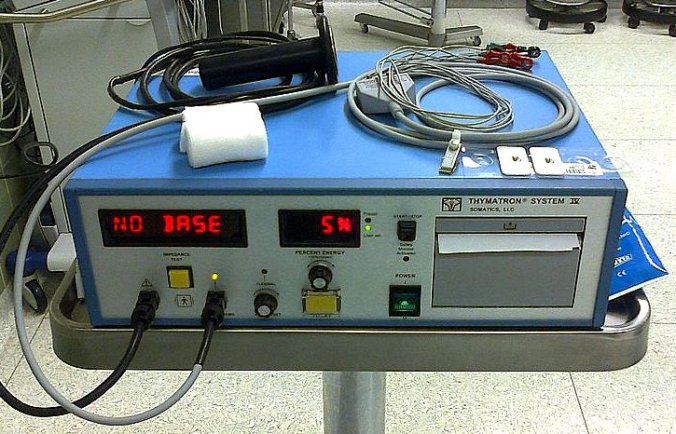
Electroconvulsive Therapy (ECT)

Thymatron-ect-machine.jpg

“Electroconvulsive therapy (ECT), formerly known as electroshock therapy, and often referred to as shock treatment, is a psychiatric treatment in which seizures are electrically induced in patients to provide relief from psychiatric illnesses” -Wikipedia

Basically, ECT is a treatment by which patients consent to have seizures intentionally triggered by electric shocks which are applied to the brain.

When you put it that way, it sounds barbaric and unnecessary.  Why would someone consent to have electric currents put through their brain under general anesthetic and undergo seizures?

The desperation and intense suicidal ideation that can accompany treatment resistant depression can be unbearable and even fatal.  Given the choice between suicide and ECT, some people choose ECT.  I was one of those people.

In 2011, I was caught in the grips of one of the worst depressive episodes of my life.  I was fighting off constant thoughts of suicide and severe self harm.  I was having difficulty functioning in my day to day life.  I had tried every medication known to human kind.  I was truly desperate and ECT was a last resort, something I hadn’t tried and something I hoped would provide even brief respite from my suicidal depression.

Over the course of about 8 weeks I received 15 electroconvulsive treatments.  This means I was put under general anesthetic 15 times and I had 15 seizures.  Some were unilateral (one side of the brain) and some were bilateral (both sides shocked simultaneously). I received the treatment as an outpatient, twice a week, Monday and Friday mornings at a hospital near my home.

Each morning I would report to the inpatient psychiatry floor around 6:30AM.  I would change into a hospital gown, remove my jewelry and be taken on a stretcher, by an orderly, down to the surgical area of the hospital.  I would wait in the semi-darkness, dimmed light of the surgical recovery room.  While in this room, nurses would place an IV into my hand so the necessary medications could be injected.  I was hooked up to heart rate monitor and other monitors.  There were usually 4-6 of us lying there, side by side, waiting our turn in the treatment room.  As I would wait, I would see the previous person being wheeled out of the treatment room, unconscious.  It was unsettling, as I knew my turn was coming soon.

The ECT room was a small procedure room attached to the surgical recovery room.  It was just large enough for a stretcher, the medical professionals and the necessary equipment.  It was bright and clinical.

Nurses and doctors began to work on me quickly.  I had the impression of an assembly line, a schedule being kept, patient in, treatment given, next patient in and so on.  My temples were wiped with alcohol swabs and electrodes attached.  The anesthesiologist talked to me about the medications he was going to administer.  A nurse would often hold my hand, there to keep me calm as everything was arranged.  The medications were injected one by one through the IV.  I could feel the cold fluid entering into the veins in my left hand.  I would keep my eyes fixed on the clock, trying to remember the time as I went unconscious, to later compare to the time on the clock when I awoke.  Sometimes I would lose no more than 15 minutes of time, the procedure was very quick.

I remember feeling afraid.  The nurse asked me to count backwards.  An oxygen mask was applied to my face and nose, ready to breath for me while I was unconscious.  The medications worked quickly and then nothing.  There was only one time of the 15 when I was aware of part of the process.  The medications they injected to relax my muscles began to act before I was unconscious, I felt like I was suffocating.  I couldn’t breathe and I started panicking.  I literally couldn’t breathe, but I was awake.  I could hear them talking and feel the next medication being injected and then nothing.

I would wake up 15 minutes later.  Back in a different curtained bay of the recovery room.  I could hear the nurses helping the other patients on either side of me, also recovering from ECT.   This was the part of the treatments that I hated most.  I had to stay in the recovery room for 30 minutes following the treatment, as they monitored my blood pressure and other vital signs.  I felt trapped.  I was hooked up to machines.  I often had a sense of panic and wanting to flee, to leave, to be outside.  Sometimes I would cry and I don’t think the nurses understood why.  Eventually the Doctor would come, talk to me briefly and I would be released.   The first time I could barely walk and the nurses wheeled me to the entrance to meet my family member.  I was usually home by 9 am.  The whole process taking 2-3 hours.

Usually I would stumble, drowsy and disoriented to the car.  I would be driven home and I would go straight to bed.  Usually I would sleep and rest for most of the day.  I lost a lot of weight over those few weeks because I ate so little due to missing breakfast and then being nauseous from the medications.  I also had severe headaches due to the shocks, and many side effects from the medications.  I felt like a zombie.  My short term memory was foggy as to the events during those 8 weeks.  During that time, my grandmother passed away and the experience was surreal through the state of mind I was in.  I have no memory of my own birthday that year, and few of my daughter’s.

In terms of long term side effects from the treatments, I found that the area of my brain which recalled the order of the months of the year and the seasons of the year were impacted.   If someone asked me “What season comes before Fall?”  I would feel confused and have to think very hard to answer “Summer”   Similarly with the months of the year and the order of the holidays in the calendar.

Overall I don’t think I suffered any major memory loss.   At the time I thought that the treatments helped my depression a little.

Sadly, I only realized about 9 months later that a large portion of my depression was situational, related to my abusive marriage.  In the end, the treatment for my depression was to move away from him.

If I’d realized this sooner, I probably would not have endured ECT.

Looking back on the whole series of treatments, it feels unreal.  It feels traumatic.  It feels strange and difficult to process.

In what world does it make sense to further traumatize a traumatized brain?  But desperation will make a person take desperate measures.  I survived and that is what matters.

Writer’s Block.

tumblr_l6ba2tL1d21qb4a07o1_500

I haven’t been blogging very much recently.

One reason is that I’m incredibly busy working full time and single parenting full time.

Another reason is that I have both so much to say and so little coherent to say.  I have all these ideas, memories, flashbacks, feelings and thoughts floating and swirling in my head, but haven’t been able to conceptualize a theme for a single blog post.

I started writing a post on Tuesday, which was the three year anniversary of my separation.  The day I told him I was leaving.

I never do well with anniversaries.  My PTSD gets worse, my flashbacks get worse, I think a lot about the past, my progress, where I have been and where I am going.  I am particularly impacted by holidays and anniversaries.  This is common for many people with PTSD because we don’t just remember things, we relive them.   Thus certain anniversaries of traumatic events are literally unforgettable.  I navigate my year around the anniversaries of various traumas, the deaths of my friends and family members, their birthdays, times when I was abused, anniversaries of meeting and leaving my abusers…it’s all stored in there.

The post I started was going to focus on how far I have come and the things that I have gained since leaving my ex-husband.  I was feeling particularly discouraged and demoralized after experiencing re-traumatization and further abuse from CAS and indirectly from my ex-husband.  I was beginning to feel like my entire life would be controlled and navigated by his abuse, until either he dies or I die.

But this week I feel a bit more hopeful.  Having a plan of action, even an imperfect plan helps ground me.  I wanted to write a bit about what I have gained through this three year, ongoing leaving process.  But even those thoughts weren’t properly formed and they were marred by intrusive thoughts and flashbacks.

I wasn’t sure if I should just write down a disjointed list of some of the flashbacks I’ve been having.  Because a disjointed post might accurately represent the way I’m experiencing life right now.  On the other hand, I really wanted to write something infused with gratitude.

In the middle, the blog post will meet here: a description of a flashback and why PTSD is so damn challenging, which will flow into some ways in which I am now better able to cope.

I want to describe the utter banality of some flashback triggers, because it illustrates how very unpredictable PTSD can be.   We all think of the obvious triggers, seeing the perpetrator, seeing people who look like the perpetrator, someone smells like the perpetrator, events remind you of the abuse etc.  But triggers can be literally anything.

Last week I was driving downtown and I saw a man walking down the street.  The man was unremarkable.  He was wearing a hospital bracelet on one arm and was gingerly holding his other arm which was wrapped in a clean, white gauze bandage.  He didn’t look unhappy or upset, he didn’t look like my abuser.  It was clear he was walking home from receiving treatment at the emergency room.  Nothing unusual, strange or threatening about it.

But I had an incredibly intense flashback which engaged all my senses.

I was back in time, I was leaving the hospital myself after receiving stitches for self harm.  I could feel the numbness in my arm from the local freezing.  I could smell the gauze and the tape they use at the hospital to secure the bandage.   I could feel the pain in my arm from where the stitches went in, as the freezing wears off and the swelling and bruising begins.  And I was overcome by an extremely intense urge to cut myself.  So intense that I felt dizzy.

Realize that all this took place in a matter of a few seconds.  The only trigger was seeing the man with the bandage and I had a complete physical and emotional reaction. Body memories, emotional feelings from the past and a motivation in the present to harm myself.

It’s quite incredible to me that this happened.  But this is what PTSD is.

And now the gratitude.

Living away from my ex-husband has given me the strength and motivation to resist those urges to destroy myself.

4-5 years ago if I had that strong an impulse to cut, I would have acted on it.  I would have used the flashback as an excuse…I had to do it….I would have given my power away to the urges.

Now, in recovery I can rationalize with the urges and I can ground myself and make an empowered choice not to harm myself severely.

I never could have made these shifts living in an abusive home.  I didn’t realize how unsafe I felt 24/7 until I moved to my new home and suddenly relaxed.

I have so much gratitude for being able to sleep at night without being assaulted.  I have gratitude for being able to make choices based on what is good for me.

I am so thankful for my ability to work.  Essentially, leaving my ex-husband allowed me to go from being psychiatrically disabled, to working full time in a demanding, challenging job, within a little over a year.

I love being employed.  I love having the privilege to help other women survivors.  I love being able to enter spaces where before I never would have been taken seriously, and be seen as a colleague and sometimes even an expert.   I occupy this mysterious space.  I am a psychiatric survivor and a service user while at the same time being a mental health service provider.   This is  a gift and a privilege that  I never forget.  Every single day that I work I am grateful for the opportunity to turn my negative experiences into a powerful way of finding meaning in the suffering I endured.  I find meaning in knowing that what I have survived has allowed me to help others with empathy, compassion, wisdom and joy.

Most people who know me now would have a hard time believing that 5 years ago I was unable to work, dependent, depressed, self destructive, suicidal and being abused.

Sometimes people who know me now forget.  They see me functioning and they forget that I struggle and constantly grapple with PTSD.  I function well with a very high level of symptoms and for that I am also grateful.

Ultimately, the last few months have been extremely difficult for me.  I’ve felt lost, depressed and hopeless at times.  But I have gained so much since leaving.  I have gained not just a career, but job that brings meaning to my life.  I have a safe home.  I am able to keep my children safe much of the time.  I am able to raise them with the values of social justice, equality and openness that I believe is right.

And even if this post is disjointed and unfocused, it is written, and for that I am thankful.